
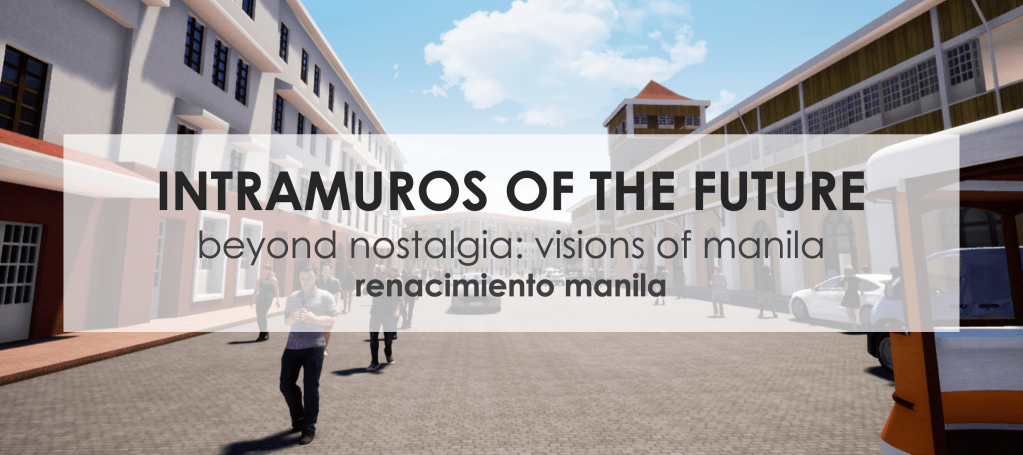
Re-envisioning the Walled City. Beyond nostalgia: visions of Manila
By Renacimiento Manila
The future is everything.
We at the Renacimiento Manila are firm in our belief that cultural rebirth can only be realized by promoting the heritage and history of the city among its people, preserving existing built heritage and spaces, rebuilding historic landmarks, promoting the arts and culture which in its wake will revive communities and draw in visitors, and over all helping in the urban renewal of the city as rooted in the past while facing the challenges of the future.
Part of our action plan for the realization of this vision is to create public interest and generate demand for the consideration of heritage in the discourse of national development, and in the long-run, for the possible reconstruction of historic sites in Intramuros. As such, as part of our advocacy to usher in cultural revival in the city of Manila, we invite everyone to imagine Manila as it could be in the future – a national treasure and a showcase of our past.
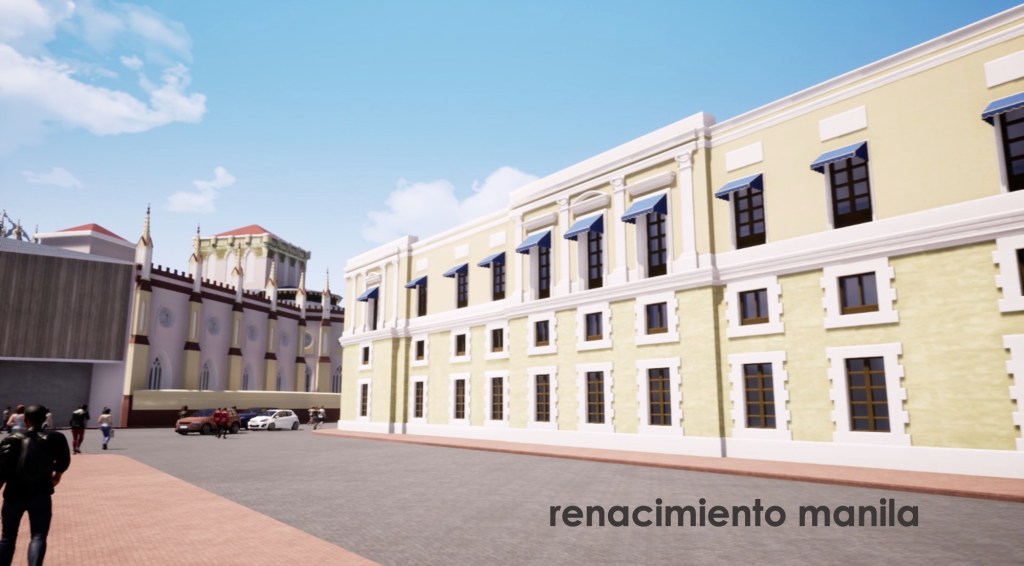
With this in mind, one of our resident artists has put forward her visions for the historic Dominican Quarter in Intramuros. In their 3D model, artist Chae Lee of General Santos City gives us a glimpse of what a future would look like when the Dominican Quarter in Intramuros has been reconstructed.
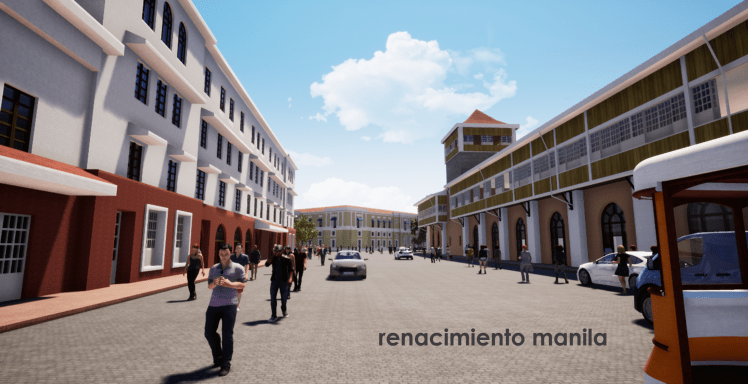
A tour of Chae’s model starts at A. Soriano Avenue. In our vision for the future of the historic Dominican quarters, we believe that inclusive mobility should be paramount in any heritage site. As such, for Intramuros’ main thoroughfare, we envision a system where pedestrians are supreme, public transport is a priority, and private vehicles, though still very important, are given less spotlight–after-all, one should experience heritage and not just pass through it.
In Chae’s model, the Intendencia at the end of the avenue has been reconstructed, and on the right, the campus of the University of Santo Tomas has been rebuilt. Notice the tower of Sto. Tomas, an important feature of the original school campus.
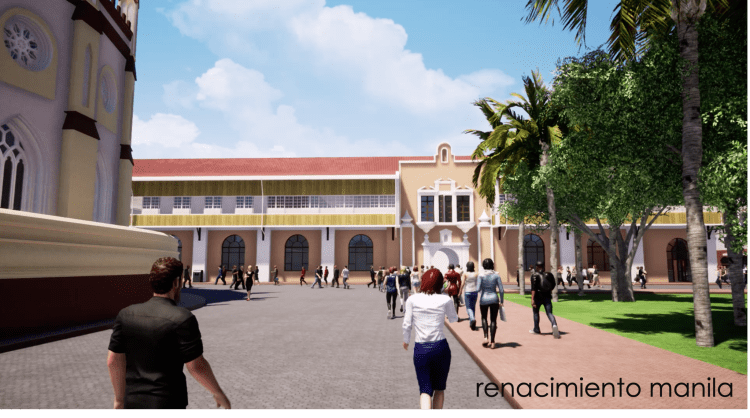
Turning right at the end of Andres Soriano Avenue we approach the Plaza Espana (right). In this photo we see a reconstructed University of Santo Tomas at the far end. On the left is a glimpse of the back side of the Sto. Domingo Church.
The reconstruction of Intramuros had always been the dream since 1979 when the Intramuros Administration (IA) was created. Under IA’s charter, Intramuros as a monument to the Hispanic era of Philippine history has been envisioned, and efforts toward the restoration and orderly development of the district has been given premium. The Renacimiento Manila is one with government in its desire to restore the historic district pursuant to its mandate, and in doing our part, our efforts are concentrated on how we can generate more public interest and demand toward the revitalization of the historic district. Who knows, with enough public interest and demand generated, perhaps the burden of at least envisioning the reconstruction of historic landmarks might not be so hard after all.
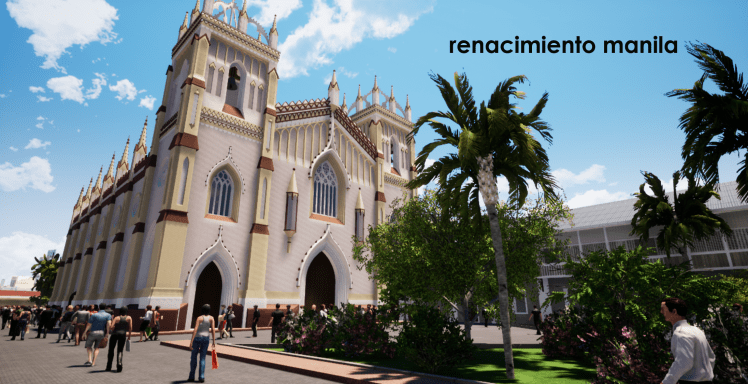
Turning left from the direction of the previous photo, we find ourselves at the Plaza of Santo Domingo Church. Intramuros had been historically known for its churches. The Church of Sto. Domingo was said to be one of the most beautiful of them all, however, it was destroyed in 1941 when it because one of the first casualties of the Second World War. A complex of modern office buildings now exist on site.
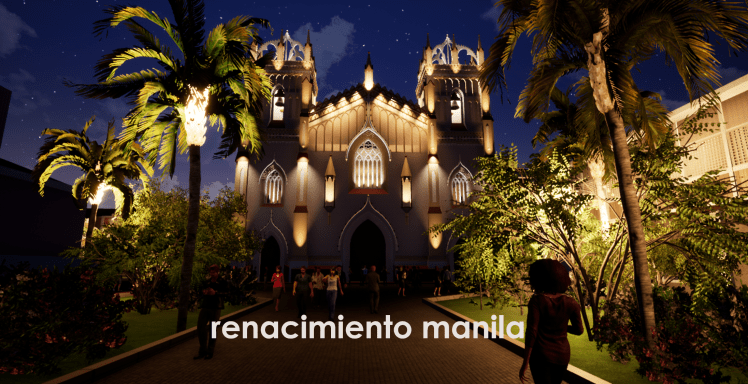
In Chae’s work, we see the Dominican Church reconstructed in its full glory. The model is based on archival photos, many of which are freely available in the Internet. As shown in the model, there is enough data to re-create the entire structure from scratch.
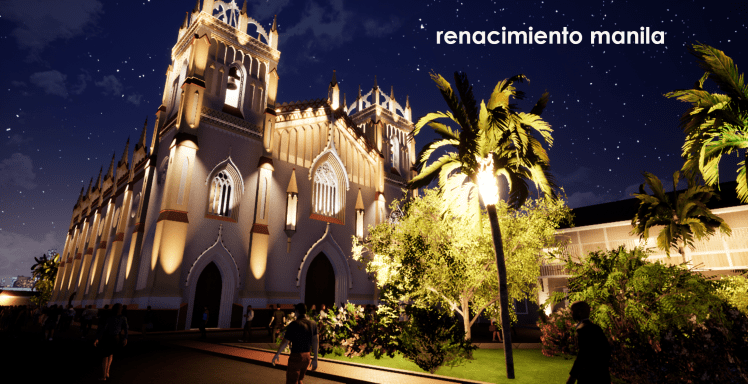
A view of the Sto. Domingo at night would be breathtaking as lighting can easily highlight the church’s intricate details.
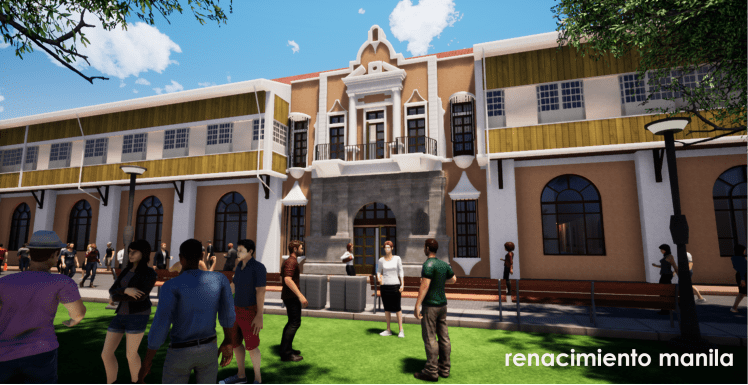
The University of Santo Tomas is the oldest university in the Philippines. Founded in 1611, it was the cradle from which the fathers of this nation were educated and formed. A reconstruction of the Dominican quarters would not be complete without the restoration of Santo Tomas. The Ayuntamiento de Manila beside it has already been reconstructed as the present Bureau of the Treasury, and what better way of keeping up with this momentum than by continuing the restoration of the entire block.
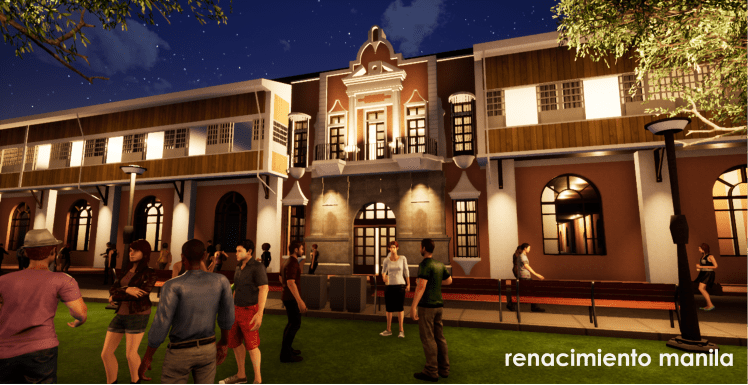
Here are other photos of Chae’s 3D model of the Dominican Quarter:

Did you like these photos? Tell us, and don’t forget to follow us in Facebook @RebirthManila and subscribe to our Instagram @rebirth.manila.

The Renacimiento Movement. What, then, is the Renacimiento Movement? The movement is the core philosophy of the organization. It is founded on the reality that heritage is a cornerstone of holistic development and that it is indispensable in ensuring quality of life. As such, cultural revival is necessary for the promotion of heritage in the national agenda. Heritage should be driven by the people, regardless of race, gender, creed, or religion. This cultural revival can be achieved through the following ways: government support, the advancement of private initiatives, and the engagement of the people.
 Renacimiento Manila
Leave a comment