
What were the forms of Mass Transit in the Philippines during the Spanish Era?
Text by Angela AP
Illustrations by Diego Gabriel Torres
Renacimiento Manila
26 July 2020
Transportation in the Philippines had changed over time. It is well known for having the jeepneys which are dubbed kings of the road. But more than that, Manila has seen the evolution of Filipino transport; changes in the urban plans, such as historical ones, remain felt to some extent nowadays, from the horses to steam, diesel, and today’s technology, across history.
Within the 333-year Spanish colonial period, most of the land transport at that time had to be done by foot.
HORSE-DRAWN COACHES
It was until the 18th century when the Spanish colonizers introduced a new mode of transport consisting of two-wheeled horse-drawn carriages. This is known as the calesa—brightly-painted wood or metal carriages were the most efficient at its time, allowing movement of people and goods.

The kalesa—the horse-drawn coach—has variants, one is known as the garetas or kareton which is pulled by carabao. The larger caruaje, or the carriage are four-wheeled coaches, and the smaller, box-like, pony-driven carromata are operated similarly as with the kalesa.
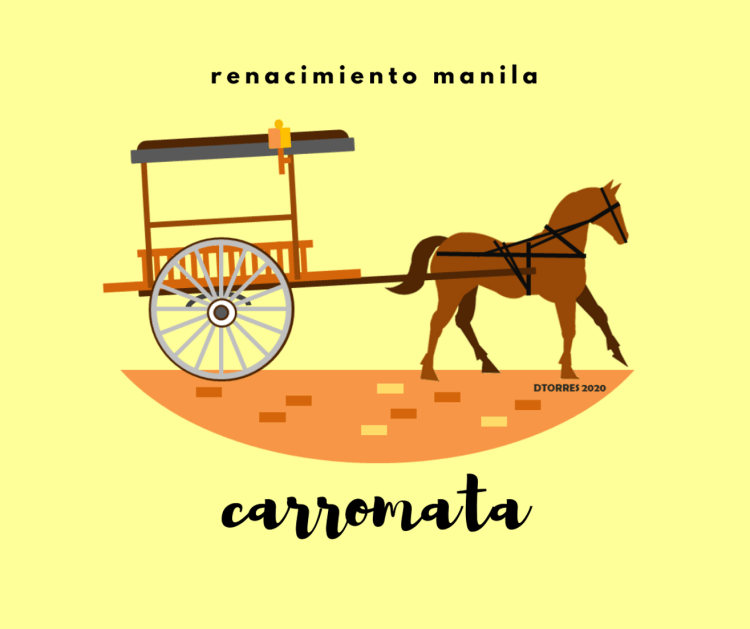
A horse-drawn coach driver is known as the cochero, localized as kutsero, who sits in the front driver’s seat to control the movement of the horses. Traditional workshops that craft the kalesa are known as the karyoserya.
However it became apparent that the current modes of transport were inadequate, partly due to Spanish colonial public works doing little to no effort to address the traffic demand, despite having the polo y servicio or obligated labor. Some of which are sent to work in fixing roads at that time are not given enough materials to make do.
Half of the 18th century paved way for Spanish policies to recognize economic development to aid their colonies. But despite this, it would not be until around three decades before the end of the century, for the first railroads to be planned and thus constructed.
TRANVIA
Around two decades before the end of the 18th century, plans for a light railway system, known as the Formularios para la reducion de los anteproyectos de ferrocarriles, were laid out by the Administracion de Obras Publicas (Administration of Public Works). This included blueprints for a tramway system, much known as the tranvia.
In 1882, businessman Jacobo Zóbel y Zangroniz, engineer Luciano M. Bremon, and banker Adolfo Bayo are the three Filipinos who began the company venture for the tranvia, which became the Compañia de los Tranvías de Filipinas (Company of Philippine Tramways). This was due to the increasing population in Manila, and thus, a growing demand for transport was apparent.
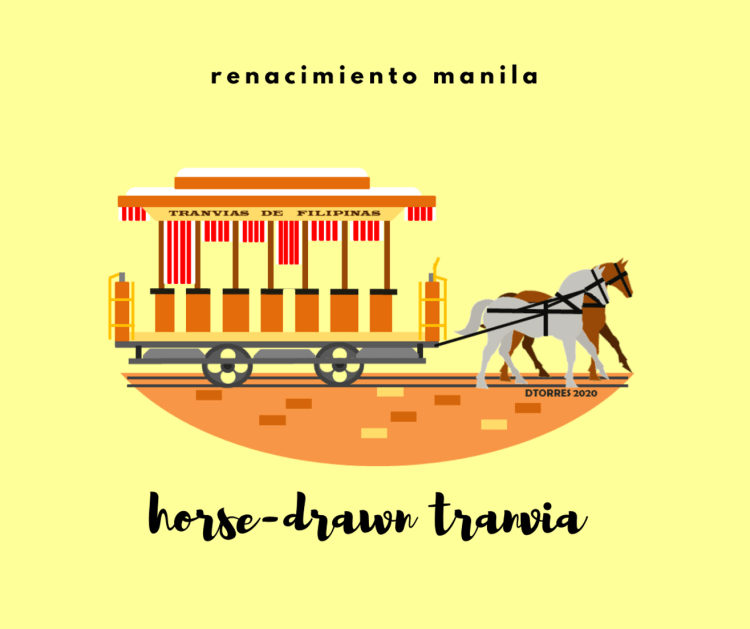

The first tranvia line—and the first railway stretch to have run in the Philippines—was the Tondo-Malabon Line. Construction completed and revenue services began in 1884. Owing to active business by merchants at Malabon and galleon trading at Manila, the line became popular, servicing every hour in each direction.
The Tondo-Malabon line is also the first length of steam railway in the Philippines, having utilized four German-manufactured steam locomotives and eight passenger coaches. After a few years, four more lines were opened; these served Sampaloc, Intramuros, Malate, and Malacañang. This was documented in detail at the Memoria y estatutos by the Compañia, or the tramway company.
PHILIPPINE NATIONAL RAILWAYS
The Philippine National Railways was then known as the Ferrocarril de Manila-Dagupan. Plans were drawn as early as 1875 when King Alfonso XII issued a royal decree for a railway plan to be sumitted for Luzon. This was the Memoria Sobre el Plan General de Ferrocarriles en la Isla de Luzón, submitted by Don Eduardo Lopez Navarro. While the plan was from the Spanish, the consession for constructing a line from Manila to Dagupan went to the British. This consession was the Ferrocarril de Manila–Dagupan (Manila–Dagupan Railway), later to become the Manila Railway Company, Ltd. of London, on June 1, 1887.
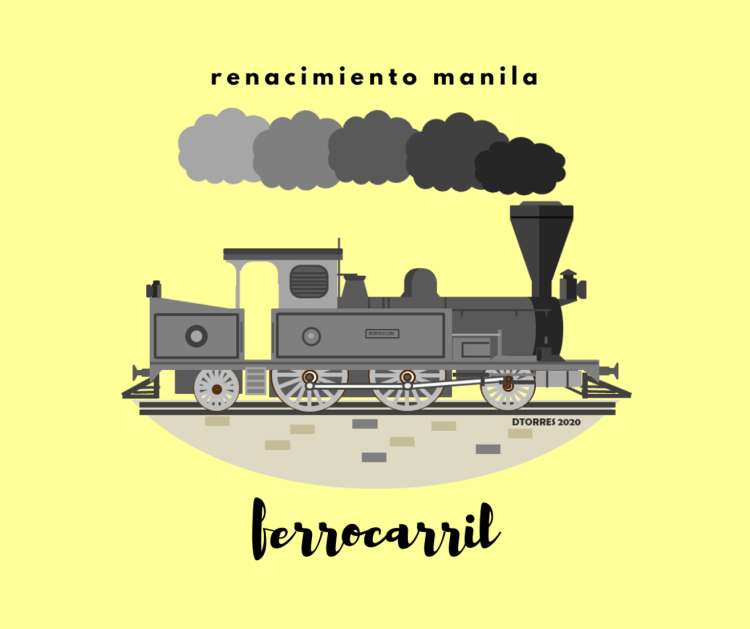
Construction of the line, known mostly today as Main Line North, began construction in 1887 from a cornerstone laid in Tutuban station. In November 24, 1892 the first trip from Dagupan to Manila ran full steam ahead, which was 195-kilometer (121 mi) long.
During that time, steam locomotives were the prime movers in railways, specifically long-distance, intercity railways that connect towns and provinces. The North Main Line boosted economy by having stimulated agriculture and greatly improved trade activities throughout the line’s right of way. Moving from Manila to the northern provinces was significantly easier.
A final word
Transportation in history is, by any means, an esoteric subject to Filipino basic education. However, gaining knowledge regarding this particular topic will be greatly helpful, to see patterns on how events turned out, and how transport at that time shaped the different ages in Philippine history. Obtaining sources alone to verify documentation is elusive; in fact, it was not until recently that a Wikipedia article for the tranvia was published!
To note, the Spanish era ended in 1901, to which the Filipino uprising was successful, yet at the same time, American imperialists took over the archipelago. Preceding events included the first light company La Electricista, which would later be acquired by an American businessman to form Meralco. This, in turn, follows the life of the tranvia and the ferrocarril in the American Era, and lastly, changes in transport during the following colonial period.
References
“The Last Calesa Maker: How A Proud Fernandino Kept A Fading Industry Alive”. Capital Town Pampanga. March 28, 2019.
https://www.capitaltown pampanga.com /last-calesa- maker-proud- fernandino- kept-fading- industry-alive/
Corpuz, Arturo G. (1989). Railroads and regional development in the Philippines: Views from the colonial iron horse 1875–1935. Cornell University.
Jose, Ricardo T. (August 25, 2018). “Planning Metro Manila’s Mass Transit System”.
“100 Years with Meralco”. Meralco. October 11, 2004. Archived from the original on September 18, 2009.
https://web. archive.org/web/200909 18153259/http://www. meralco.com.ph/Corporate /about/mh _100_years2.htm
“100 Years of Meralco: Colonial Outpost”. meralco.com.ph. Meralco. October 11, 2004. Archived from the original on September 18, 2009.
https://web. archive.org /web/20090918154656/http:// www. meralco. com.ph/Corporate/ about /mh_100_years. htm#1
Compania de los Tranvias de Filipinas (1885). Memoria y estatutos (Digitized book) (in Spanish). Madrid: Impr. de Fortanet. HE 3949 C65 A3.
“Brief history of PNR”. Philippine National Railways (February 27, 2009). Archived from the original on February 27, 2009.
https://web.archive.org/web/20090227040648/http://pnr. gov. ph/history.htm
Gonzalez, Michael Manuel (1979). The De Manila a Dagupan (PDF). Philippines: University of the Philippines Diliman.
Written by Angela AP, Renacimiento Manila. Illustrations by Diego Gabriel Torres. All rights reserved. Do not copy the illustrations. Violators will be pursued.


 Renacimiento Manila
Leave a comment