
Text and Illustration by Angela AP
Renacimiento Manila
09 Aug 2020
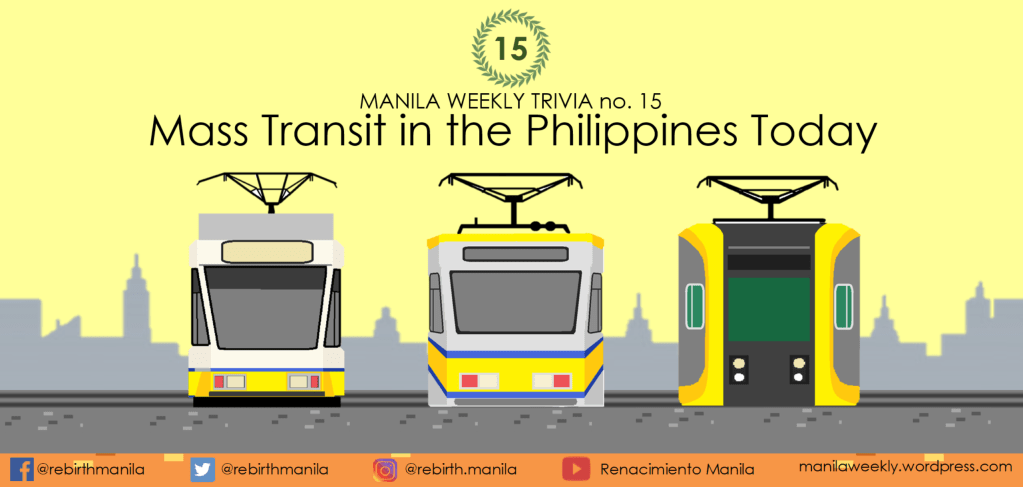
Mass Transit in the Philippines Today
Post-war Manila, and the Philippines itself, has seen significant changes. World War II itself has caused significant destruction, and the timely push for roads enable car-centric attitudes with apparently no alternatives than either constructing railways or a heap of elevated roads.
After the war, the Philippines faces its challenges, in rebuilding itself, and practicing self-sufficiency in many facets such as mass transit. This includes the replacement and abandonment of structures and systems which led to the current available modalities nationwide.
World War II
The Manila Railroad played a vital role during the war; one of these includes the Bataan Death March. Prisoners-of-war who survived the tortures in between the march were transported in hot and stuffy metal railcars, as if they were freight, to Camp O’Donell at Capas, Tarlac.
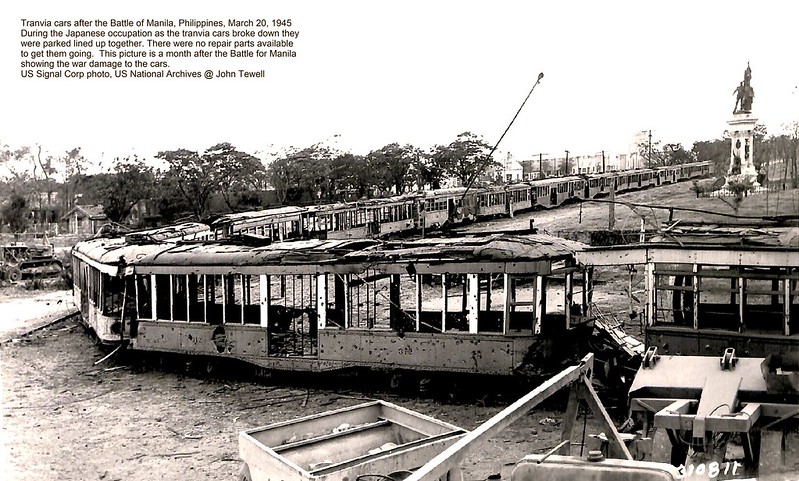
Nonetheless, it was the Battle of Manila in 1945 that caused extensive damage to the city. Most old buildings were bombed repeatedly, and the flow of carnage replaced the colorful hustle and bustle of the city. The tranvia was scrapped along the way, and the bridges were deliberately scrapped as the Japanese attempted to thwart the American forces. Thus, public transportation in general was obliterated in those times.
Post-war ingenuity
The jeepney, known as the “king of the road” in the Philippine setting, commonly attributed to Filipino adaptiveness, and Leandro Sarao who founded Sarao Motors and the creation of this local innovation from surplus Willys or Ford Jeeps either sold or given to the Filipinos as the Americans left the country.

1943 Willys Jeep
Photo from thisiswhyimbroke.com
Manila Jeepney with Quiapo-España signboard 1957
Photo from Eduardo de Leon (Pinterest)
Longitudinal seating, chrome-plated designs, and colorful paint marked the characteristics of the jeepney, an inexpensive means to provide alternative public transport that took over the tranvia.
The jeepney takes its roots from the Jeep from the acronym GP, which meant “general purpose”. Wartime jeeps of shorter bodies were called “AC” or autocalesa. The term jeepney has seemingly arisen from the terms jeep and the jitney, slang for a “dollar van”.
As years passed, the use of jeepneys as public utility vehicles had been widespread nationwide. Surplus minivans and light trucks are refurbished locally depending on the aesthetics and need.
Currently, there had been moves to phase out the traditional jeepneys we still see today, as one concern regarding jeepneys is its emissions which contribute to air pollution. In a newspaper at Metro Manila the fuel consumption of a 16-passenger jeepney and a 54-passenger air-conditioned bus was the same. Experiences in commuting “Fleet modernization” projects are also being undergone, which involves the shift to the truck van-like air-conditioned vehicles using diesel or electricity, and cashless payments.
Nonetheless, jeepneys are inexpensive means of transport. Should alternatives replace the existing fleet we know, what would become of them whose creative liveries paint the asphalt roads?
Roads, and roads, and roads
Thoroughfares in the Philippines are mostly roads compared to rails. This trend has arisen from and after the American period, in the boom of automobile dependence and more paved highways. From the 1930’s onwards, road-based trucks and motor vehicles such as the autobuses of Meralco competed with the rail-based long-haul services. To keep up with the shifting demand, the Manila Railroad Company operated road-based transport to maintain revenue that was lost to other transport companies.

Clark Subic Expressway. Photo from mantarey (Philippine Bird Photography Forum)
The dominance of road-based transport led to expansions of national highways and a growing population through decades. It was from an American perspective for motor vehicles to transport people to and fro their workplaces, and was thus applied to the mass transit backbone. It was also deemed easier to pave roads and thus the demand would go out of the railroad.
Today, most of Filipino mass transit is still road-based; rail-based transit in Visayas and Mindanao are nonexistent. To go from one province to another, commuting by bus is an ubiquitous choice. Jeepneys still ply the road, and so do taxis, tricycles, and also modern jeepneys which look like airconditioned minibuses.
Cycling and walking are still options. However, sidewalks are often trimmed down, usually to add space for vehicular traffic. Trucks are the only way to carry freight, whose lanes sometimes come too close to educational institutions, housing locations, and even Intramuros.
Continuing full steam ahead
The Manila Railroad Company has not seen further expansions after the war. All tramways present prior to World War II are either buried under roads, left as ruins, or cleared altogether as reconstruction efforts are deemed too expensive.
Panay Railways had resumed services for railroad services for passenger and freight until it subsequently ceased operating in the 80’s. Mindanao, on the other hand, had proposals for a railroad dating back in the 1900s.
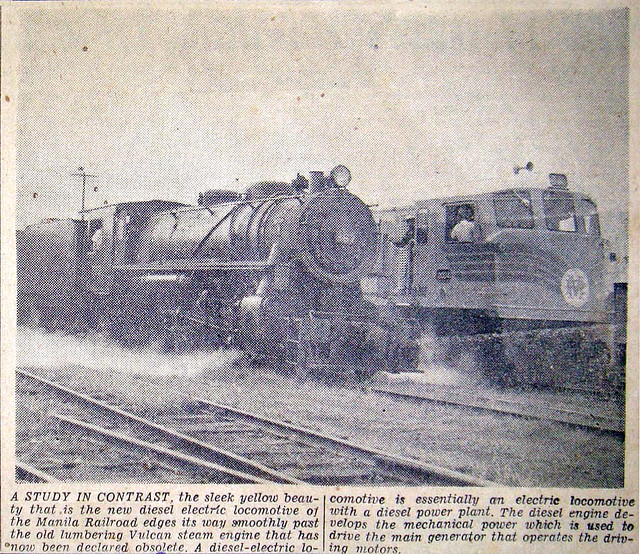
In the half of the 20th century, diesel engines replaced the steam locomotives in the Manila Railroad Company. The first ones are 1500 class Streamliners, and the succeeding trains were mostly produced by GE. Currently freight services are not available, and so is activity in most branch lines. It was also during the 1950s that a new charter, Republic Act No. 4156 was granted to the Manila Railroad Company, therefore becoming the Philippine National Railways today.
Meanwhile, Luzon did not have new railroads until in 1984 when the LRT Line 1 was constructed and is opened to the public. This was the first LRT in Southeast Asia, albeit the implications of large demands and succeeding disrepairs had yet to be realized for years later.
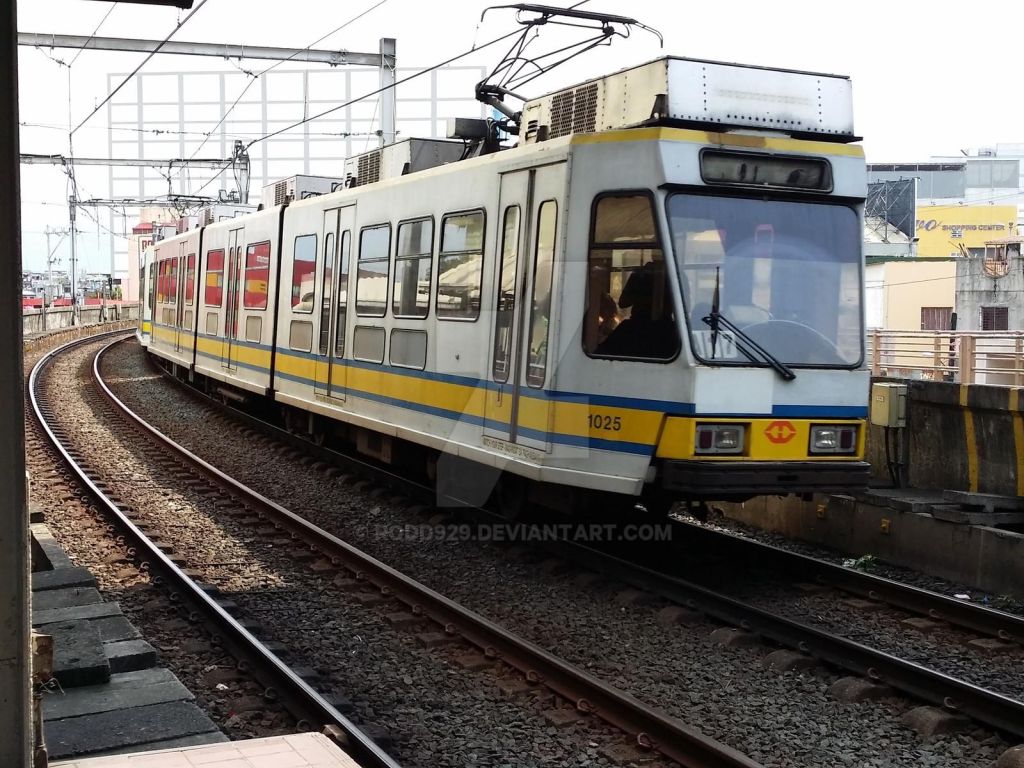
LRT 1G (LRTA 1000 class)
Photo by Rodd929 (Deviantart)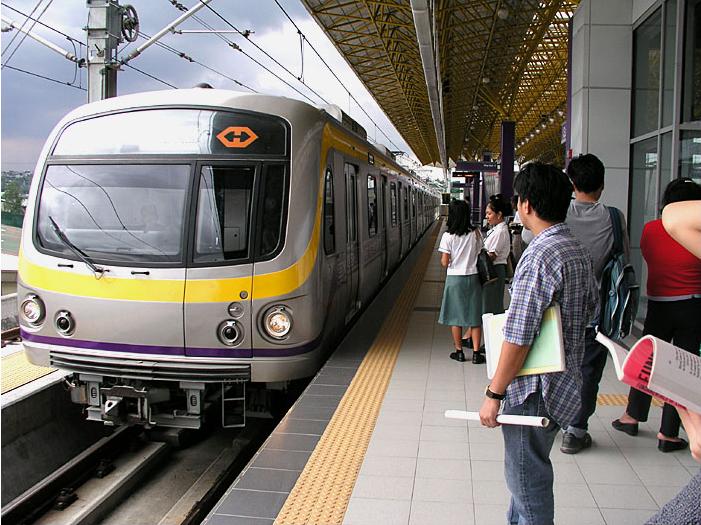
Megatren (LRTA 2000 class)
Photo from Wikimedia Commons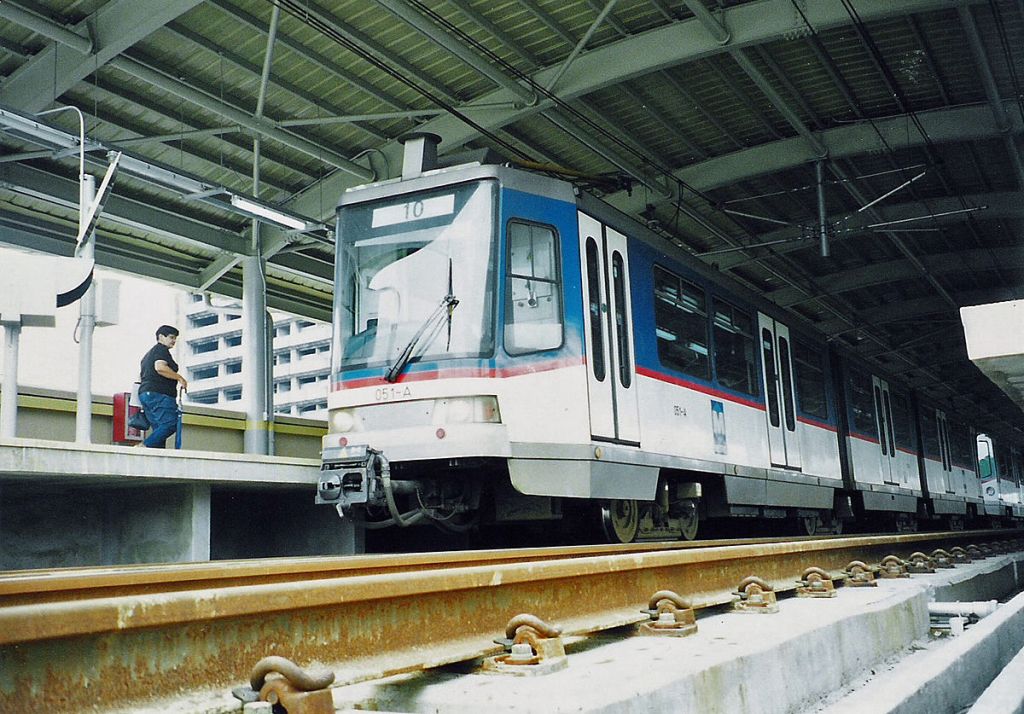
MRTC 3000 class
Photo from Wikimedia Commons
Subsequently, in the 90’s, the MRT Line 3 was built. What was labeled a “metro rail transit” is, in fact, utilizing high-speed trams from SKD Tatra. This was because the plan for an LRT along EDSA was implemented, coinciding with the Asian Financial Crisis. This particular line was marred with issues hither and thither, from the inaccessibility of high stairways to apparent poor maintenance to huge, unwieldy demands.
In 2004, the MRT Line 2 was opened to the public, labeled as the “Megatren”. Although colloquially referred to as a “light rail transit”, thanks for its low throughput or demands, it is a heavy rail line, as the trains—wider with significantly higher axle loads than lines 1 and 3—fit the “heavy rail” in APTA standards.
At present, only the three LRT/MRT lines (as how it is known colloquially) and the PNR commuter services are there. Not much expansion was done, save for a north extension in the LRT Line 1. The Bicol Express has not had a comeback since 2012, but commuter services through the years, at least, are being extended little by little.
What rolls next
If one were to experience mass transit in Metro Manila at present, it would seem to be entangled with lack of organization. It is plausible that little effort has been made to tackle the puzzle of seemingly never ending traffic, particularly in urban areas.
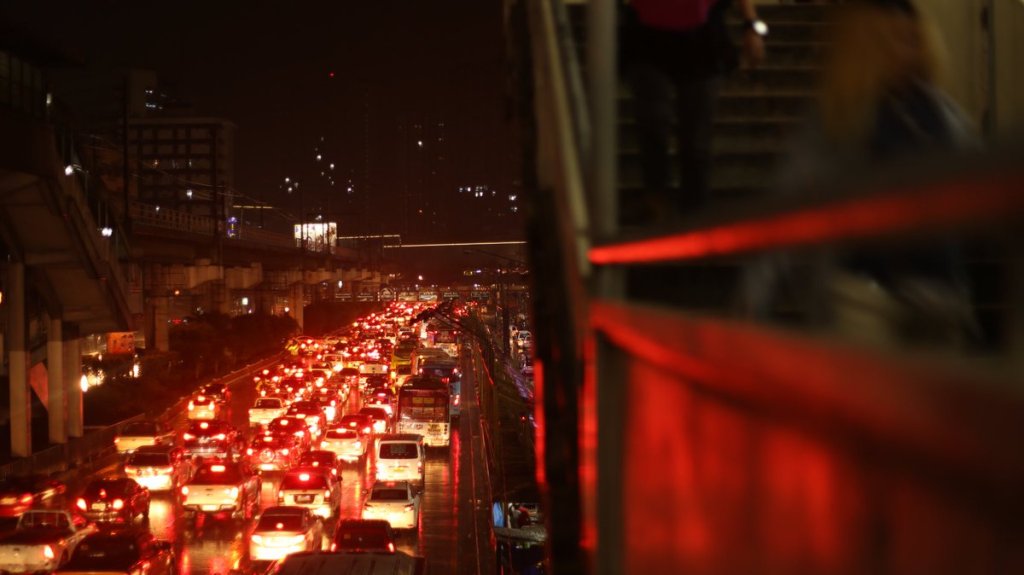
Traffic during #OmpongPH at EDSA North Avenue, QC. Photo from ABS-CBN News
The dysfunctional mass transit manifests in many factors. First, roads have but mere sidewalks and more lanes. The sidewalks often cannot fit bikes; sometimes it is nonexistent at all. A good solution can be reclaiming walkways for pedestrians, and road designs that promote multiple forms of modalities. Existing road-based transport can be organized to avoid unfair charges due to the boundary system and make mobility more accessible to everyone—from fixed stops to clear visuals and guides.
Secondly, the dependence on roads had become too overarching. It reached the point where a phase of the Skyway was built directly in front of the old Paco station facade and over Plaza Dilao, leaving it in a shadow that stays even at day. More elevated roadways that are in the works—and perhaps done without our prior knowledge—are band-aid solutions; attempts to merely divert and reroute traffic demands that will nonetheless continue growing.
Thirdly, it is unwieldy for academic jargon (i.e. LRT/MRT) to be used as colloquialisms, lest if the standards used by the transit systems are clearly defined for the local setting.
Had Line 2 been extended eastward to Rizal, its current low demand would have likely met the expected statistics, and it would be regarded as a heavy rail line. Maintaining a rail system with the correct regulations might have greatly improved even the most trivial aspects of the railway, perhaps to retaining its ube and mango livery in tip-top condition.
Finally, the importance of rails must have been realized, and recalled of. Rail-based transport serve as excellent feeders with its high capacity and exclusive right-of-way, something that transport in the Philippines is in dire need of.
As urbanization begets the increased demand of population and transport, and that urban cities also grow in Visayas and Mindanao, perhaps it is time to advance the use of railways in these areas, too.
Today, we can only dream about quality mass transit. Development must be shared; after all, other sectors will greatly benefit from efficient mobility. But it is best, too, to be critical and conscious if the added infrastructure will help or harm us or our environment and culture in the long run.
Text and Illustration by Angela AP, Renacimiento Manila
IG: @koressha and @resshako
References
Huber, Thomas M. Battle of Manila. battle ofmanila. org/pages /01_huber. htm
Office of the Provost Marshal General (November 19, 1945). Provost Marshal Report 19 Nov 1945 REPORT ON AMERICAN PRISONERS OF WAR INTERNED BY THE JAPANESE IN THE PHILIPPINES. Camp O’Donnell, Capas, Tarlac. man sell. com/ pow_re sources/ca mplists/p hilippines/od onnell/provost_rpt. H tml
Jose, Ricardo T. (August 25, 2018). Planning Metro Manila’s Mass Transit System. riles.upd.edu.ph. ril es. upd. edu. ph/index. php/20 18/07/25/planning-m etro-man ilas-mass-tra nsit-system/
Corpuz, Arturo G. (1989). Railroads and regional development in the Philippines: Views from the colonial iron horse 1875–1935. Cornell University.
Liongson, Leonardo Q. (2000). A “Must” Reading for Regional and Urban Planners and Railroad Enthusiasts Alike. University of the Philippines Press.
“Lifestyle Sarao Jeepney”. The Philippines: The City of Las Piñas. Archived from the original on May 7, 2016. we b. archive .org/ web/2 0160507000228/http ://las pinas city. gov. ph/li festyle-sarao.h tml
Willis, J. Jr. (August 17, 2015). “Harry Stonehill: enterprise helped him build a business empire, recklessness and lack of political finesse brought it all down”. juli uswillis. com/201 5/08/17/harry-s tonehill-his-ent erprise-helped-h im-buil d-a-business-empir e-his-recklessn ess-and-l ack-of- politica l-finesse-b rought-it-a ll-down/
Blacksmith Institute and Clean Air Asia Center. (2016). “Alternative Technologies for the Philippine Utility Jeepney” (PDF). Retrieved November 23, 2017. cle anair asia. org/wp -content/ uploads/2017/04/Jee pney-CB-Study. P df
Cruz, Cherryl Anne. (February 9, 2015) Check Out the Standard Dimensions and Features of the Modern Jeepney. carmu di. com. ph/journal /check-out -the-stan dard-dime nsions -and-feat ures-of-th e-modern -jeep ney/
“PNR to resume Bicol Express in Sept”. GMA News. May 9, 2014.
gma netw ork. com/news/sto ry/367959/econ omy/bu siness/ pnr-to-res u me-bicol-ex press-in-sept
“Bicol Express operations cancelled”. Manila Bulletin. November 19, 2016. ne ws. mb. com. ph/2016/11/19 /bicol-express -operations-c ancel led/
Angelo, Francis Allan L. (October 30, 2005). “PANAY RAILWAY REHAB NEXT YEAR”. The Daily Guardian via Blogspot. Iloilo City. franc isalla nangelo .blogspot. c om/2005 /10/panay -railway- rehab-next- year. html
Salvilla, Rex S. (July 28, 2006). “Panay Railways”. The News Today. then ewsto day.i nfo/2 008/1 2/12/public.lan d.tran sp ortation.in .iloilo.in.t he.1930s .html
Quezon III, Manuel. (2015). Railways in Mindanao: Then and Now. The Philippine Diary project. philipp inedia rypr oject.c om/2015/05 /06/railw ays-in-min danao-th en-and- now/
Palmera, Erica Jean (May 15, 2014). The old Cebu Railway. The Philippine Star. philst ar.com/ cebu-li festyle/ 2014/05/15 /1323377/ old-cebu-r ail way
Japan International Cooperation Agency (JICA). (1976). Feasibility Study for Manila Rapid Transit Railway Line No.1 2 volumes. Manila. Has hta gmrt2. Wordp ress.com /
Light Rail Transit Authority (August 9, 2017). Maintenance of the Manila LRT Line 2 System, Terms of Reference (PDF) (Report). Light Rail Transit Philippines. Publ iccontent.s inpro.cz/Pub licF iles/201 7/11/26/PB1 7-167-8.Bid ding %20Do cum ent.0725 23311. pdf
Department of Transportation. (2016). About section.
Japan International Cooperation Agency. (2011). Preparatory Study for LRT Line 2 Extension Project final report.
Japan International Cooperation Agency. . (2013). Study on Railway Strategy for Enhancement of Railway Network System in Metro Manila of the Republic of the Philippines final report, Volume 1 LRT Line 1 Cavite Extension Project.
Flickr links
The Old and the New (November 24, 1956) flic kr.c om/photos/7 9691913@ N05/328940 80044/in /pool-13 95212@ N21
MRR/PNR Alsthom Promotional Poster (1966) flickr.com/ pho tos/79691913@N 05/105 360 55 134/I n/pool- 1395 212 @N21/
Locomotives for PNR from the Sunday Chronicle (November 20, 1966) flick r.c om/ photos/796 91913@N 05/10536 055134/in/p ool-1395 212@ N2 1/
PNR GE locomotive at Dagupan (1981)
PNR GE locomotive at Bayambang (1981)
Wikipedia links
en .wi kipedia. or g/wiki/Bataan_Death_M arch
en .wi kipedia. or g/wiki/Battle_of_M anila_(1945)
en .wi kipedia. or g/wiki/Jeep ney
en .wi kipedia. or g/wiki/Transpo rtation_i n_the_Phili ppines
en. wi kipedia. or g/wiki/Manila_ Light_Rail_ Transit_Syste m_Line_1
en. wi kipedia. or g/wiki/Manil a_Light_R ail_Transit_ System _Line_2
en. wi kipedia. or g/ wiki/Manila_Metro_ Rail_Transit_System_Lin. e_3
en. wikipedia. or g/wiki/Phi lipp ine_National _Rail ways
en. wi kipedia. or g/wiki/ Panay_ Rai lways

 Renacimiento Manila
Leave a comment