

Article by Carlos Cucueco III
Illustration by Diego Gabriel Torres
Photos by Koneksyon PH
12 August 2020
Hidden among the intricacies of the University Belt lies a structure that showcases itself both as an important institution for the health of the children and as an excellent example of heritage architecture. This intimate pink building surrounded with a lively garden called Gota de Leche is located at Calle Lepanto (currently S. H. Loyola Street) in Sampaloc, Manila.

The origins of this historic institution started with the founding of the Asociacion Feminista Filipina by notable women including Concepcion Felix and one of Rizal’s sisters, Trinidad Rizal. One of the goals of this association is to provide social welfare especially to women and children. The group noted that the mortality rate of children three years old and below are high. Later, it was found out by Doctors Manuel Guerrero and Joaquin Quintos that one of the leading causes of infant mortality was due a disease called beri-beri. One of the sources of this disease was the milk of mothers who have this disease. In order to combat beri-beri, a non-profit charity foundation called La Proteccion de Infancia was established. Their program of distributing pasteurized cow’s milk to children was called La Gota de Leche – A Drop of Milk. Their first home was located at Calle San Pedro (presently Evangelista Street) in Sta. Cruz, Manila. In 1907, the philanthropist Teodoro Yangco gave a plot of land in Sampaloc for the permanent headquarters of the foundation.

In 1914, the architects and brothers Arcadio and Juan Arellano were commissioned to design the Gota de Leche. This project was the first collaboration of the brothers as Juan has just finished his studies and trainings abroad. Juan Arellano’s commissions include the Metropolitan Theater, the Manila Central Post Office Building, the Legislative Building (currently serves as the National Museum of Fine Arts) and many more.
The overall design of the building was based from Filippo Brunelleschi’s Ospedale degli Innocenti, an institution in Florence, Italy that serves as an orphanage and was considered as one of the first examples of Renaissance architecture. This is evident with the look of the five-bay loggia of the Gota de Leche. Like the Ospedale degli Innocenti, the loggia of the building showcases tondi (forms of art in circular format) depicting sculptures of infants which symbolizes the mission of the foundation. The façade of the building was further enhanced with classical motifs on the columns and arches and other moldings. A spacious garden attracts a tropical look on the building. The interior spaces have a simple and comfortable setting which was enhanced with the use of capiz windows and the pastel color template accented with dark floor tiles. The building’s construction was finished in 1917.
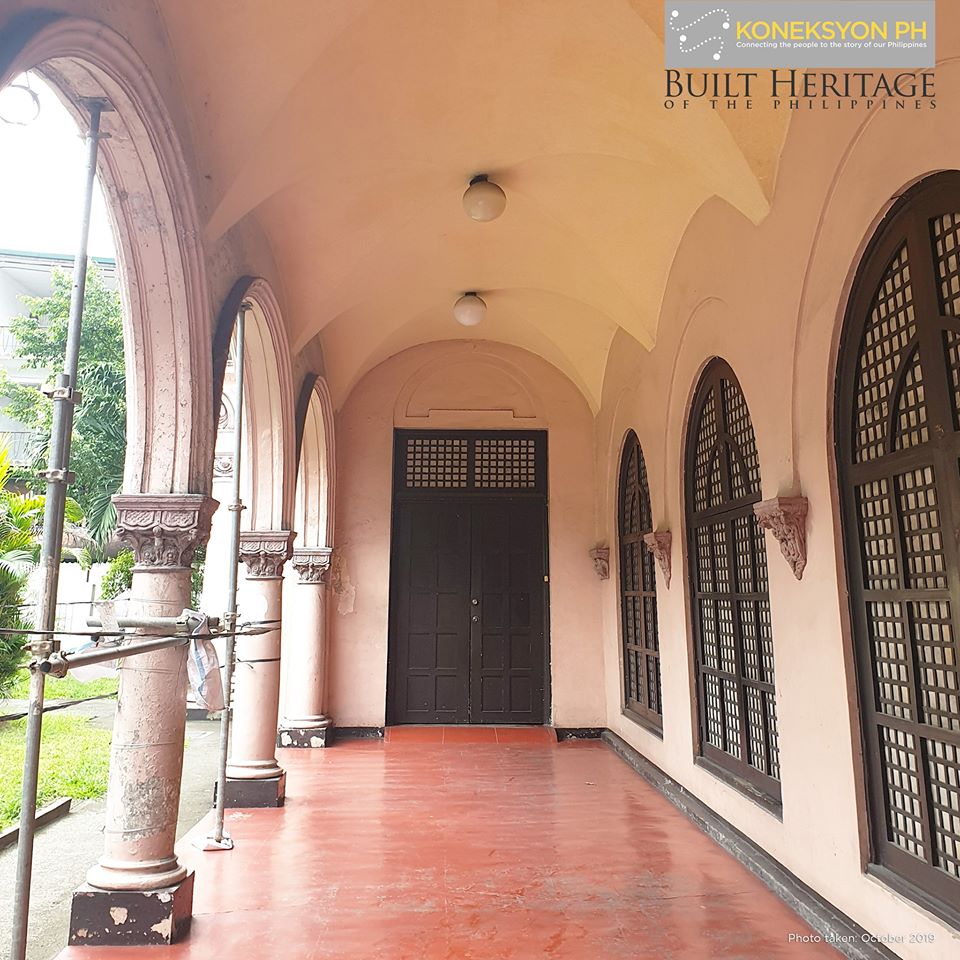
Survived during the horrendous World War II which destroyed many architectural gems of Manila, the Gota de Leche eventually deteriorated due to the passage of time. Modifications were made like the addition of annex spaces and the modification of the interior ceiling to accommodate the air conditioning system. In 2002, the restoration of the Gota de Leche started with Architect Augusto Villalon being the head of the restoration of the project. Fortunately, an old vault was found, and it contained important documents regarding the foundation including the original plans of the Arellano Brothers for the Gota de Leche. The restoration proceeded with the removal of the annex spaces, the retrofitting of the roofing destroyed during a strong typhoon, the removal of the modifications on the ceiling, the overall repainting using the exact colors specified in the original design, the rejuvenation of the landscape, and many more. The restoration also employed the use of traditional building construction techniques to remain faithful to the original plans.
The Gota de Leche was given an honorable mention for Cultural Heritage Restoration by the UNESCO Asia Pacific Heritage Awards in 2003. The citation reads as follows:
“The careful restoration of the 1917 building provides a welcome model for preserving Manila’s rich architectural and social history. Returning the building to its original appearance and prominence in the University Belt neighborhood provides a worthy and appropriate setting for the sustained operation of Gota de Leche’s charitable programmes, while demonstrating a commendable commitment to advancing the local conservation agenda.”
In 2014, the Gota de Leche was declared as an Important Cultural Property by the National Museum of the Philippines. At present times, the foundation continues to achieve its mission of providing sufficient nutrition to the disadvantaged and malnourished Filipino children and mothers.
In retrospect, the case of the Gota de Leche is one of the more successful ones in the field of heritage conservation in the Philippines. Restorations like this eventually help us reconnect with our collective past while we also envision the ideal future we want.
Special Thanks to Koneksyon PH.
Sources
Historical Marker, Gota de Leche
Historical Marker, La Proteccion de la Infancia, Inc.
Historical Marker, Asocacion Feminista Filipina
The Urban Roamer. theurbanro am er.co m/ the-gota-de-le che-of-sampaloc/
The Philippine Daily Inquirer. lifes t yle.inquirer.net/259044/cent ury-old-structure-rich-history/
The Philippine Star. phils tar.com/lifesty le/arts -and-culture/2004/0 3/01/24 0917/re min isc ence s-go ta-de-leche
Benie Layug. ben jie layu g.co m/2012/02/g ota-de-leche-building -a-heritage-conse rvation -success-story.html
Business World. bwo rldonline.com/ heritage-b uilding-th e-focus-of-ch aritys-2017 -desk-calendar/
UNESCO Thailand. Ban gk ok.un esc o.o rg/sites/default/ files/ass ets/article/Asia-P acific%20He ritage%20Awards/files/2 003-winners.pdf

 Renacimiento Manila
Leave a comment