

Text and Illustrations by Diego Gabriel Torres .
Renacimiento Manila
16 Aug 2020
Jones Bridge and Quezon Bridge – Two of Manila’s Iconic River Crossings
Manila is a city shaped by water. Of the many waterways that criss-cross the face of the city, the mightiest and most significant would be the Pasig River.
The Pasig River cuts through the middle of the city, dividing the land into north and south. As population centers developed along the Pasig River, getting from one side of the river to the other – be it for commerce or simple travel – became an important matter.
Crossing the river until the 16th century meant using boats to go from one shore to the other. The establishment of Spanish Manila in 1571 and its development as a center for Asian and Trans-Pacific trade, would change the way by which people crossed the Pasig River.
The Binondo Crossing
By the 17th century more and more people were making the river crossing from the dense northern town of Binondoc (Binondo) to the Intramuros and the Parian de los Sangleyes (the old China town and marketplace) in the south.
In 1626, the construction of a stone bridge began in the Binondo – Parian river crossing, financed in part by the Chinese community. The bridge was completed in 1630, and its completion made crossing the Pasig River easier and, since there were no more ferry boats to pay, cheaper.
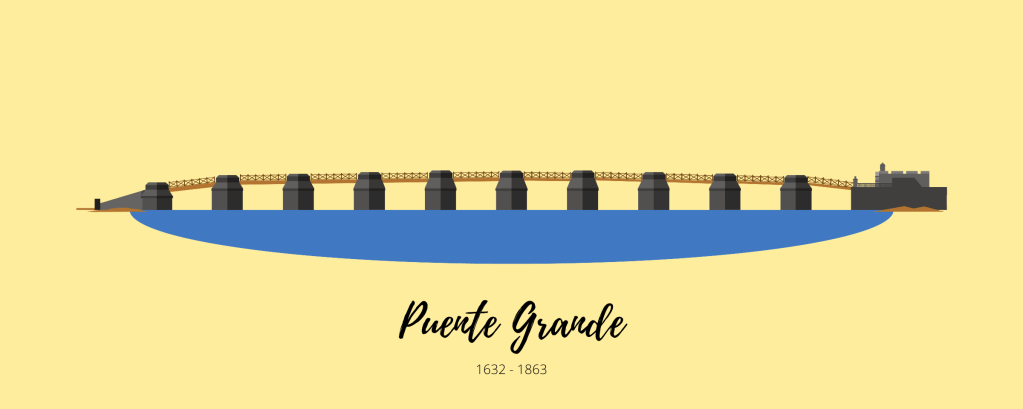
Called the Puente Grande, the first bridge to span the Pasig River (at a time when the river was wider than what it is today) had ten spans consisting of nine stone piers and a road surface made of wooden beams. It also had a small fort or a fortin on the Parian side of the bridge, built as an additional defense for enemies trying to storm the bridge to attack Intramuros.
The spans where upgraded into stone arches in the early 19th century. The bridge survived numerous earthquakes until it was damaged by the 1863 earthquake.
The bridge was demolished and replaced by a temporary pontoon bridge while a new bridge was being designed.

In 1875, work on the new bridge was completed. Called the Puente de España or Bridge of Spain, the new crossing had 8 spans, the two central spans being made out of steel trusses – a product of the industrial revolution. The new bridge was also decorated by elegant three-branched lamp posts, imported from Europe. Dr. Jose Rizal described the bridge as being built out of Belgian steel, and using Filipino labor, the only thing Spanish about it was its name. The new bridge was soon choking with horse-drawn vehicular traffic as commerce grew in the northern suburbs of Binondo, Tondo and Santa Cruz.
During the American colonial period, the roadway on the bridge was expanded to accommodate more vehicles and the new tranvia or trams. Severe flooding in 1914 damaged the central pier of the bridge. The city decided to build a more modern bridge to replace the aging Bridge of Spain. The damaged section was replaced by a temporary steel truss while work on a new bridge commenced.
The new bridge was built one block to the west of the old bridge, connecting Plaza Moraga and Calle Rosario to Plaza Lawton in the South.
Designed by Architect Juan Arellano, the new bridge was inspired by the Pont Alexandre III in Pari. It would be the grandest and most monumental bridge ever to span the Pasig River to this day. The bridge had three arches and was built using reinforced concrete. The neo-classical bridge had elegant balustrades and finials. Sculptures also adorned the piers and central arches of the new bridge. On the landings, Arellano designed four plinths (two on each side of the river) adorned with four sculptures known as the La Madre that depicted numerous aspects of the young nation.

The new bridge was completed in 1921 and was called Jones Bridge, after Virginia Representative William A. Jones who authored the Philippine Autonomy act of 1916. The Bridge of Spain was demolished soon after while Jones Bridge became a landmark of the city.
During the Battle of Manila in 1945, Japanese forces blew the elegant bridge into oblivion. The damaged central span was replaced by a temporary truss bridge until aid and reparations made building a new bridge possible.
The new post-war Jones Bridge was a far cry from its prewar namesake. It was basically an ordinary reinforce concrete bridge. Through the years, some attempts at beautification were done to this nondescript and dingy bridge. The 2019 beautification is so far the most successful and whole hearted attempt to recapture the grandeur of the prewar Jones Bridge and turn this blight of a bridge into a city landmark.
Quiapo Crossing
Just a few yards from the Binondo Crossing is another important crossing of the Pasig River – the Quiapo Crossing.
By the 19th century, the northern suburbs of Manila experienced growth and development. One such district is Quiapo. As mestizo and Spanish families relocated from Intramuros to the quiet suburbs of Quiapo, trade and commerce also followed. Reaching Quiapo at the time meant using boats or going all the way through Binondo and Santa Cruz.
IN 1849, work begun on a bridge connecting Quiapo to the south. It was spearheaded anad later operated by the Matia, Menchacatorre y Compañía. The new bridge was built using modern methods. Instead of masonry arches, the bridge was built as a suspension bridge, supported by four towers (two on both sides of the river).
The suspension bridge was opened in 1852, and was named the Puente de Claveria after Governor General Claveria. But in time it became known as the Puente Colgante, which means suspension bridge.
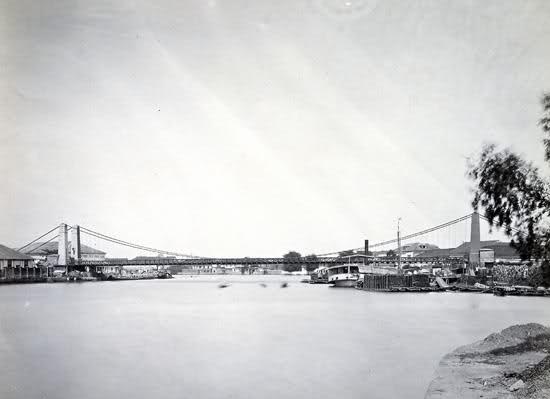
The Colgante was a toll bridge and was primarily used by pedestrians and light horse drawn vehicles.
Quaipo continued to develop as a commercial district as the 20th century progressed. Reaching Quiapo by car meant taking Jones Bridge or the steel truss Santa Cruz Bridge. The Colgante was already outdated and inadequate for the needs of the times.

In 1939, the Colgante was replaced by a new steel and concrete girder bridge. Named Quezon Bridge in honor of President Manual Quezon, the new bridge featured art deco towers and was inspired by the Sydney Harbor Bridge in Australia.
The bridge, like all the other bridges across the Pasig River, was destroyed by the Japanese during the Battle of Manila in 1945. Unlike Jones Bridge, however, Quezon Bridge was rebuilt similar to its prewar design.

Manila Jones bridge (2017) – before beautification 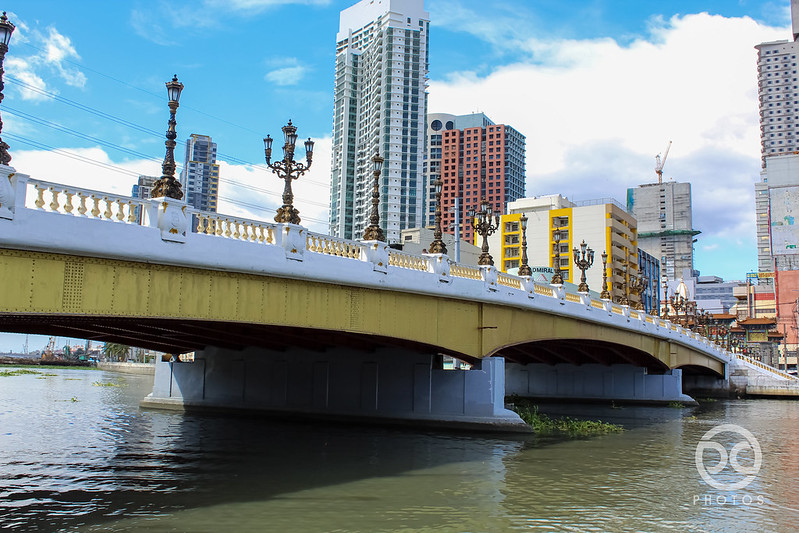
Manila Jones bridge (2019)
The bridge today is a busy crossing, connecting Taft Avenue (and in essence South Manila), to Quezon Boulevard – Lerma – España (and in essence Quezon City). Neglect, urban decay and natural wearing has forced the bridge in recent years to be continuously retrofitted.
Conclusion
These are just some of the more storied bridges which span the Pasig River. Today, there are 16 bridges which span the length of the Pasig River, with new crossings being built.
These crossings were primarily made to connect communities and to allow ease of access especially for trade and employment.
Unfortunately today, at least one bridge in the Pasig River is being built not out of necessity but as a means to glorify a foreign country. The Binondo-Intramuros Bridge is seen mainly as an unnecessary bridge which does more to glorify China rather than genuinely address issues of ease of access, since the Jones and Del Pan Bridges already accomplish the goal of connecting that section of South Manila. Not only that, the China Bridge is also going to funnel traffic into a historic district which aims to lessen the flow of vehicular traffic to foster a pedestrianization in an urban heritage spot unique to Manila.
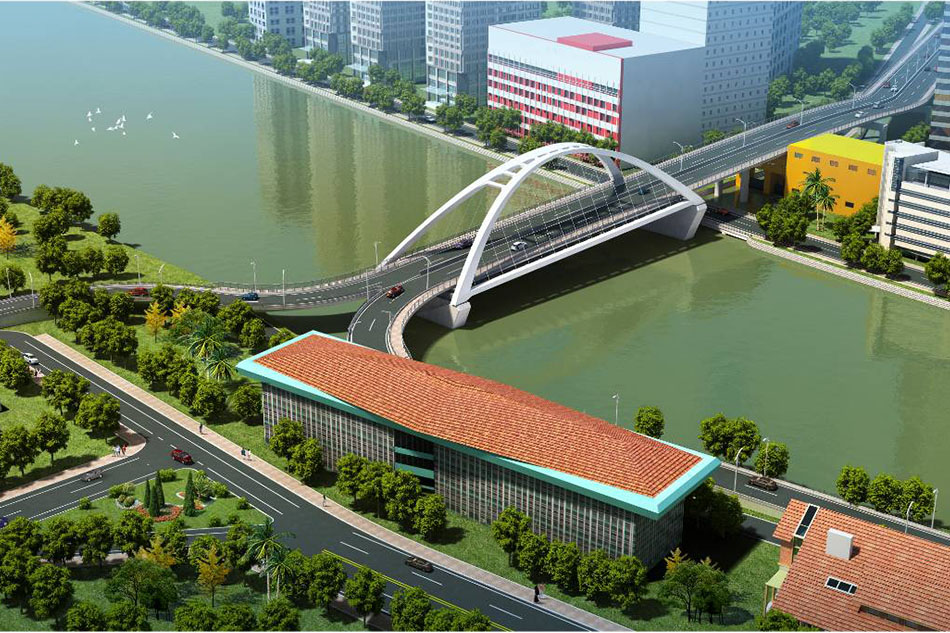
This vain glorious bridge project is a sorry addition to the collection of bridges, began by the Puente Grande in the 1600’s which are part of the long process of literally bridging communities to form a greater community.
Bibliography
Gopal, Lou. Manila Nostalgia. April 5, 2013. http://www.lougopal.com/manila/?p=472 (accessed August 10, 2020).
—. Puente Colgante – Insular Ice Plant. June 17, 2013. http ://w ww .lougopal.com/manila/?p= 732 (accessed August 10, 2020).
ABS-CBN News. Manila’s Jones Bridge: Bridging the past and present. November 26, 2019. htt ps://news .abs-cbn. co m/life/multimedia/sli deshow/11/26/19/manilas-jones-bridge-bridging-the-past-a nd-present (accessed August 11, 2020).
Sembrano, Edgar Allan M. COntroversila China Funded Binondo-Intramuros Bridge put on hold. May 27, 2019. http s://lifes tyle.inquire r.net/3364 82/controversi al-china-funded-binondo -intra muros-bridge- put-on-hold/ (accessed August 13, 2020).


 Renacimiento Manila
Leave a comment