

Renacimiento Manila
19 Aug 2020
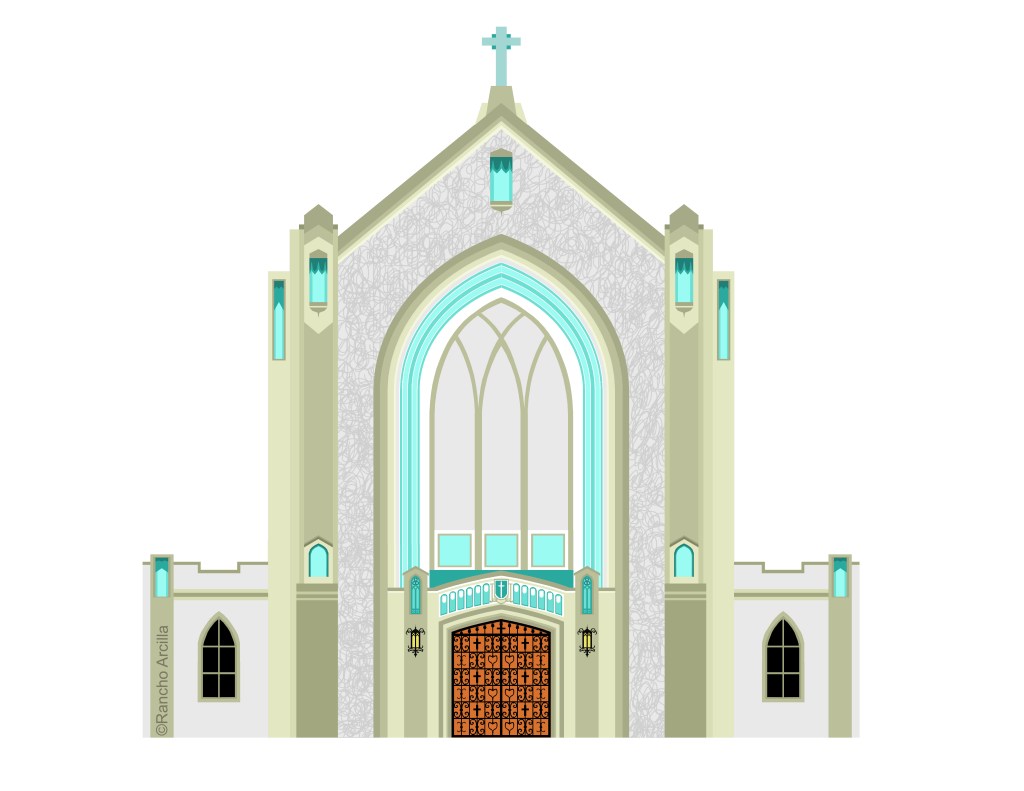
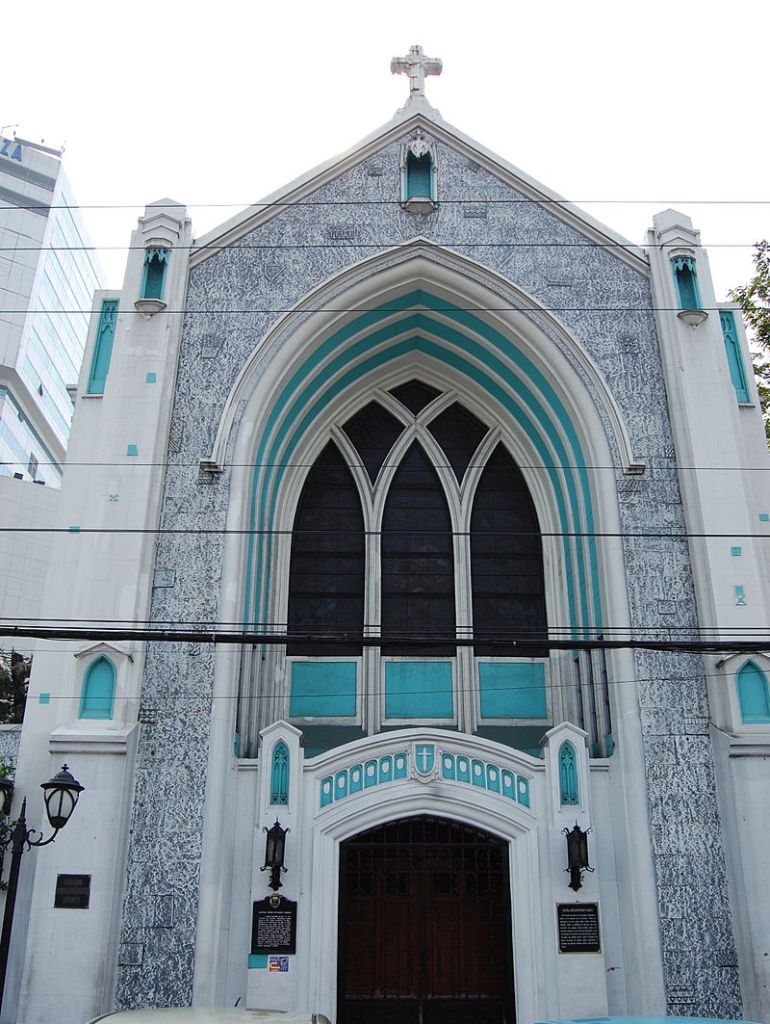
Established in March 5, 1899 as the Central Methodist Episcopal Church, the Central United Methodist Church that we now know today in Kalaw St. in Ermita is the first Protestant church in the Philippines. The present structure is the third methodist church building on site.

In October 1900 the Board of the Methodist Church purchased a parcel of land at the corner of San Luis St. (now Kalaw St.) and General Luna Street for the construction of their first church building in the Philippines.
Their first church building was constructed in 1901. We currently have no photos of the first Methodist building.
In 1906, the second church building designed by C.B. Ripley was completed. A photo of this second church may be seen below. Ten years later in 1916, the church was renamed as the Central Student Church.

Photo from Lou Goupal via Manila Nostalgia, 21 July 2013.
The present structure, the third church on site, was designed by Juan M. Arellano and was completed in 1932. During the Second World War, the structure was occupied by the Japanese forces and was subsequently destroyed during the Battle of Manila in 1945.
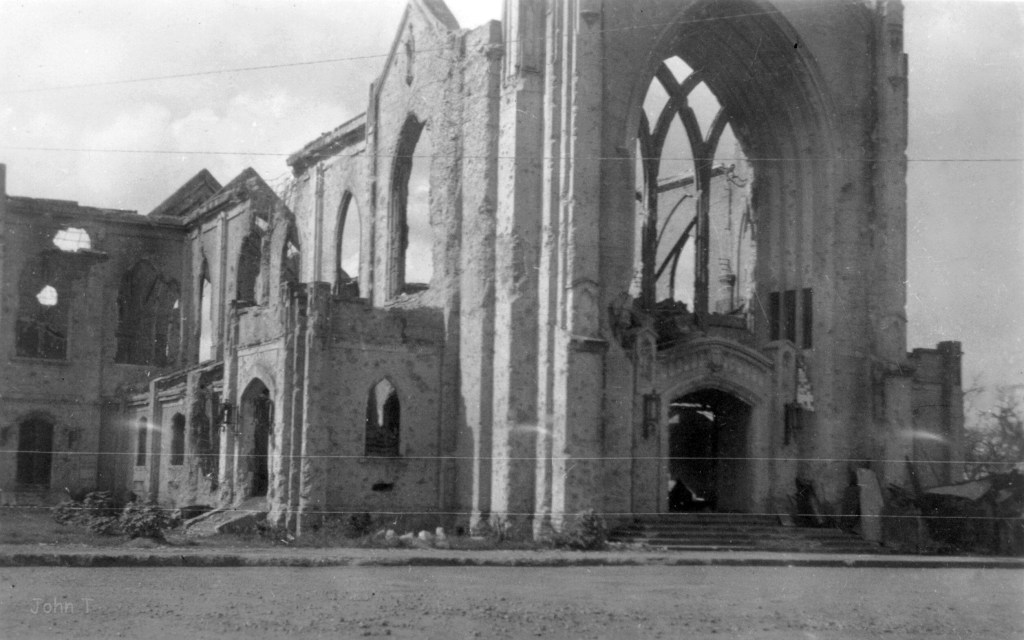
Photo from John Tewell via Flickr, 22 Feb 2020.
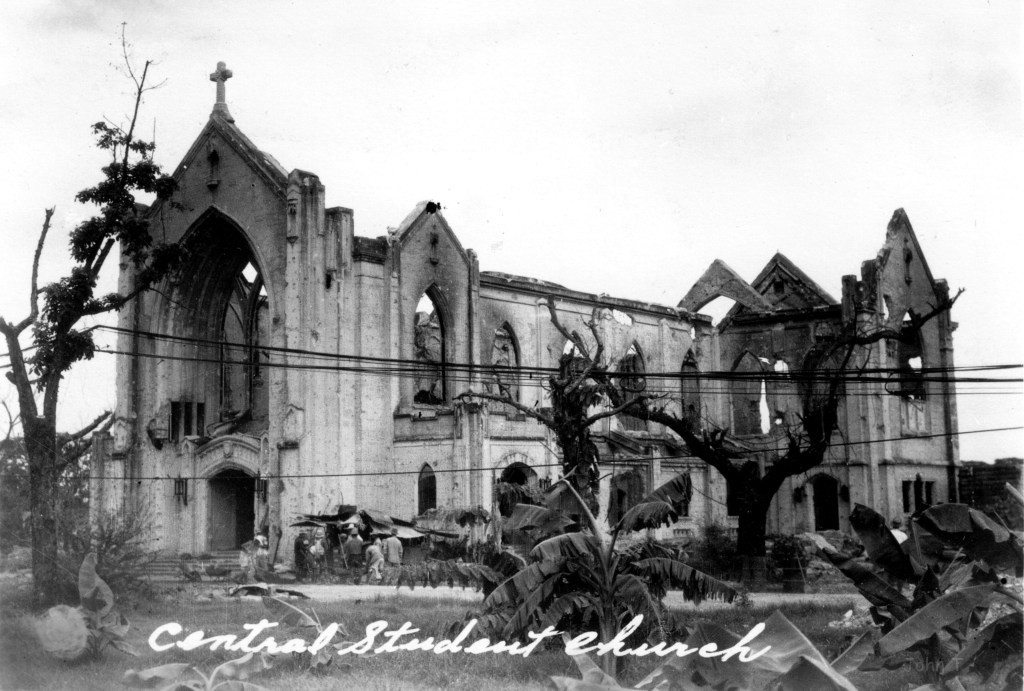
Photo from John Tewell via Flickr, 22 Feb 2020.
The structure was completely ruined after the Battle of Manila. Fortunately, the church was reconstructed after the war following its original design, and in 1949 it was inaugurated renamed as the Central Church.

Photo from Lou Goupal via Manila Nostalgia, 21 July 2013.
Today the Central United Methodist Church stands as one of the finest gems in the pantheon of Protestant heritage in the Philippines.
References
- Historical Marker installed by the National Historical Institute, 1985
- Goupal, Lou. (2013). Malate – Ermita District: Part 3 in Manila Nostalgia. Retrieved 19 Aug 2020 via lougop al. co m/m anila/?paged=32
- Wikimedia Commons (for public domain photos)

 Renacimiento Manila
Leave a comment