
Renacimiento Manila
23 Aug 2020
The Colegio de San Juan de Letran is currently the oldest school in Intramuros. It is a private educational institution of basic, higher, and advanced learning under the Filipino friars of the Order of the Preachers.

Contrary to popular misconception, the name of the Colegio de San Juan de Letran is not directly derived from a saint. The name of “San Juan de Letran” was derived from a building in Rome, the St. John Lateran Cathedral.
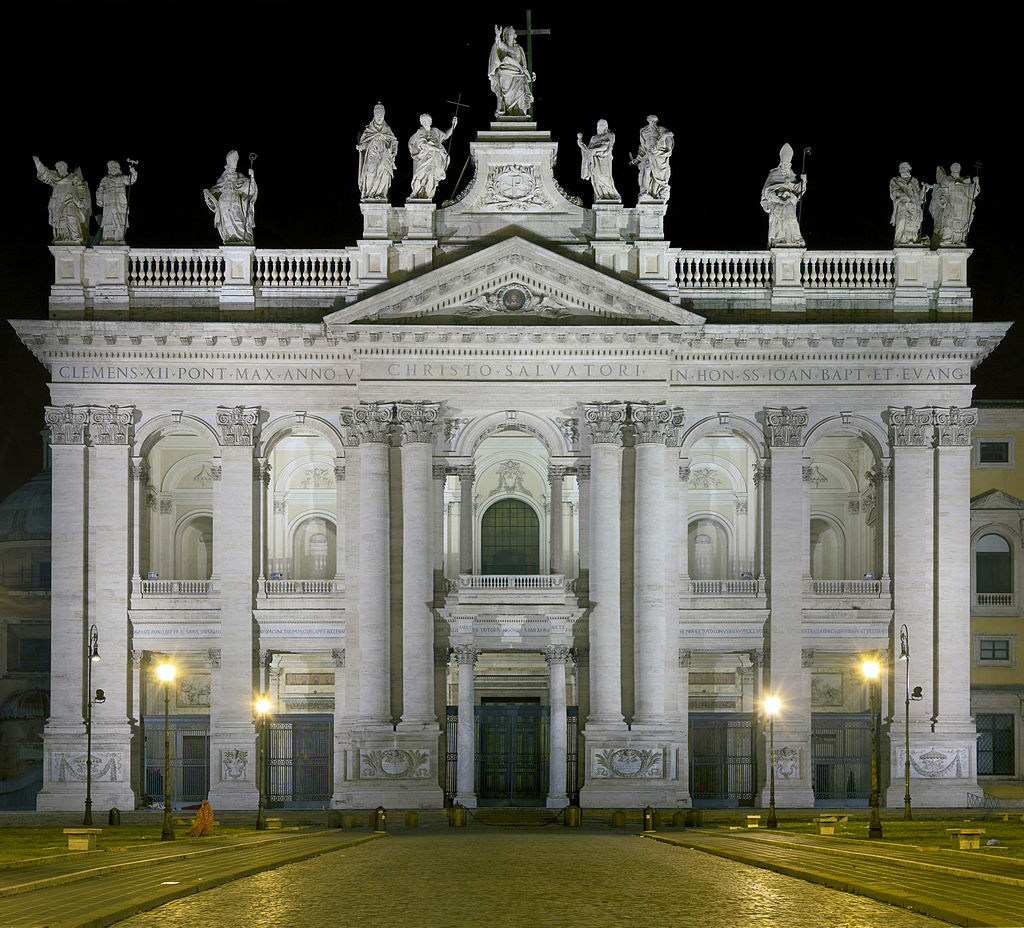
Photo from Wikimedia Commons.
Letran has two foundation dates: 1620 and 1630. The Colegio de San Juan de Letran as we know it today was formally established in 1630 upon the union of two pre-existing institutions which were both established in 1620–the Colegio de los Niños Huerfanos de San Juan de Letran and the Colegio de Huerfanos de San Pablo y San Pedro.
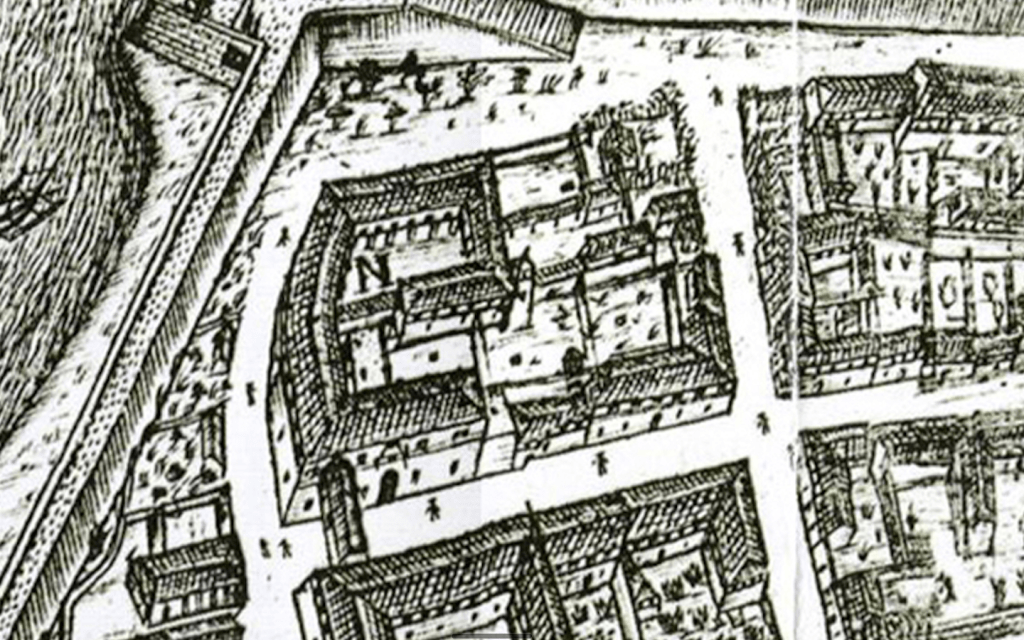
Letran was not original to Intramuros. The school first held campus in the suburbs outside the walls of Intramuros, in the site now occupied by Park n’ Ride in Lawton, Manila. It was in 1668 when it first settled on the lot it now occupies in Intramuros.
In 1690 Letran was declared ecclesiastical college, while in 1865, the colonial government categorized it as a First Class school. Apart from the University of Santo Tomas, there were only two First Class schools in the Philippines: Letran and the Ateneo Municipal de Manila. It’s First Class status allowed Letran to operate courses leading to the degree of Bachelor of Arts.

In 1930 Letran celebrated its 300th Anniversary.
Plans for expansion after the Tercentenary were developed. With congestion becoming a chronic problem, it was decided that the old bahay na bato type main building must demolished in favor of a four-storey modern structure. In 1937 this new building was inaugurated.

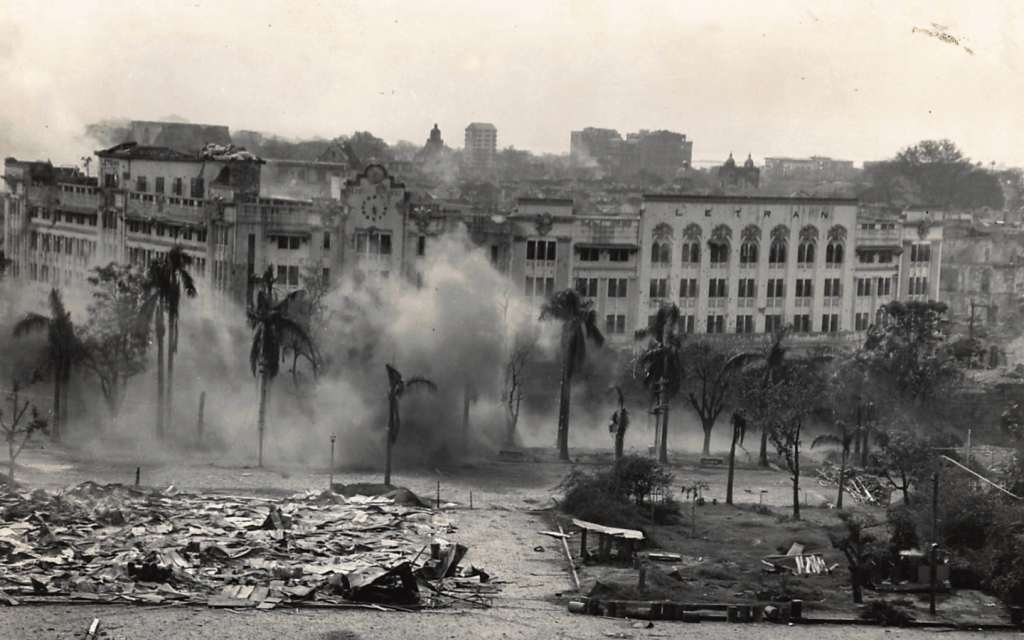
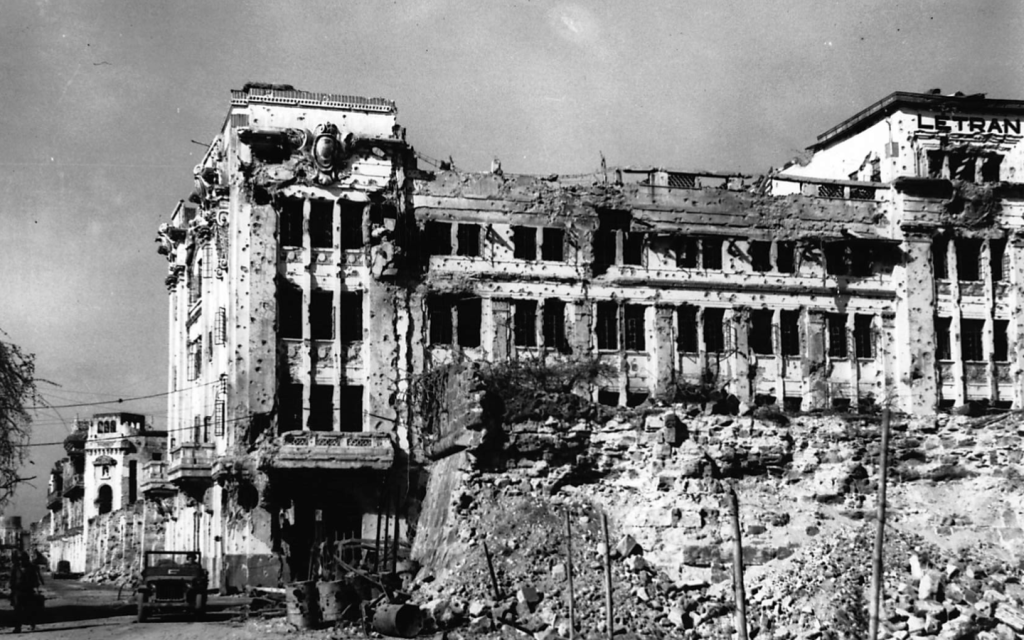
During the Second World War the school suffered many damages. Fortunately, the main building remained relatively intact. In 1946 the ruined edifice was restored to its former prewar glory.
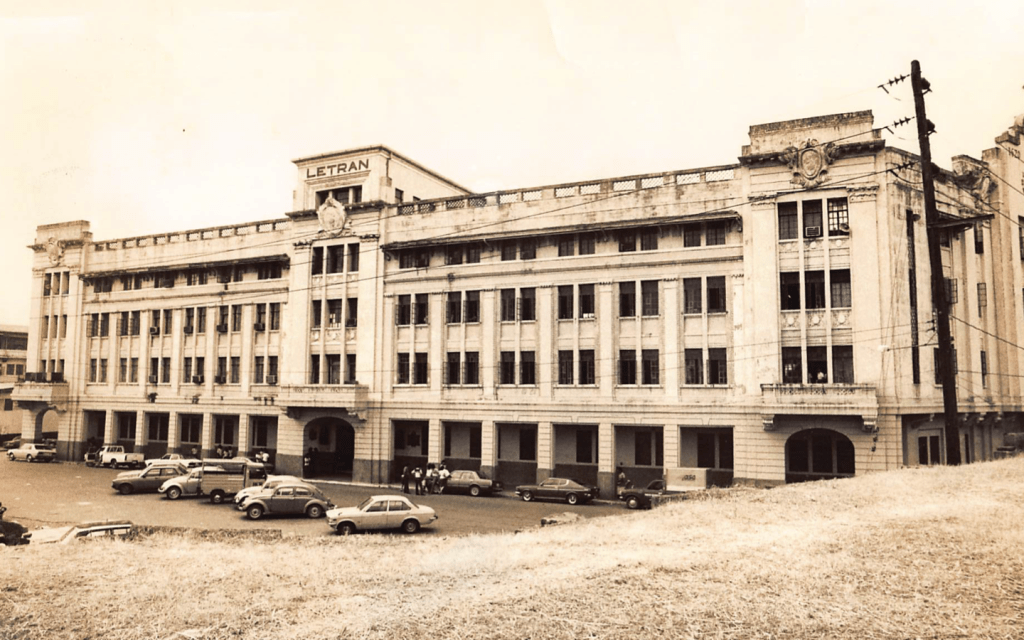
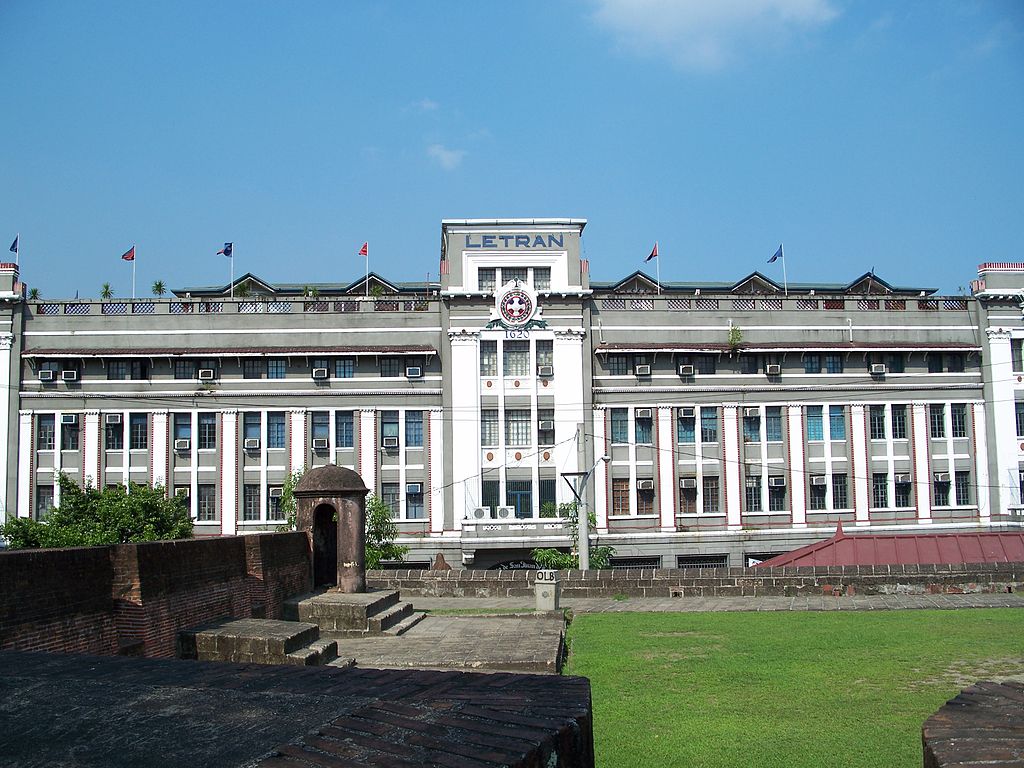
Today the Colegio de San Juan de Letran is one of the finest schools in the country. Its legacy in the history of the development of education in the Philippines is sterling, and its heritage in Intramuros is peerless.
—-
References
Torres, Jose Victor (2005). Ciudad Murada. Manila: Intramuros Administration.
Javellana, Rene (2003). In and Around Intramuros.
Photo sources
Intramuros Administration Archives
Wikimedia Commons

 Renacimiento Manila
Leave a comment