
Arch. Carlos Cucueco III
10 Sept 2020
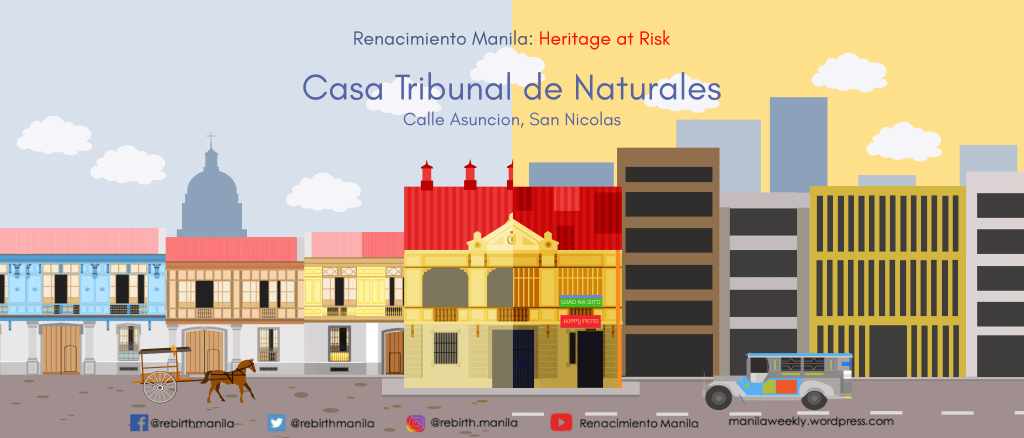
Heritage at Risk: Casa Tribunal de Naturales
Manila’s cultural heritage remains at risk and in grave danger. As the city continues to destroy treasures and icons such as the Sunico Foundry, American Chamber of Commerce among others, Renacimiento Manila would like the public to notice other heritage at risk – treasures that may soon vanish if we do not cherish and fight for their place in our city.

During the Spanish Era, the Casa Tribunal served as the prototype to the municipal halls that we know today. Each town has its own Casa Tribunal but in the case of the two arrabales beside Intramuros, Binondo and Santa Cruz, they were provided multiple Casa Tribunales based on the gremio (guild) system. The gremio system is composed of three classes – natives, Chinese mestizos and pure-blooded Chinese. This was made for easier management especially with tax collection.
Throughout Manila’s arrabales, only Binondo’s Casa Tribunal de Naturales in Calle Asuncion remains as of today. The current structure was repaired after the 1880 earthquake with the design of the Municipal Architect of Manila at that time, Juan Jose Hervas. He was also known as the designer of the Tutuban Train Station, the Hotel del Oriente and the La Insular Building.
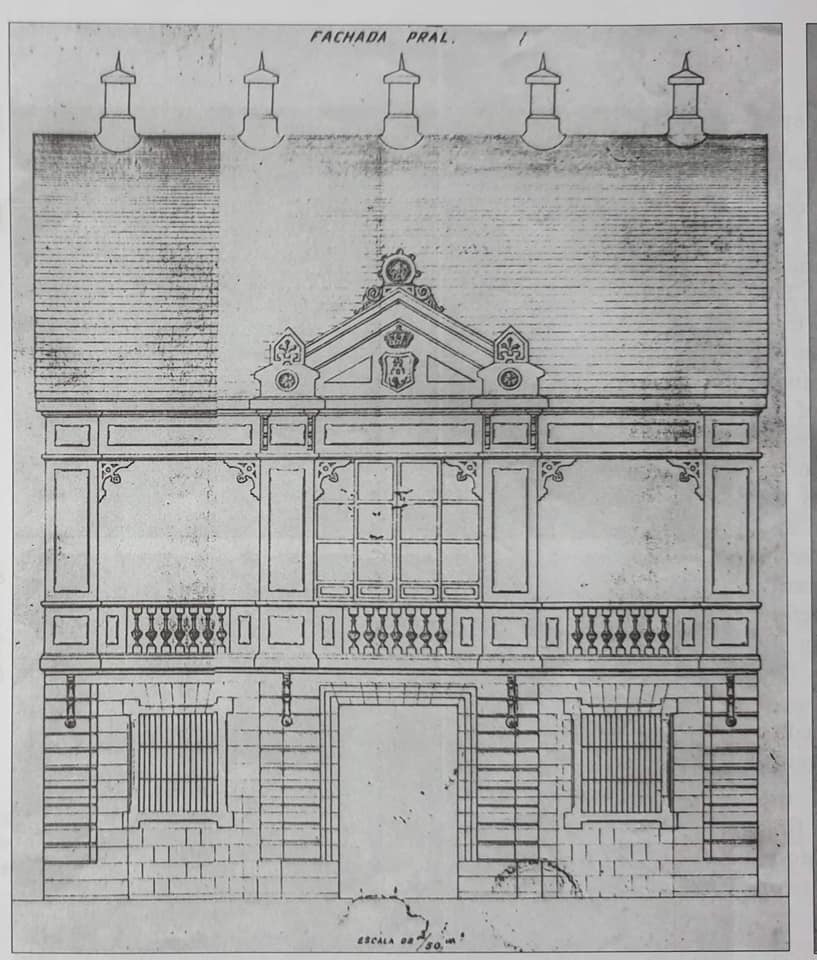
This Casa Tribunal contains spaces for executive and judicial functions such as the office for the gobernadorcillo, the court room known as the Sala de Justicia, rooms dedicated for archives and arms storage, and jail cells called calabozos. The façade of the building is composed of two storeys with the lower storey made with stone and the upper using wood. The façade also has a pediment showcasing the Spanish colonial seal, thus signifying its function as a government establishment. Ventilation of the building was improved with the utilization of air vent stacks.
Based on photographs taken during the last few years, the Casa Tribunal de Naturales seems to be under a private owner but does not have any occupants. The structure has a high possibility of demolition based on the trend of nearby buildings which has become modern mid-rise structures. An alternative future is the reconstruction for adaptive reuse of this historical edifice. This structure can be reused as a private residence, a cultural museum or as a barangay hall.
Text by Arch. Carlos Cucueco III
Illustration by Diego Gabriel Torres, Renacimiento Manila
All Rights Reserved.
References
Mengay’s Memoir (April 19, 2019) Retrieved from:
fac ebook . com /979716 23543 9748/ posts /casa- tribunal -de-natura les-loca ted-at-calle-asuncion san-nicolas-in-1886-plans-we/26001 14083 399947/
Center for Filipino Architecture (August 30, 2020) Retrieved from:
fac ebook . com/story . php ?story_f bid= 139515 584 507271 &id= 1088 192842 43568/
Traveler on Foot “San Nicolas District” (Feb 5, 2019) Retrieved from:
traveler onfoot . wordp ress . com/20 19/ 02/ 05/san-ni colas-di strict
The Urban Roamer “Memory and Modernity in San Nicolas District” (March 30, 2013) Retrieved from: theurban roamer . com/ mem ory-and-mo dernity- in-san- nico las-district

 Renacimiento Manila
Leave a comment