

Beatrice Ann Dolores
13 Sep 2020
How Important is the Pasig River?
Much like the blood coursing through our veins, fresh waterways like the Pasig River and its estuaries serve a similar purpose in supporting life on the areas they serve. History has proven this, but unfortunately, we took it for granted given its present state. The more that we acknowledge our interconnectedness with nature, the more that we include it in our efforts for progress and development.
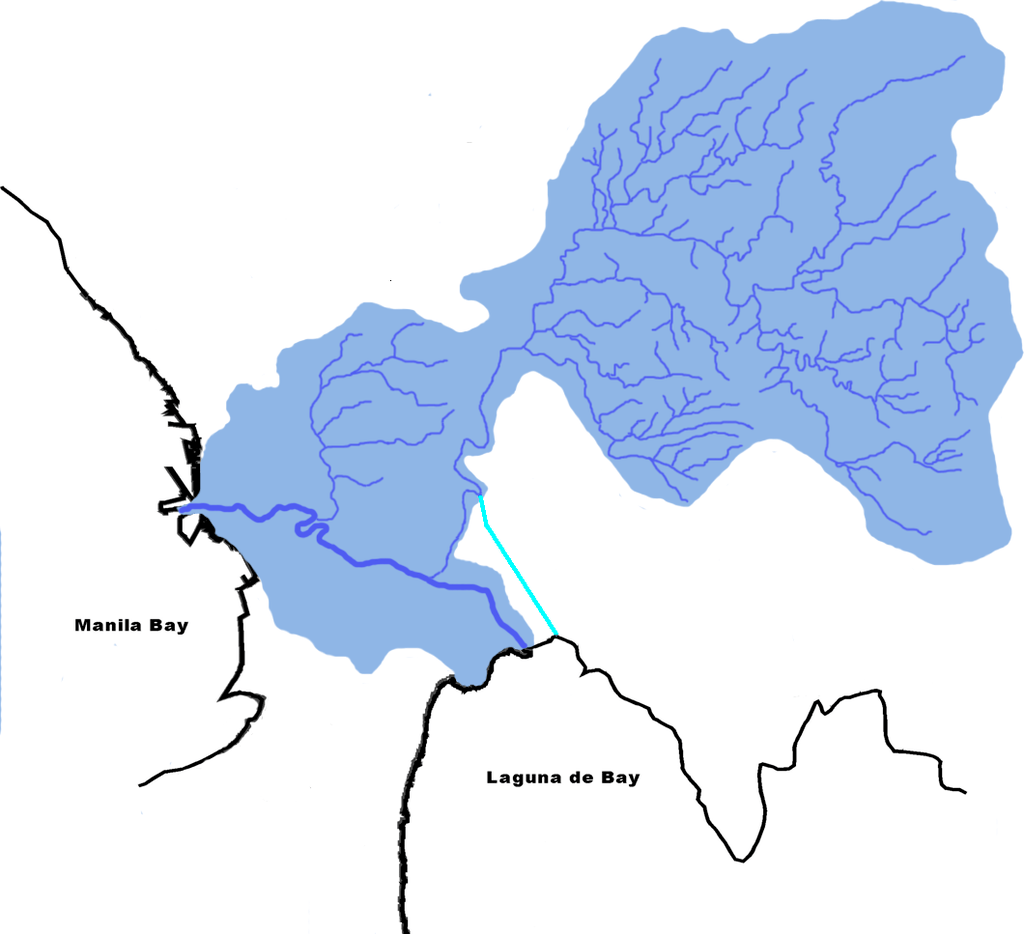
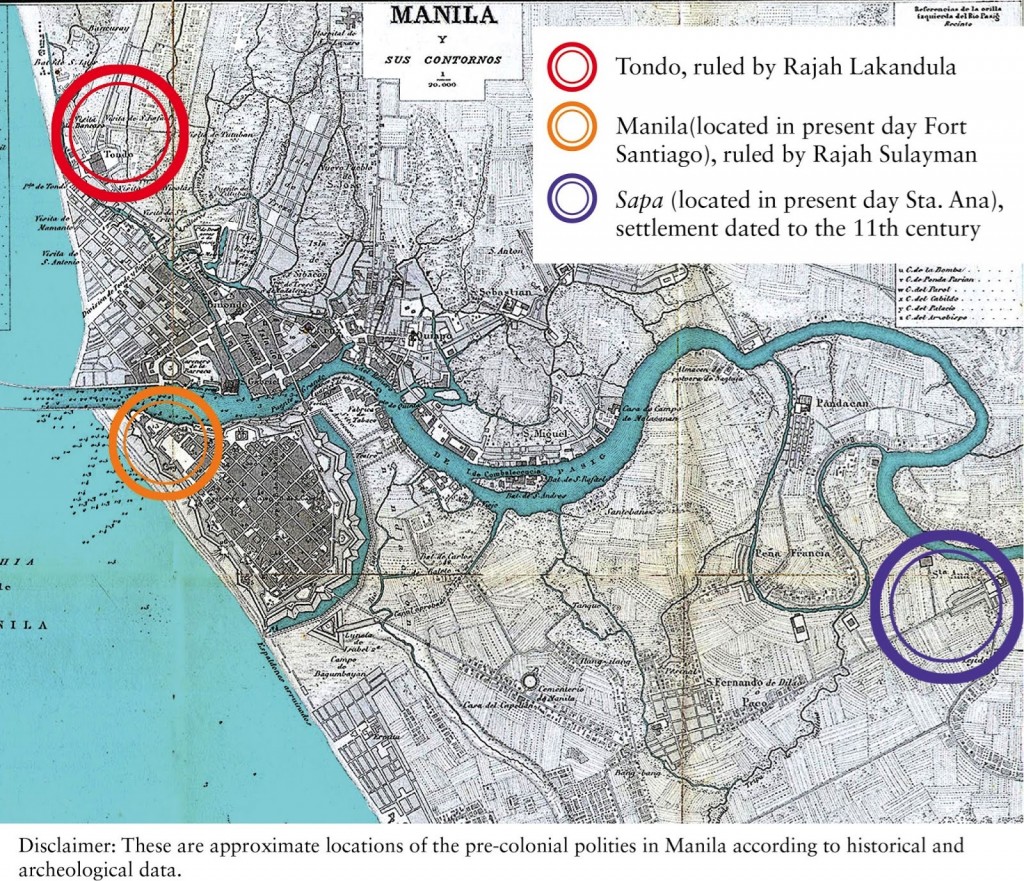
Pre-colonial settlements in Luzon called “polities” thrived along this 25-kilometer stretch of water that connects Laguna de bay to Manila bay. And together with the polities of Tondo, Maynila and Sapa a.k.a. Namayan (which territory stretched from now San Juan city to Sta. Ana – both along the same river), there’s also the settlement of Pasig from which the its name is derived. As we are well-familiar with, these settlements have been powerful at their own right with their own political structure, relations, wealth, and trade. The most notable here is the Tondo historical polity located in the northern part of Pasig River which is even written at the oldest historical record of the Philippines: The Laguna Copperplate Inscription.
During the Spanish Colonial Period, on the same river docked the revolutionary Manila Galleon trade – the exchange of valuable resources coming from East Asia and the West which placed the Philippines at the center stage of global maritime history (15th to 18th century). Going past the Fort Santiago, these magnificent ships docked along the Pasig River, specifically by the Customs House or Aduana/Intendencia (now ruins) in Intramuros. For the first time in history, this 250-year of maritime trade opened the world to a larger expanse of wealth which easily turned Manila into one of the greatest entrepots of its time, together with the diversity of culture, resources, and race.

They caught the location of these eastward blowing winds called “westerlies” which took them across the ocean.
Source: Wikimedia Commons.
It is important to note that the Philippines brought coconuts to Mexico and South America, that is why they now have these plantations. The Manila Galleon Trade also brought to our part of the world the silver mined from the richest silver mine: in a 4000-meter high mountain called Potosi of Bolivia. We also got peppers, peanuts, pineapple, sweet potatoes, cereal, and beans while they got rich silk, ivory, porcelain, and other goods coming from China’s Ming Empire. This vast trade only got cut off when the Mexican War of Independence broke out in 1815.
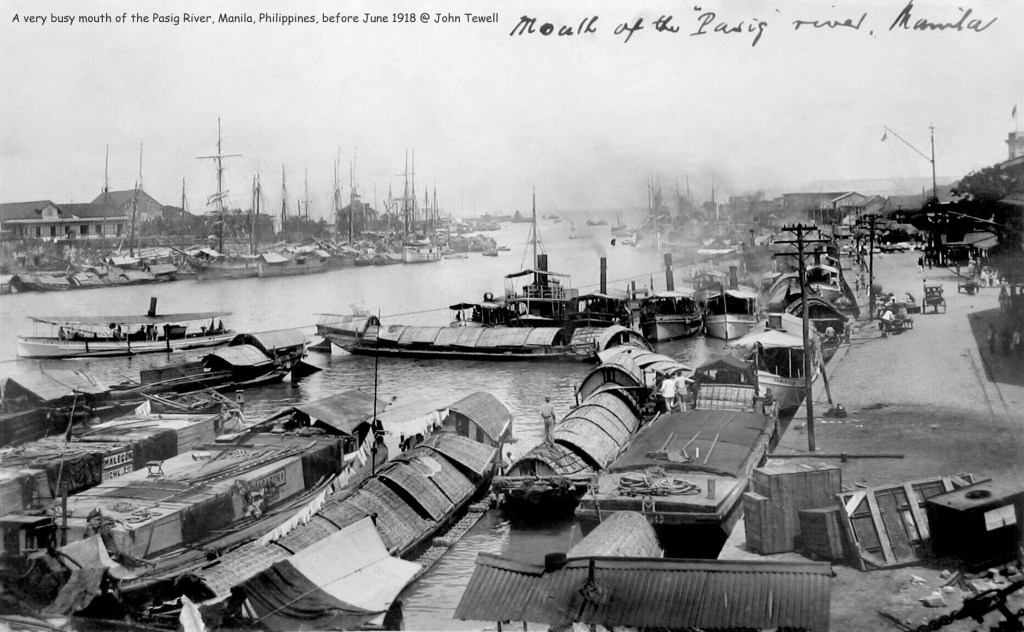
However, that is only one part of the happenings in the Pasig River. The river was a prosperous avenue of activity because it was the most efficient mode of transportation during a time of lesser roads, mountains, plantations, and horseback riding. Together with the large Galleon ships, there were numerous kinds of watercraft that traversed the river. Passenger bancas: a smaller type of boat to transport people from one place to another, cascos or boat huts which transported goods and also served as homes of numerous families, and even coconut rafts floated along the river because its weight isn’t within the carrying capacity of cascos, were all prevalent during the time. There used to be crocodiles, nila plant from where Maynila was said to be derived from, duck pens by the riverside, washing of clothes, and even bathing of both humans and carabaos on the same waters.
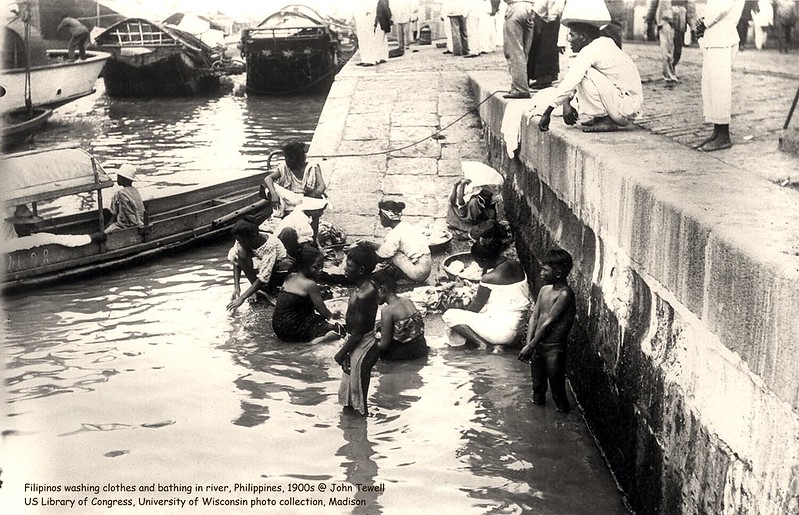
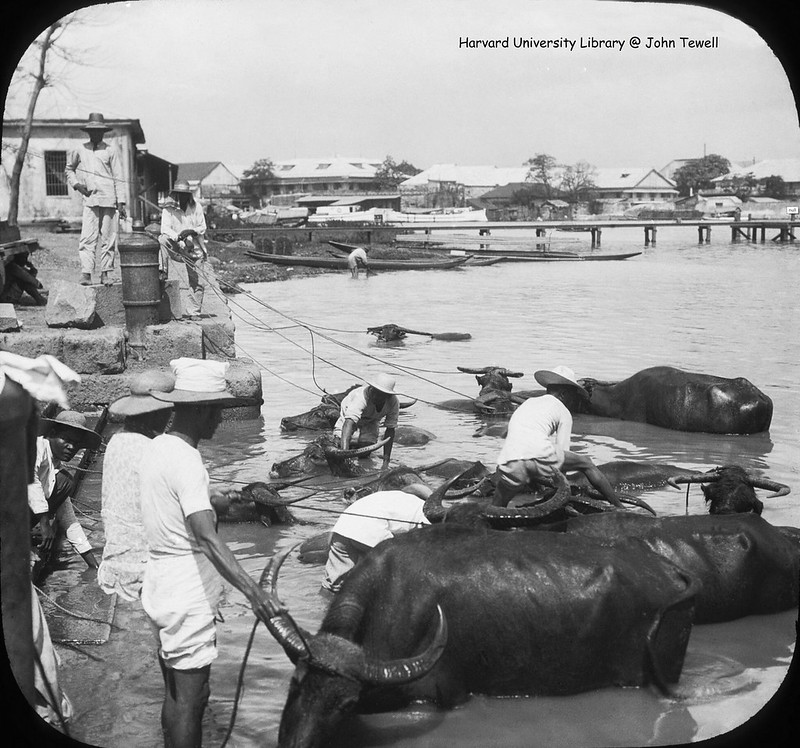


Bottom: A busy Pasig river focused on cascos (barges), which served as goods transport & dwellings of some families.
Photos courtesy of John Tewell (Flickr).
The elites even situated their houses on the riverside (like the Malacañang Palace, and Lawton’s residence) because of the grandeur and tranquility of the Pasig river. Banks also situated their buildings along the waterways which boosted the vista or the visual landscape of the stretch, just like how properties lined their hotels and accommodations along the Manila bay.
Fishing was even a thing before the river became heavily polluted after WW2 – not because of the war’s debris per se, but because of how the city struggled after the war, with informal settlers inhabiting the riversides and industrial wastes directly dumped on this very important river. Now, water lilies and catfish are the main living matters capable of thriving in the Pasig River. There are also huge tilapias and other fishes but according to Fish Tissue Analysis by the PRRC (Pasig River Rehabilitation Commission), these aren’t suitable for human consumption especially with the heavy fecal coliform present in them. Sludge, and all forms of waste (even human bodies) are present in the river.
How do we move past this? Several cities from all over the world also suffered from pollution problem, but have invested in revitalizing their rivers and waterscapes as an acknowledgment of their value. The 8.4km creek called Cheonggyecheon for example serves both as flood control and public amenity in Seoul, South Korea. Even the Chicago River and New York had ridiculously polluted rivers but have transformed their respective rivers for the benefit of their own cities. In terms of addressing how to clean these sludge in cooperation with the efforts of PRRC on removing wastes, there is already an existing technology here in the Philippines which is actually being used on several estuaries: a feat of biochemical engineering called E.M. Mudballs which eats up the sludge and naturally revitalizes the water ecosystem.

Photo courtesy of the author. All rights reserved.
An example of a success story with this treatment is Estero de Uli-Uli of Malacanang Compound, San Miguel, Manila: a collaborative effort of the private sector, PRRC, and the residents themselves. The residents and the government cleaned up the MSW (municipal solid wastes), while the private sector and NGOs (non-gov’t organizations) provided funding and the technology of these fermented mudballs. During the 2016 volunteering I had experienced, it was not as clean as the picture below, but there was barely no stench anymore. This small stretch of estero needed 2,000 mudballs as treatment one summer (sunlight is needed to generate more microorganisms to eat the sludge). There is also a different solution by Dr. Marino Orikawa, PhD, but these aforementioned solutions are probably just some of the readily available solutions out there.


Considering all these, especially the rich history and significance of the Pasig River, may our future developments include Pasig River as an asset and a bountiful resource rather than a blight. It can also help alleviate the traffic congestion of the metropolis. It has proven its value and capability to make Manila, and even the Philippines a global powerhouse pre-Industrial Period, so what’s stopping our modern society in bringing back the glory of the Paris of Asia?
Text by Beatrice Ann Dolores
Illustration by Diego Gabriel Torres
Renacimiento Manila
All Rights Reserved.
References
Giraldez, Arturo. The Age of Trade: The Manila Galleons and the Dawn of the Global Economy (Exploring World History)
Digital Manila
Emro Japan
Filipiknow
John Tewell
Manila Times – Old Manila Galleon
Manila Times – Philippines, Globalization
Nas Daily
Philippine Information Authority
Wired

 Renacimiento Manila
Leave a comment