

Angela Piguing
3 October 2020
“Be proud that MaSci has a one of a kind old building,” the teacher says, reminding the Grade 7 students to not vandalize within the campus.
Among the five buildings in Manila Science High School, the teacher refers to the H.A. Bordner Building. MaSci, as it is fondly called, celebrates its founding anniversary every October, a tradition that commemorates the school’s history, first as the “pilot science high school.” Yet aside from the fun and games in the festive Foundation Day, there stands a silent witness, having gone through the two World Wars and, luckily, has retained much of its original structure.
Who was H.A. Bordner?
The initials stand for Harvey Albert Bordner, an educator and public school administrator. He worked in the Philippines from 1902 to 1936. He was one of the Thomasites with his wife Maude Ethel Martin whom he married in 1902—and they were involved in tasks such as setting up a new English-based public school system and the training of Filipino school teachers.
Harvey was assigned Superintendent of Bulacan public schools in 1906, and in 1915 he became Superintendent of the Philippine Normal School and subsequently took the position of the Superintendent of Manila City Schools.
On the other hand, his wife Maude taught English, and as a teacher at the Malolos Intermediate School in Bulacan, the young Guillermo E. Tolentino received his first lessons in drawing. The latter would later on be known as the National Artist of the Philippines for Sculpture, with the UP Oblation as one of his well-known works. The Oblation originally stood at the site of the University of the Philippines Manila Campus, a block away from the H. A. Bordner building.

For 34 years, the Bordners served actively as public school teachers in the Philippines. In 1936, Harvey retired due to ill health and thus returned home with his wife to Indianapolis. A year later, Central High School (or sometimes called Central-Bordner school) which occupied the eponymous building was renamed as such. Harvey died in 1938.
H. A. Bordner: Gabaldon or not?
The H. A Bordner building was designed by William E. Parsons, and was constructed in 1914. It was then known as the “Central School”, the first established public school for the children of American Citizens.
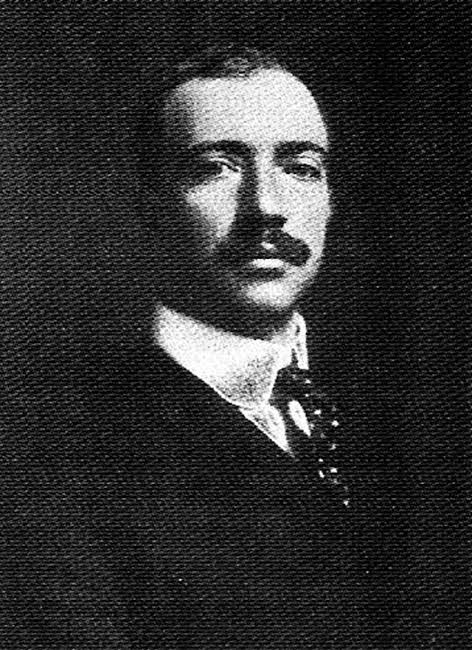

Gabaldon also has an image on Wikimedia Commons.
William E. Parsons was also the architect behind the “Gabaldon School Buildings”, a term for standardized public school buildings built from 1907 to 1915. The architectural plans drew key elements from the vernacular bahay kubo and bahay na bato. Aside from the Gabaldons, Parsons was the architect behind the Manila Hotel and the Philippine General Hospital.
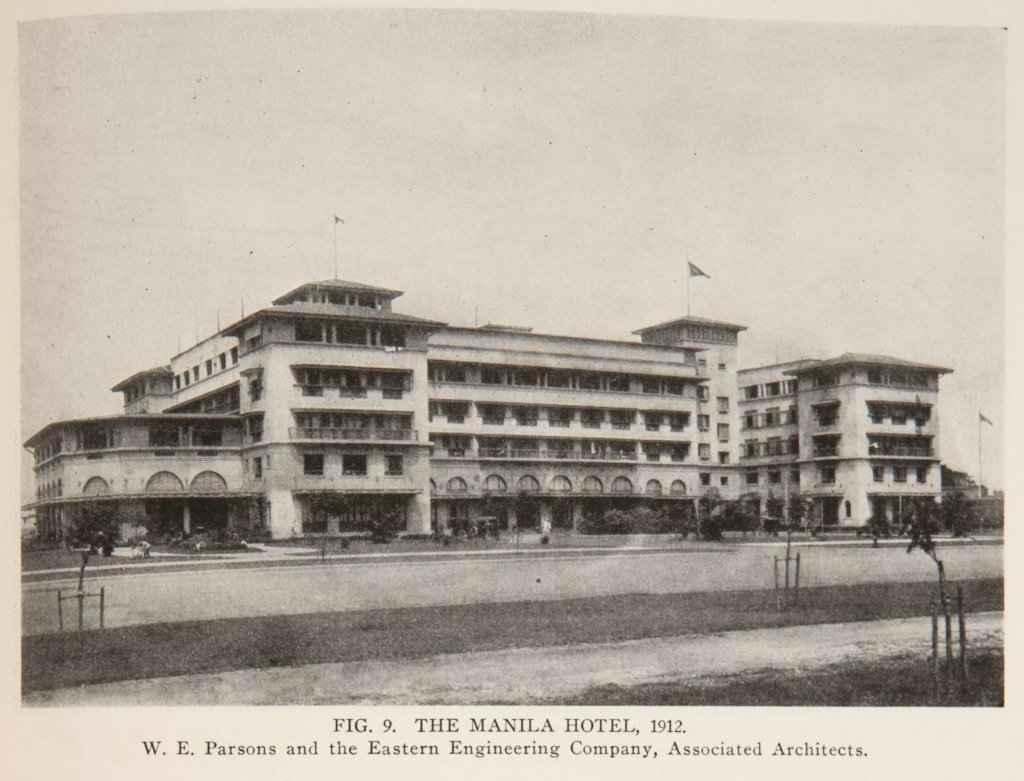
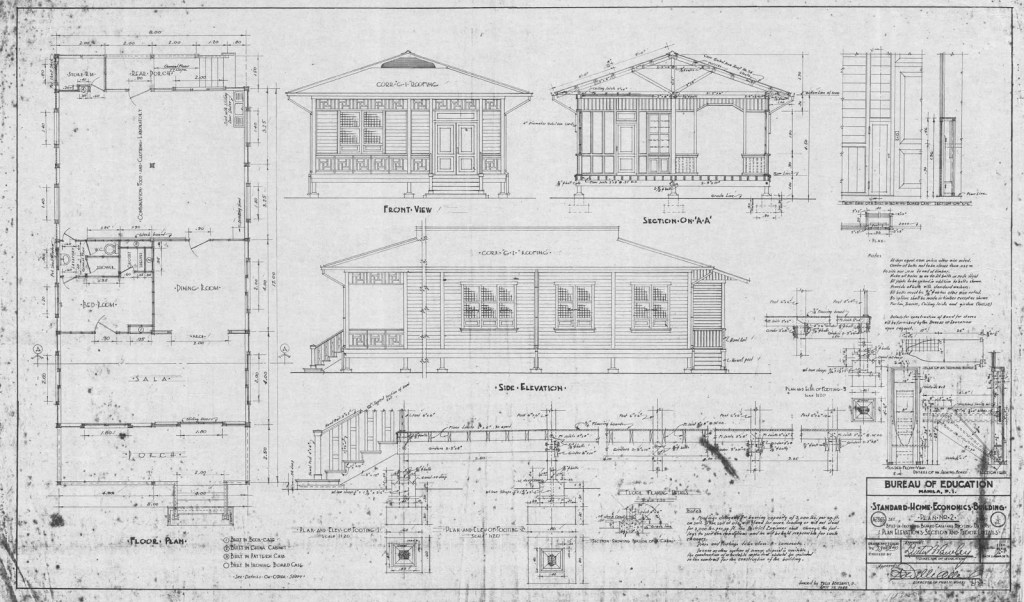
Photo sources: Left – “The work of William Parsons in the Philippine Islands” Newberry Publications; Right – Retrieved from Restoring the Gabaldon School Buildings in Cebu by Troy Elizaga.
Meanwhile, the Gabaldon school buildings are named after Isauro Gabaldon who wrote the legislation Act No. 1801, better known as the Gabaldon Law. From this, public schools were built during the American colonial era following Parsons’ architectural plans, and with the public school system, Filipino children are granted access to education, much like how the Spanish used religion to colonize.
Gabaldon school buildings and other structures that Parsons designed share similar characteristics, such as symmetry, high arches and big windows, for continuous passive ventilation, and translucent concha or capiz shells to reduce glare given the tropical nature of the Philippines. The use of reinforced concrete over hardwoods is also observed.
Key elements that form a Gabaldon school building also include:
- Typically one or two floors; the ground floor is elevated
- Diagonal paths/roads radiating from central hubs (H or U shaped plans, thus classrooms are connected by corridors)
- Fascia with designs that range from “geometric-minimalist” to more intricate patterns
- A “tongue and roof” wooden flooring
- “Corrugated iron roof” sheathing
- Classrooms with two swing-out doors
- A semblance of a bahay na bato and/or bahay kubo
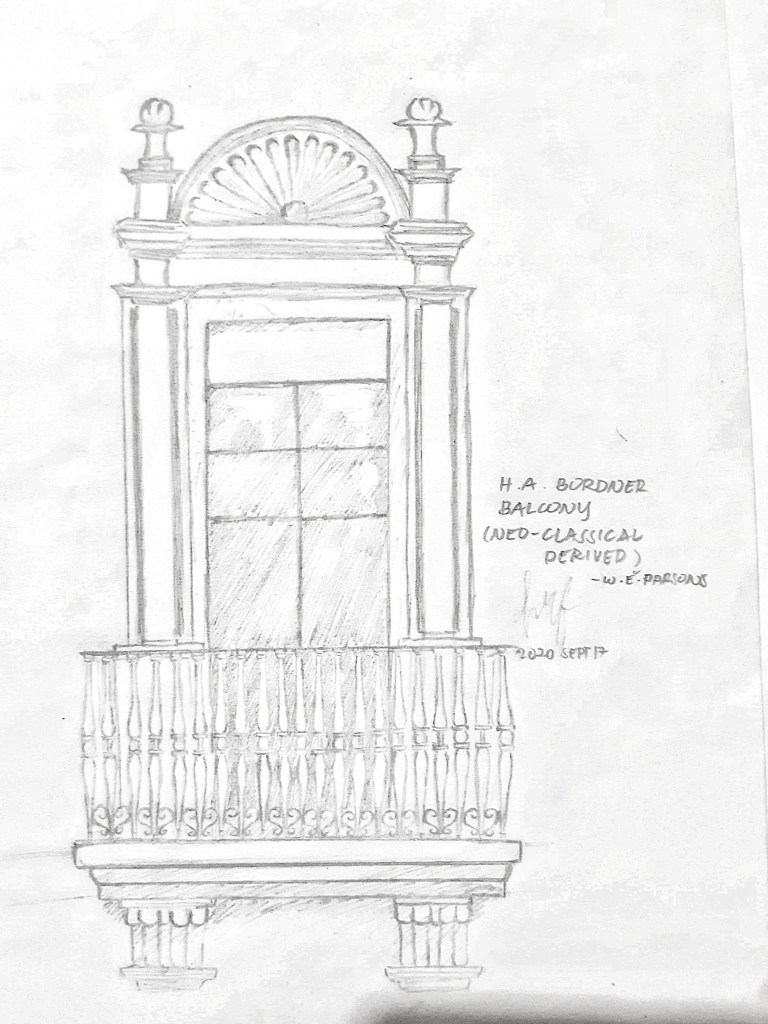
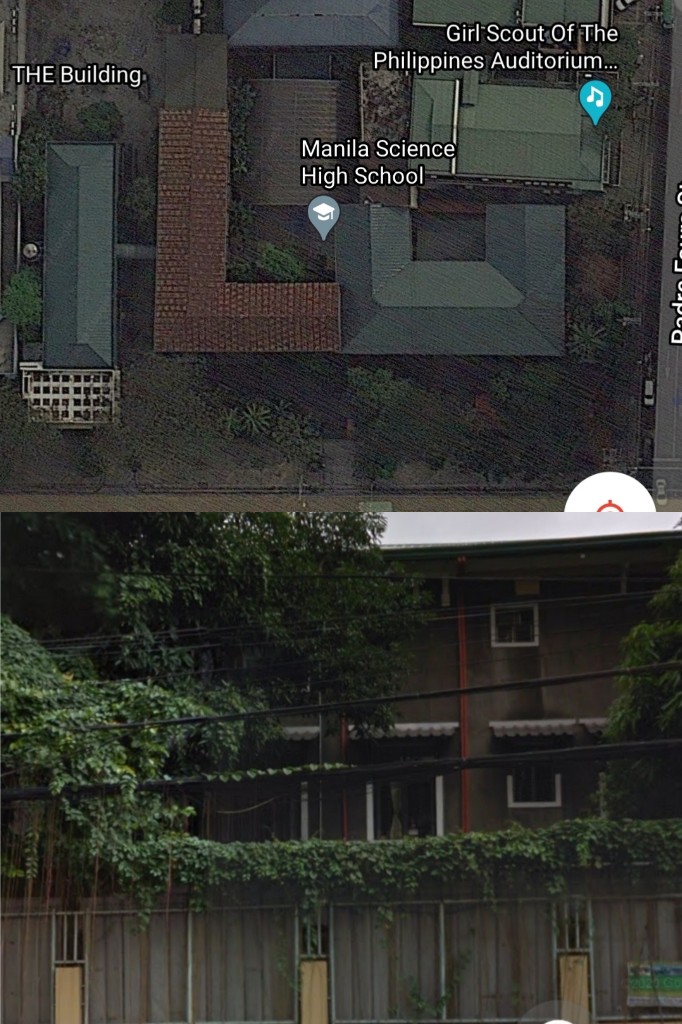
Photo sources: Left – an illustration by Angela Piguing, under CC-BY-SA 4.0. (You may use it provided you cite the creator and release a deriv under the same license.) Scan enhanced by Andrei Alejandro. Right – taken from Google Maps Street View.
Is the H. A Bordner building a “Gabaldon Building”? Architecture-wise, the building follows much of the key elements (a U-shaped plan, a corrugated iron roofing, and tongue and roof floorings). Upon observing archival images of the building, it used to have capiz shell windows which are either awning or are located at the ground floor’s arched windows. However, Bordner Building has 3 floors, and unlike most Gabaldons, the overall style resembles less of the vernacular; its style is more akin to other buildings designed by Parsons himself such as the Philippine General Hospital which is a block away. If H. A. Bordner is classified as a Gabaldon building, its design is not mass-produced.


Left: Awning capiz shell windows, most likely a classroom at the second floor; Right: Central School students posing for a class pic in 1921.
Photos from Lou Gopal of Manila Nostalgia.
On checking if Bordner Building is classified as a Gabaldon building by law, firstly, the building presently does not have a historical marker as a heritage building of its own. There exists RA No. 11194 or the “Gabaldon School Building Conservation Act” that requires the rehabilitation of existing Gabaldon buildings, with a provision stating for an inventory of all existing Gabaldon buildings; however, it is likely that this inventory is publicly inaccessible. Third, if we are to take a sneak peek at some bidding documents of the Manila LGU for the rehabilitation of school buildings, mention of structures in the MaSci campus is rather generalized, at least to the extent of documents for public view.
Hence, is the H.A. Bordner Building a gabaldon or not? This remains an open question, but this also should not undermine the heritage significance of the structure which was an innovation at the time of its construction.
A testament of regeneration and purpose
The H.A. Bordner is a good example of conservation-led regeneration. The building may have undergone several changes through rehabilitation, but overall it retained much of its identity, such as the facade and the interiors that kept the high arches and the twin staircases. Even with modern techniques such as replacement of the awning capiz shell windows with steel casement windows, retrofitted lighting, and repaints had been applied, the building also stands as a good example of tropical architecture which can be considered as an innovation brought by the Americans, which at that time paved the way for Filipino architecture to evolve.

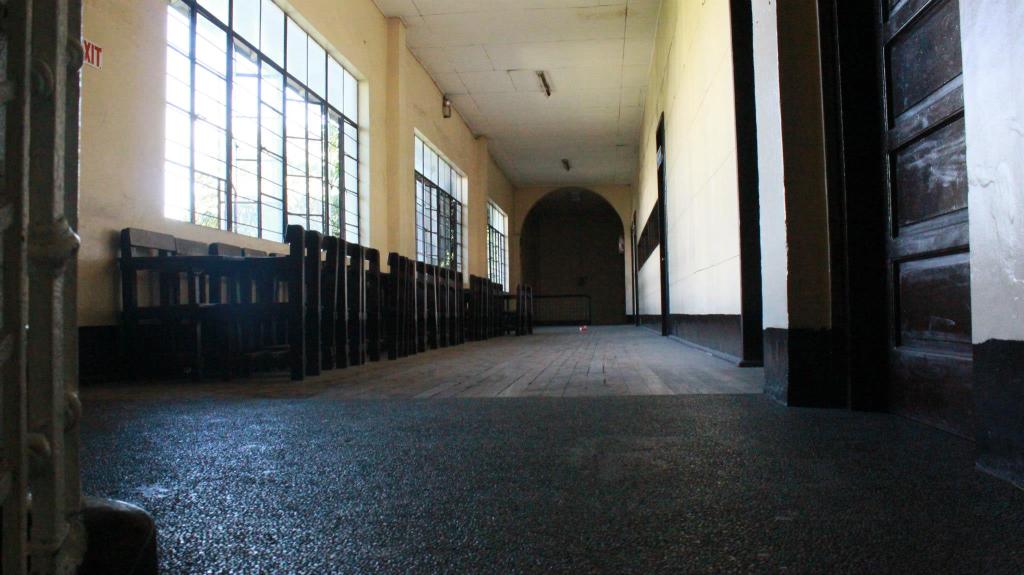
Images courtesy of the Manila Science High School SSG.
H.A. Bordner Building was destroyed in the aftermath of World War II, but this was repaired in accord to the Philippine Rehabilitation Act of 1946. The structure housed the Central-Bordner School until the institution ceased operations with the Class of 1948. Subsequently, the building became part of the Araullo High School.
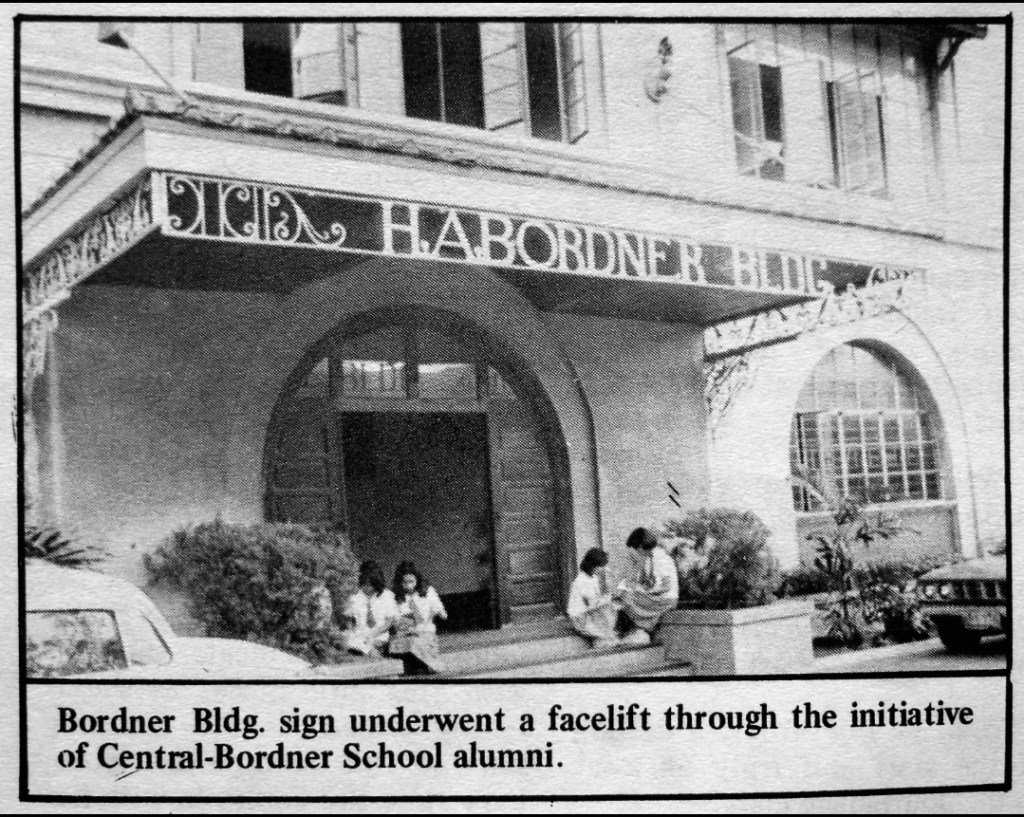
H. A. Bordner Building served as a new home to the special science students in 1967. Before then their classes were held at the “Victoria Annex”, which now houses the Pamantasan ng Lungsod ng Maynila (PLM) within Intramuros as decided by the Manila city government. Bordner Building was renovated in 1977 before its white and blue signage was restored in 1986 with the efforts of the Central-Bordner School alumni led by Mr. Harris Wightman.
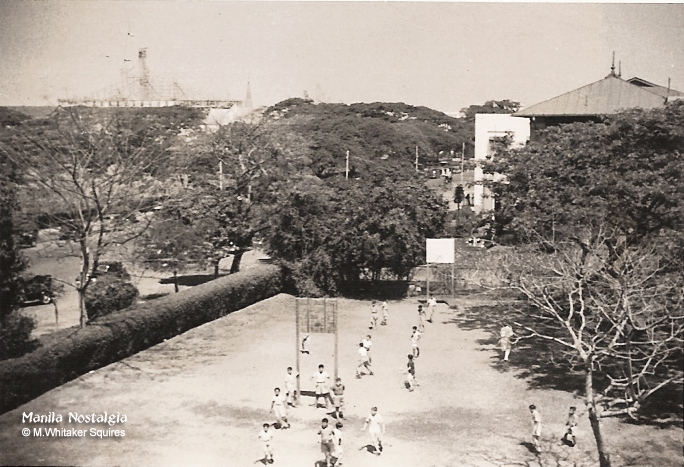
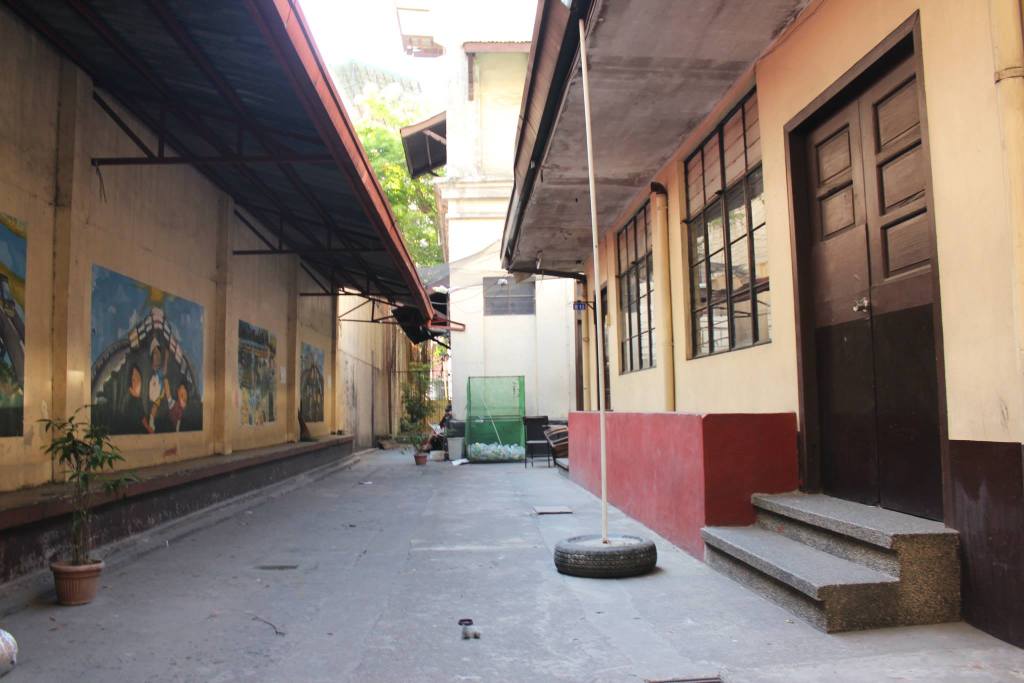
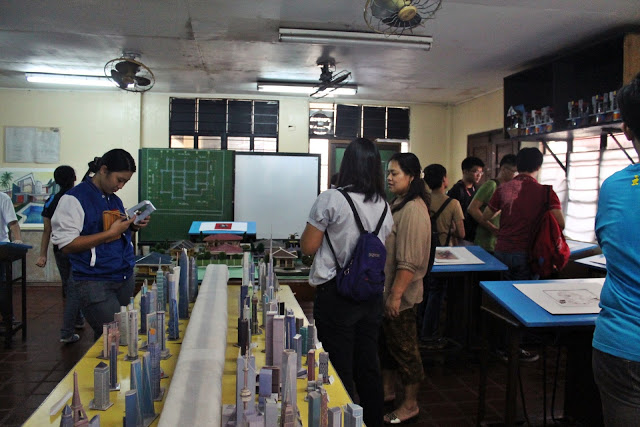
Until today, the H.A. Bordner Building is part of the MaSci campus and is known within the learning community for housing most homerooms of Grade 7 students. But it is interesting to note that before the Main Building and newer structures were constructed in the 70’s, the space beside Bordner was a playground to Central-Bordner students.
Extra dwellers?
As a century-old building, H. A. Bordner is not short of paranormal suspicion and local urban legends. Compared to other buildings in the MaSci campus (save the former Home Economics building which has since been replaced with the new SHS building), Bordner has only three floors but it is quite shorter than the 4-storey Main Building beside it, cue the small bats, and enter the inside joke that at a certain point of a day, one can access the “4th floor” of the Bordner building…
There are tell-tales that there is an underground room below the building, and that the Bordner Building has been used as a bunker or a hospital during World War II. There are also rumors about the restrooms and an air of “eeriness”, owing to the supernatural tale of a lady. But after all, perhaps the scariest things in the campus would be getting grades below 85 or getting caught upon entry to the “Botanical Garden”, right at the Padre Faura side of the campus.
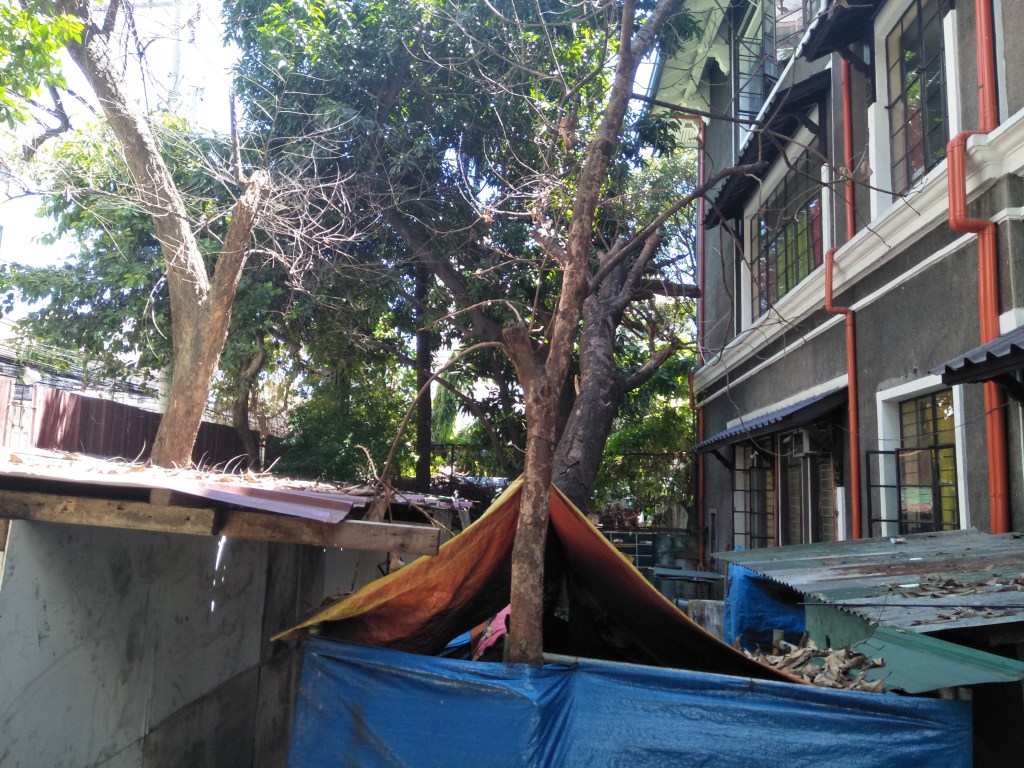

Text and pixel art by Angela Piguing, Renacimiento Manila
All Rights Reserved, unless stated otherwise.
References
Historical Marker, Manila Science High School.
Manila Science High School (n.d.). History of Manila Science High School. Archived website at web. archive .org/web/20120815115226 /http:// www. manilascience. edu. ph /about-us/8-history
Manila Science High School Alumni Foundation, Inc. (2013). Ginto’t Dalisay: The First 50 Years of MaSci. ISBN No. 978-971-95749-1-0
A.B. (2013). Manila Science HS 50th Anniversary Blog. Architectural History of the Bordner Building. Manila Science High School Alumni Foundation, Inc. Retrieved from mshs50years. blogspot. com/2013/06/ architectural-history-of-bordner. html
A.B. (2013). Manila Science HS 50th Anniversary Blog. Remembering H. A. Bordner. Manila Science High School Alumni Foundation, Inc. Retrieved from mshs50years. blogspot .com/2013/05/remembering-ha-bordner .html
Bayani Ramirez (1964). The Nucleus 1964 issue. Meet My School. Retrieved from mshs50years. blogspot. com/2013/06/meet-my-school .html
Ozaeta, J. (2017). Science page of The Nucleus 2017 issue. MaScian Tidbits. Retrieved from issuu. com/thenucleusmshs /docs/science
vashnix18 (2014). Anything Architecture Blog. Architectural Critique on the H. A. Bordner Building in the Manila Science High School Complex. Retrieved from anythingarchitecture. wordpress .com/2014/03/26/architectural-critique-on-the-h-a-bordner-building-in-the-manila-science-high-school-complex/
Gopal, L. (2015) Manila Nostalgia. My Alma Mater – The American School, Inc. Retrieved from lougopal .com/manila/? p= 3237
Bureau of Education. (1914) Annual report, Bureau of Education. Retrieved from quod. lib. umich .edu/p/philamer/ACS9512. 1914 .001
Orbasli, A. (n.d.). Re-using existing buildings towards sustainable regeneration. Oxford Brookes University. Retrieved March 18, 2014, from architecture. brookes. ac .uk/research /resources/PCIworkingPaperMarch2009 .pdf
Gabaldon School Buildings. Retrieved on 27 September 2020 from en. wikipedia. org/ wiki/Gabaldon_School_Buildings
Seballos, Nadine (2014). Gabaldon Schools. Retrieved from scribd. com/presentation/ 228677048/ Gabaldon-Schools
Opido, P. (2015). The Gabaldon Legacy. Retrieved from scribd . com/document /257493908/The-Gabaldon-Legacy
TeacherPH (2018). Conservation and Restoration of Gabaldon Schoolhouses and Other Heritage School Buildings. Retrieved from teacherph .com /conservation-restoration- gabaldon-schoolhouses-heritage-school-buildings/
Elizaga, T. (2012). Restoring the Gabaldon School Buildings in Cebu. Retrieved from troyelizaga. blogspot .com/2012/03/ restoring-gabaldon-school-buildings-in. html
Congress of the United States. (1946). Philippine Rehabilitation Act of 1946. Retrieved via the Library of Congress website from loc. gov /law/help/statutes-at-large/79th-congress/session-2/c79s2ch243 .pdf
Bidding documents
Manila LGU (2019). Invitation to Bid (D.E.P.W). “2019-SEF-5-08 Repair/Rehabilitation of Various Buildings at Manila Science HS” Retrieved in 25 September 2020 from manila. gov .ph/ other-documents/
Department of Public Works and Highways (c.a. 2018). Invitation to Bid. “Contract ID. No. 17OH0037… Cluster: a) Proposed Repair/Rehab./Construction of Manila Science High School, Taft Avenue corner Padre Faura” Retrieved in 25 September 2020 from www. dpwh .gov .ph/dpwh/sites/d efault/files/web form/civil _works/advert isement/IB %252017OH0037-45 .pdf
Other blogs and photographic references
The Iron Samurai (2019). The H.A. Bordner Building. “It is a three-story building with rumors of having a 4th floor…” Retrieved in 25 September 2020 from theironsamurai .wordpress. com/2016/09/18/the-h-a-bordner-building/
Manila Science Supreme Student Government (2013). Post features the high arch within the corridor of Bordner Building’s ground floor. Retrieved in 27 September 2020 from facebook. com/ManilaScienceSSG1314/photos/a .5296 20340424987/533429950044026/
Mesina, G. (2012). Exhibit @ the Bordner. Features the drafting room and glimpses of the Lovers’ Lane. Retrieved in 25 September 2020 from gabmesina. blogspot. com/2012/10/exhibition-bordner .html
Carpio, B. (2011). H.A. Bordner Building Facade. Retrieved from billycarpio. com/photos/2011 /masci/DSC00031 .php
Ginto’t Dalisay: The First 50 Years of MaSci also has a copy of the blog entries found in the MSHS 50 Years blogspot. It is a coffee table book published by the MaSci Alumni Foundation during the school’s golden anniversary in 2013, and it intends to relieve various aspects of MaSci through the years from the pioneer batch selected from Manila High School.
The blog by Lou Gopal, known as Manila Nostalgia, has a collection of photos from the prewar era.


 Renacimiento Manila
Leave a comment