

Heritage and the Shadows
Diego Torres
2 Nov 2020
Manila is an old city. Through the centuries, its land and its streets have witnessed the rise and fall of the structures that men have built. Scattered across Manila are numerous buildings that have witnessed the passage of time, the follies of men, personal tragedies and the depravity of human civilization at war. They are mute witnesses to vanished eras and people long gone. But every so often, these monuments that storied wonders of architecture and engineering, become places of mystery and terror.
For behind the beauty of the masonry, lies the shadow of the unknown – the realm of ghosts, specters, ghouls and the terrible glimpses of the past.
Here are just some examples of Manila’s glorious and haunted monuments.
- Fort Santiago
Manila’s ancient Citadel. Since its construction in the 16th century, the Fort has witnessed more than four centuries of Manila’s troubled past. Its triangular confines and bastions became backdrops for the horrors of colonial oppression and the savagery of modern warfare. These horrors include agonizing tortures and the massacre of civilians. A simple white marble cross in the fort marks the final resting place of 600 individuals, suffocated by Japanese troops in 1945, whose decomposing remains were found inside the dungeons.

It is not surprising that these horrors of the past sometimes manifest themselves to visitors and the fort’s custodians. People have felt unusual sensations such as cold spots, in different places inside the fort. Others have reported being touched by unseen hands that are as cold as the ancient stones. The spine-tingling stomping of a pair of heavy marching boots is known to haunt a particular comfort room in the fort – the same place where guests have been poked and shoved by an unseen malevolent being.

Spectral apparitions have also been seen by some people, notable of which are shadow figures, that at times linger in the corner of one’s eye and abruptly disappear when you look at them. Most horrifying perhaps are the reports of disembodied voices – crying in pain and terror – that have been heard coming from the bowels of the fort’s dungeons.
These are specters born out of human callousness and barbarity.
- De La Salle University (St. La Salle Hall and Chapel)

The majestic neoclassical edifice of DeLa Salle Universities’s St. La Salle Hall has stood for nearly a century along Taft Avenue, an imposing building that acts as a memorable visual landmark upon entering Manila from Pasay. Completed in 1924, the building is a monument to the dedication of religious educators. Located inside the building, is the Chapel of the Most Blessed Sacrament. The building and its chapel would experience first hand, the horrors of war in 1945. During the battle of Manila, Japanese troops stormed the building in an orgy of violence. Terrified and helpless refugees and brothers were butchered and hacked mercilessly as the Japanese rampaged inside the building. The chapel was not spared from this barbarous act. In the end, 41 of the 68 residents were killed, including 16 La Sallian brothers.

The massacre is remembered today with a memorial in the school grounds. But the building has its own terrifying way of making sure people never forget this terrible event. Numerous students have reported seeing the ghost of a young boy in the vicinity of the chapel, especially at the nearby comfort room. Students have also had the eerie experience of being grabbed or touched by unseen beings. Aside from St. La Salle Hall, ghostly sightings and encounters have also taken place in other adjacent buildings, including the new Henry Sy and Yuchengco Buildings.
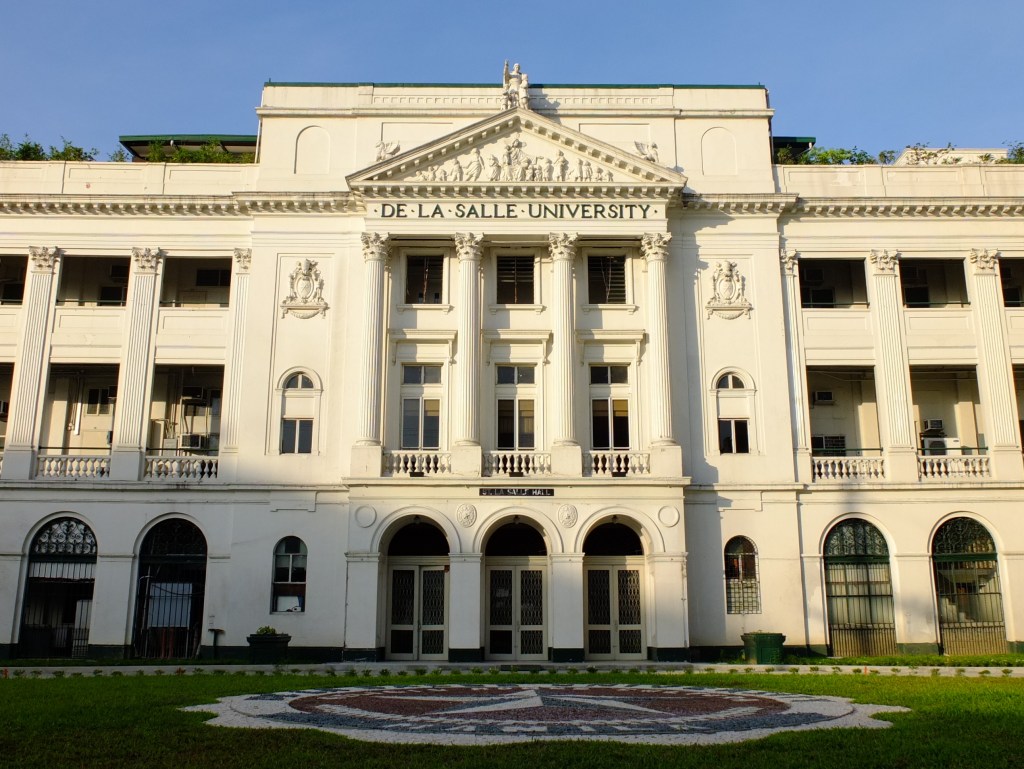
But the most vivid and terrifying specter of all is the one that manifests itself inside the chapel. Witnesses have claimed that while in meditation, they have seen a phantom appear out of thin air; the specter appears as disheveled, mortally wounded by bayonets, gasping for life as it struggles to reach the terrified witness in an apparent plea for help.
- Manila City Hall
The iconic neoclassical clock tower of Manila’s City Hall looms over the surrounding parklands as a proud symbol of the local government of the capital city. Built in 1940 as a monument of a city on the rise, the building almost immediately saw blood and destruction during the battle of Manila in 1945. Blasted and pounded to submission, the building and its Japanese defenders were reduced to pieces. The structure was rebuilt soon after, but just like the city around it, the structure witnessed revival, decay and neglect.
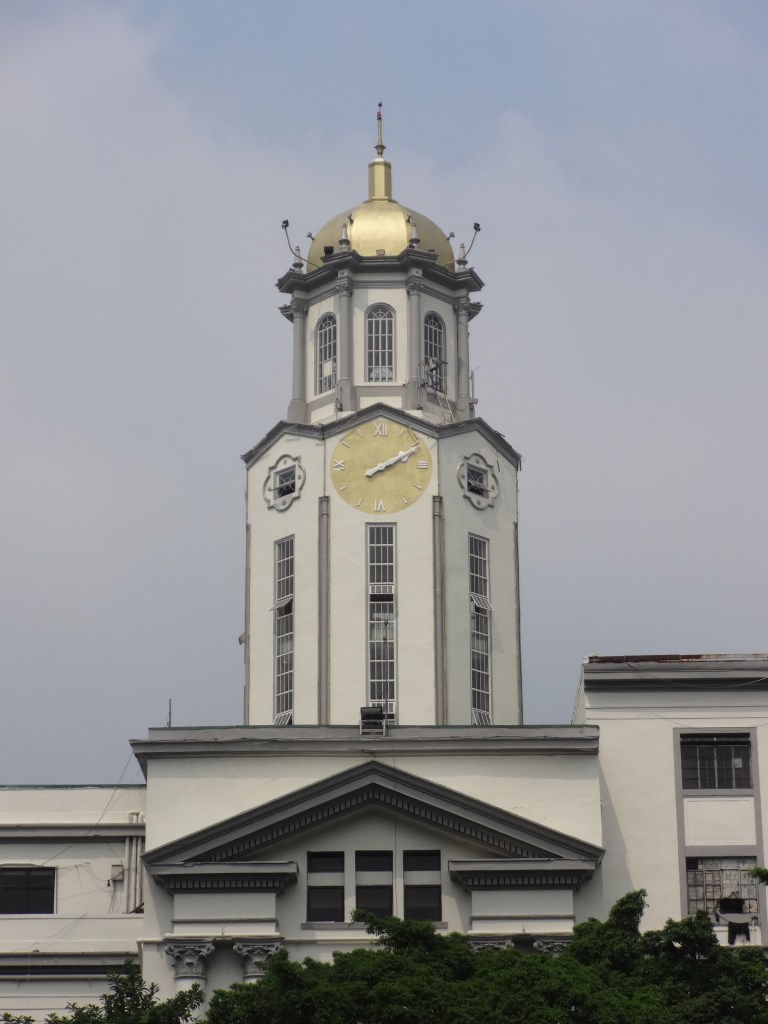
The long corridors of this grand edifice are a hive of activity during the day, like most local government buildings. But it is when the day draws to a close that the other tenants in this building get to work.
Within its coffin shaped confines, employees have witnessed and felt the presence of ghostly entities. The spirits of child-like beings have been seen running and wandering the abandoned corridors at night. Eerie noises, and even poltergeists have been experienced within the building.
Some have also claimed to have seen and felt the presence of soldiers – said to be Japanese troops – whose malevolent aura, and heavy footsteps, have left employees in terror.
The Manila City Hall is always a hub of activity – both for the living and the departed.
- University of Santo Tomas (España)
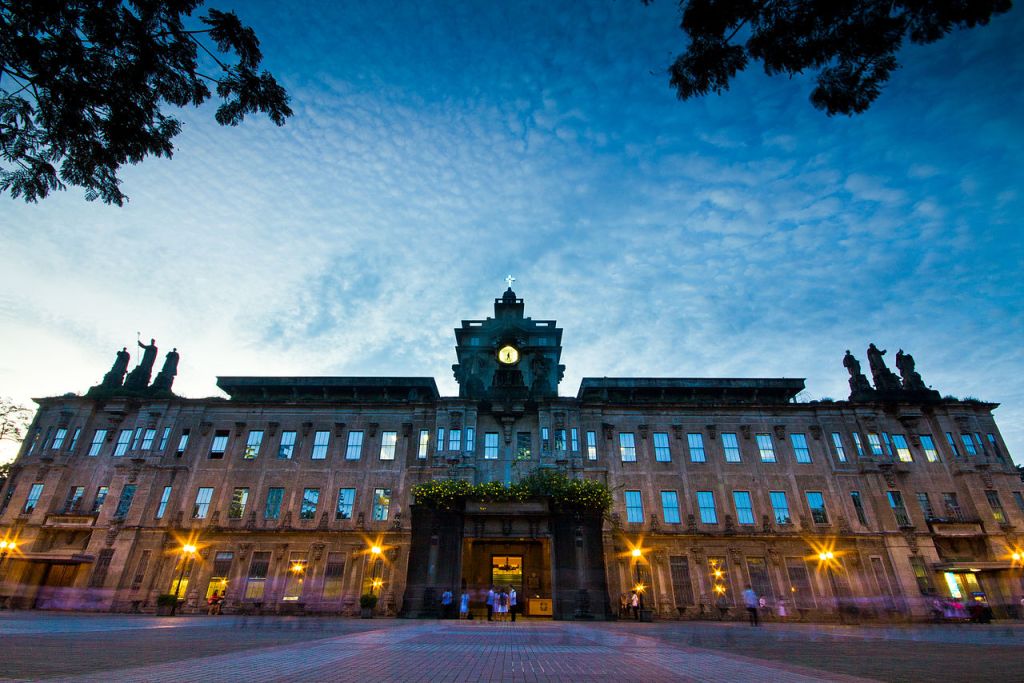
The University of Santo Tomas is one of the oldest educational institutions in the country, and in Asia. Founded by the Dominican Order in 1611, UST has witnessed the country’s history unfold – from the British Invasion, to being the original hotbed of student activism in the 19th century, and the destruction of the Second Word War. The last conflict saw the destruction of UST’s centuries old compound in Intramuros, whose entrance archway has since been relocated to another UST campus.
The Sulucan or Sampaloc campus of UST is not as old as the Intramuros campus – having only been home to UST since the 1920’s. But it’s imposing century old buildings and their accompanying statues have gazed out into different chapters of Manila’s troubled modern history. The campus was witness to the suffering of thousands who were incarcerated in the complex when UST became an internment camp for Allied civilians from 1942 – 1945. UST has since been restored as an institute of higher learning, with a growing student population that are accommodated in new buildings within the UST grounds.
But many students know that they are not alone in calling UST their second home. Stories abound of disembodied voices, calling students or getting their attention, only for them to see nobody around them. Playful entities have also been known to run around the buildings, at times moving as shadows in the corner of one’s eye.

Perhaps the most memorable of these phantoms would be the ghost of a Dominican priest. Witnesses have encountered this ghostly apparition in the University’s long promenade. There, under the shadow of trees during the night, witnesses have encountered a Dominican priest dressed in an old habit as he walks along the promenade. More terrifying is the fact that others have also seen the phantom without its head. One can only pray for a less terrifying encounter with the strolling priest.
- Philippine General Hospital
To say that a hospital has ghosts is the same as saying that there are children in a school building. Hospitals are the scene of miracles by health workers, but they are also the last places for many whose struggle have reached the end of the road.

One such hospital is the venerable Philippine General Hospital. Established in 1910, this early American colonial edifice was designed by William Parsons, who combined neo-classical elements with Filipiniana elements, producing buildings like the Laguna Capitol, Manila Hotel and Philippine Normal University to name a few. Since 1910, the hospital has welcomed the needy, even during the height of the Battle of Manila in 1945. In 1945, refugees and patients cowered in fear as the Japanese defended the edges of the grounds, which led to American forces indiscriminately shelling the surrounding buildings.
Today, PGH is larger than what it was in 1945, accommodating, the best that it can with what resources it has, the multitudes in need of medical attention.
One particular specter that has been seen in PGH, is that of a young boy. There are several versions of the story as told by witnesses. It is said that the boy, when seen, is a harbinger of death – that he shows up when he is about to usher an ailing soul, sundo, as we say in Filipino. Another story involves a more frightful version of the boy. He was reportedly seen in the PGH Burn Unit three different individuals. They saw the boy, crawling on the walls – much to heir horror.
He is just one of many specters that continue to linger in PGH.
- Calle Escolta
The name Escolta evokes the grandeur of prewar Manila, being the name of what was once the premier commercials street in Manila. Along this short street are numerous buildings that are relics and testament t the glory days of the Pearl of the Orient. The structures in art deco style, beaux-art style, neoclassical style and even postwar style are now mostly neglected, some condemned and empty – much like the now eerily sad street. From glitz and glamor to decay and neglect, Escolta is a great metaphor to the city of Manila as a whole.
But in the void left by business men and shoppers, the phantoms of the past have moved in.
Witnesses have seen the ghost of a child – a young girl according to some – who haunts the building of Syvel’s. Inside the many heritage structures, tenants and visitors have had the eerie feeling of being watched, or being closely accompanied by something event though they are alone. The laughter of children, and the voices of unseen people chatting have also been noted in the buildings.
One story tells of a regular entity in the corridor and staircase of the First United Building. It is said that every 1st of November, a phantom lady descends the grand staircase, hovering across the corridor before vanishing into thin air – to the horror of the guards at the front desk.
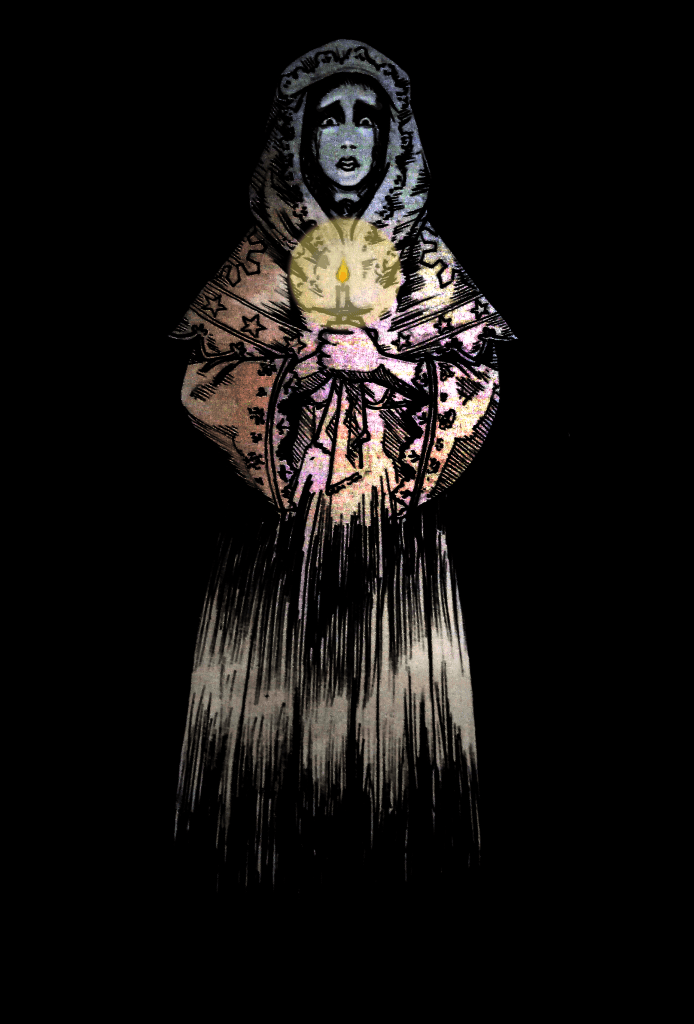
These are but a few of the ghostly encounters in Manila’s heritage buildings. Many more stories remain untold out there, by people who have been spooked, terrified and disgruntled when the city let’s the past emerge out of the shadows.
References
r/peyups on Reddit
DLSU Ghosts on Facebook
The Paragon Press via Weebly.
Additional thanks to individuals (friends and acquaintances) who told their stories to the writer, who then incorporated them in the narrative above.
Text and illustrations by Diego Gabriel Torres. Renacimiento Manila. All rights reserved.

The Renacimiento Movement. What, then, is the Renacimiento Movement? The movement is the core philosophy of the organization. It is founded on the reality that heritage is a cornerstone of holistic development and that it is indispensable in ensuring quality of life. As such, cultural revival is necessary for the promotion of heritage in the national agenda. Heritage should be driven by the people, regardless of race, gender, creed, or religion. This cultural revival can be achieved through the following ways: government support, the advancement of private initiatives, and the engagement of the people.
 Renacimiento Manila
Leave a comment