

Adam Daniel Reyes
in partnership with Koneksyon PH
24 December 2020
Upon feeling the cold breeze within the ‘-ber’ months, we finally came to the most awaited part of the year, Christmas! Throughout history, Filipinos are already celebrating Christmas earlier that the world would have expected. Seeing young children carol through the cold nights while giving warmth in our hearts. Misa de Gallo, sometimes referred as Misa de Aguinaldo, a countdown for many by going to churches, before celebrating Christmas day. And as usual, we will never forget our excitement, with our faces lifting up as we see the feast for Noche Buena. Noche Buena (literally meaning “the Good Night”) is often celebrated at midnight before Christmas day. There are many foods to serve on the table such as jamón, lumpia, and many more; but here are common foods that that are present in a family’s Noche Buena:

Lechon
Lechon is widely known throughout the Philippines, Spain, and most Latin American countries. It is one of the most served food in Filipino gatherings such as fiestas, birthdays, and even weddings.
Although, during the 13th century, Chinese trade missions started, introducing roasted pigs across Southeast Asian nations. Furthermore, the word ‘lechon’ is the the Spanish word for ‘pig’; giving possible traces that Philippine lechon was introduced by Spanish colonizers during the 16th century.
Today, Philippine lechon can be cooked in many ways, from huge ovens to traditional cooking over charcoal. Having plain Luzon lechon, more likely to be seasoned with salt and pepper; and sophisticated Visayan lechon with different herbs and stuffing. There are also innovations from leftover lechon such as lechong paksiw and sisig. Moreover, Filipino families continued to present lechon during Noche Buena since Christmas is a huge celebration for many Catholic Filipino families.
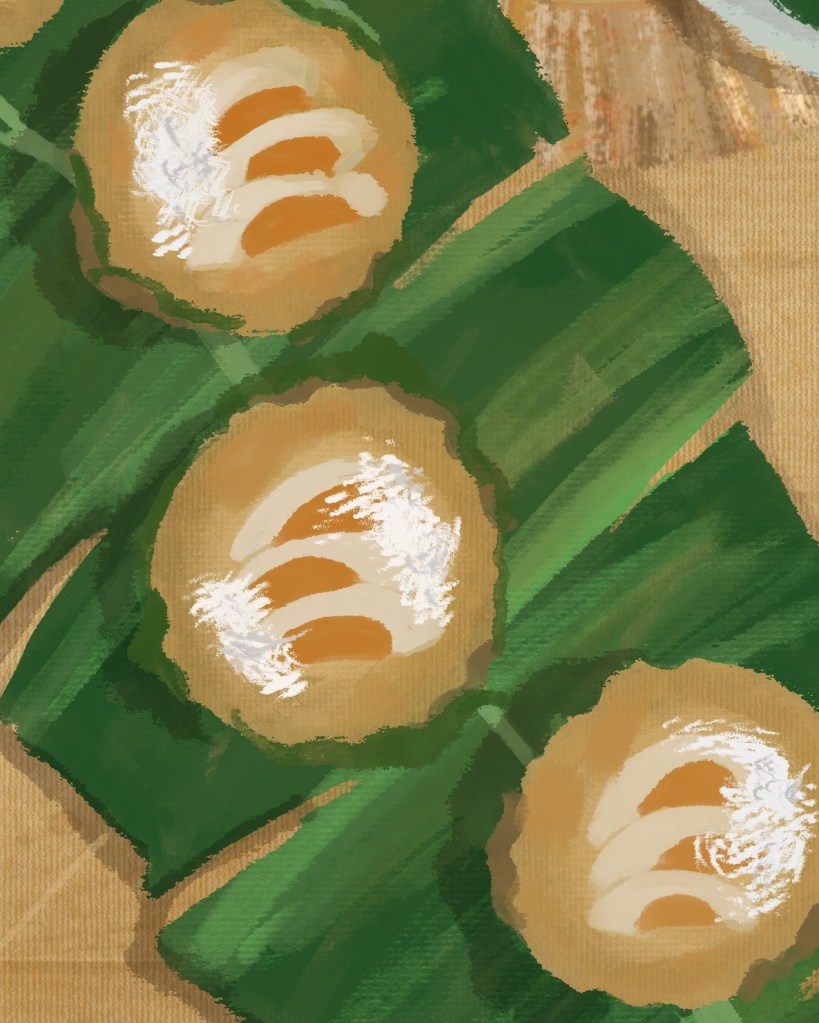
Bibingka
Bibingka is popular in the Philippines and Indonesia. In the Philippines, bibingka were usually present during Advent and Christmas season. A baked rice cake, traditionally cooked in clay pots with line leaves such as banana leaves.
A shared origin of bibingka from the Philippines and Indonesia. It is believed that it was introduced by Portuguese who visited both countries, but it is more likely believed by others that bibingka originated from the Philippines and introduced it to Goa, since the Philippines was never a colony of Portugal; and rice is a staple crop across the nation.
It is widely seen that bibingka, alongside with puto bumbong, were cooked and sold beside or near the church, after a ‘Simbang gabi’. From glutinous rice called galapong is soaked overnight either in water or milk, and sprinkled with yeast. As it forms a thick paste, eggs and milk are added. It is commonly served during the nine-day novena masses, since friars and farmers ago will immediately eat something heavy after the mass; therefore, it has been a tradition for many Filipinos to serve bibingka after a Simbang gabi.

Puto bumbong
Puto bumbong is a purple rice cake that is steamed inside bamboo tubes over a hot steaming milk. Puto bumbong came from two words – ‘puto’ which is rice cake, and ‘bumbong’ from the word bamboo. Served hot and freshly on a banana leaf.
Puto bumbong is commonly partnered with bibingka since these two are considered a Christmas food for many during the nine-day Simbang gabi. Unfortunately, the origin of puto bumbong is unclear, but it was already present during the Spanish era. It was believed that it was introduced to the Philippines by Legazpi and Urdaneta from Mexico. Similarly, with bibingka, in the old days, puto bumbong is usually consumed after a Misa de Gallo for a heavy breakfast for the day.
Today, puto bumbong also has a lot of varieties when it comes to toppings. Traditionally, vendors will place shredded coconut, margarine, and sugar. Modern puto bumbong are sometimes added with cheese. Nowadays, stalls of puto bumbong are still alive, beside or near churches to offer it to mass-goers.
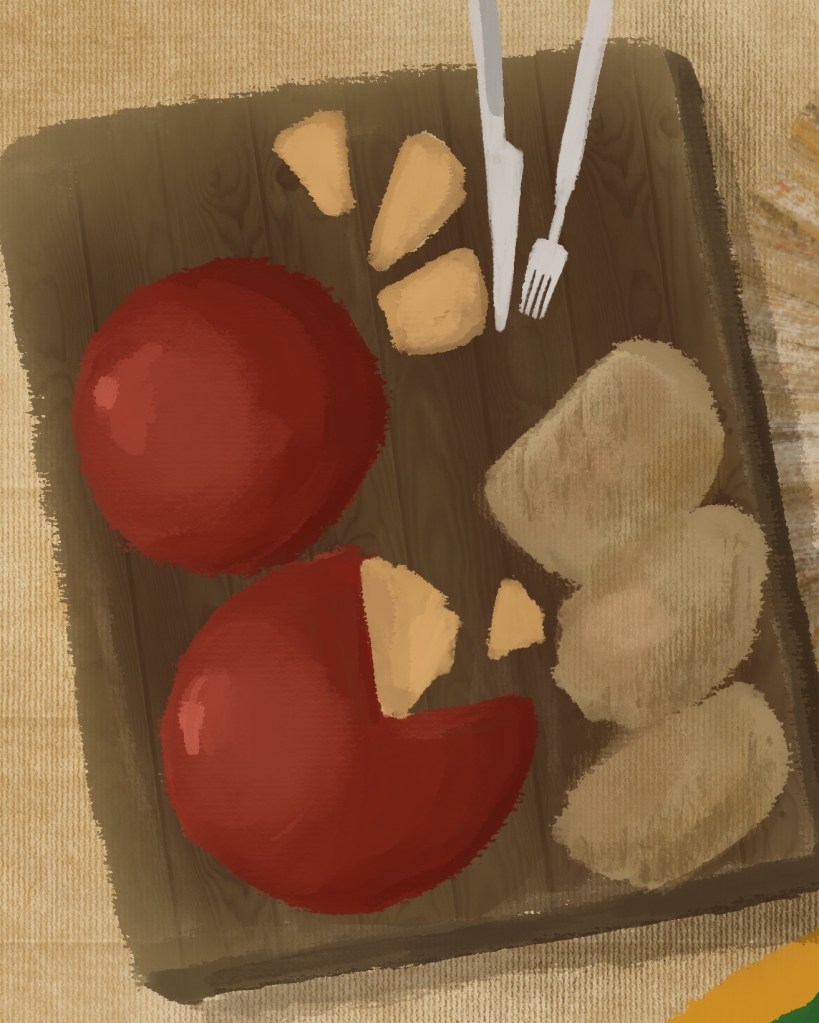
Keso de bola
Keso de bola, from the Spanish word ‘queso de bola’ which literally means ‘ball cheese’ is a typical type of cheese that can be seen during Christmas season in the Philippines. Also known as Edam Cheese, this cheese originates from the Netherlands, named after a town at the North Holland.
Keso de Bola is traditionally sold with flat ended spheres, a yellow interior, and a red coat from paraffin wax. It is the world’s popular cheese during the 14th to 18th century. It was introduced by Spain throughout its colonies, including the Philippines.
Why it is presented in Noche Buena
Keso de bola is also considered a delicacy in front of the table during Noche Buena. Customarily served with jamón (ham) and pandesal (salt bread) during Noche Buena. Today, it is still consumed by Filipino families around the Christmas season. Sometimes offered as a gift to friends and relatives.
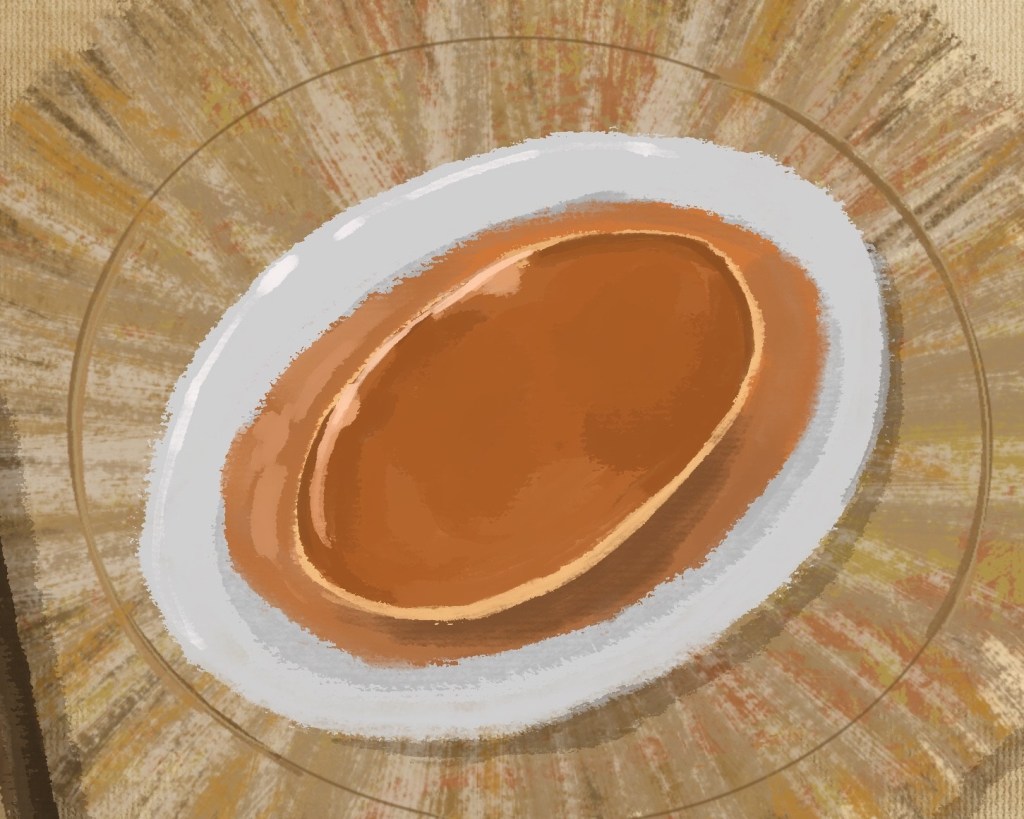
Leche flan
Crème Caramel, also known as flan in many countries, but in the Philippines, it is called leche flan (from the local term from the Spanish ‘flan de leche’ which translates to “milk flan”) is a common dessert throughout the country, normally served in Filipino gatherings like birthdays, fiestas, etc.
It was mainly brought by Spanish colonizers here in the Philippines. It is also believed that leche flan originated between the boarders of Northern Spain and Southern France. Traditionally, molding the leche flan on what we call llaneras. Some historians said that leche flan was also invented to save leftover yolks, since egg whites were used to make cement for a sturdy wall or structure, especially the walls of churches. Old recipes stated that they use carabao’s milk (water buffalo) in making leche flan.
Nowadays, leche flan is a widely-served dessert. Leche flan can be eaten on its own, or as a topping in our Philippine halo-halo, and many more Filipino desserts to combine with. Seeing this dessert in most Filipino gatherings, to resemble a homey atmosphere for friends, relatives, and visitors. A perfect dessert for a Noche Buena.
Article by Adam Daniel Reyes of Renacimiento Manila.
Art by Bernadette Balaguer of Koneksyon PH. (@shepaintedwords, @badettebalaguer – IG)
All Rights Reserved.
References
About Filipino Food
NoliSoli PH
Panlasang Pinoy
Taste Atlas

The Renacimiento Movement. What, then, is the Renacimiento Movement? The movement is the core philosophy of the organization. It is founded on the reality that heritage is a cornerstone of holistic development and that it is indispensable in ensuring quality of life. As such, cultural revival is necessary for the promotion of heritage in the national agenda. Heritage should be driven by the people, regardless of race, gender, creed, or religion. This cultural revival can be achieved through the following ways: government support, the advancement of private initiatives, and the engagement of the people.
 Renacimiento Manila
Leave a comment