
Written by Ken Tatlonghari
Art by Diego Torres
24 Jan 2021
Quiapo – the area east of Quezon Boulevard – survived the cataclysmic destruction wrought by the Battle of Manila in 1945. But what war has spared, the onslaught of rabid “developers” is now threatening to destroy. Quiapo provides Filipinos in Manila a “Viganesque” or Taal-like experience of what Manila looked like in a different time.
Quiapo, together with Santa Ana, San Nicolas and San Miguel (with the addition of the commercial heritage buildings in Escolta-Binondo) is part of the endangered heritage zones of Manila.
RENACIMIENTO MANILA
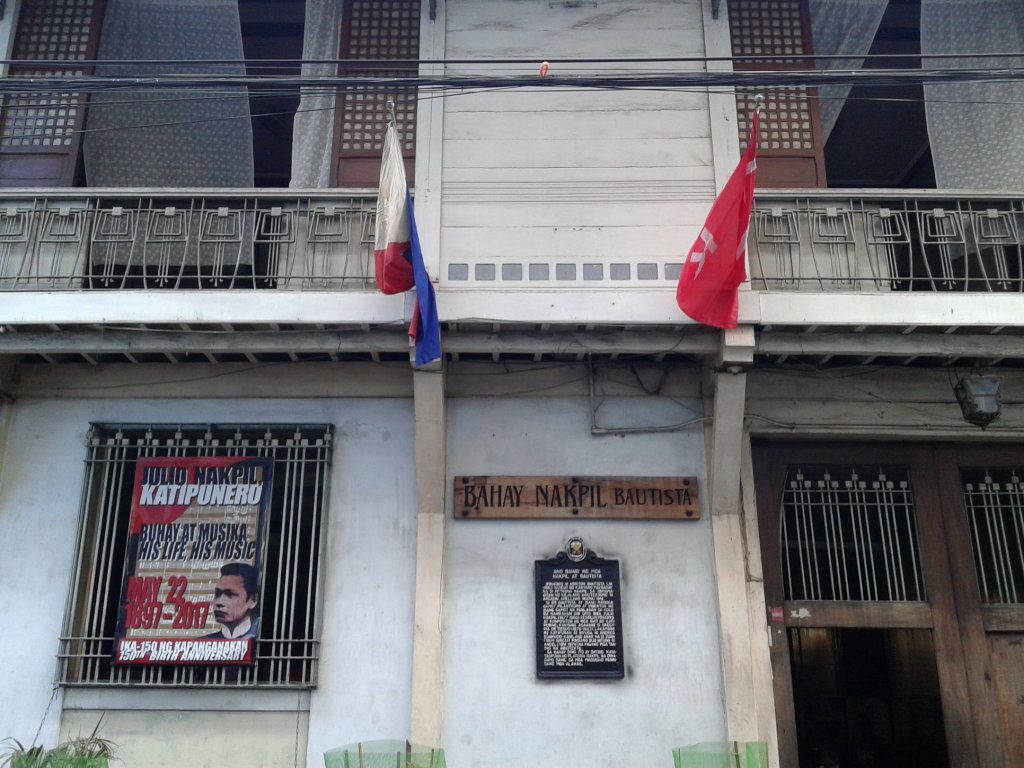

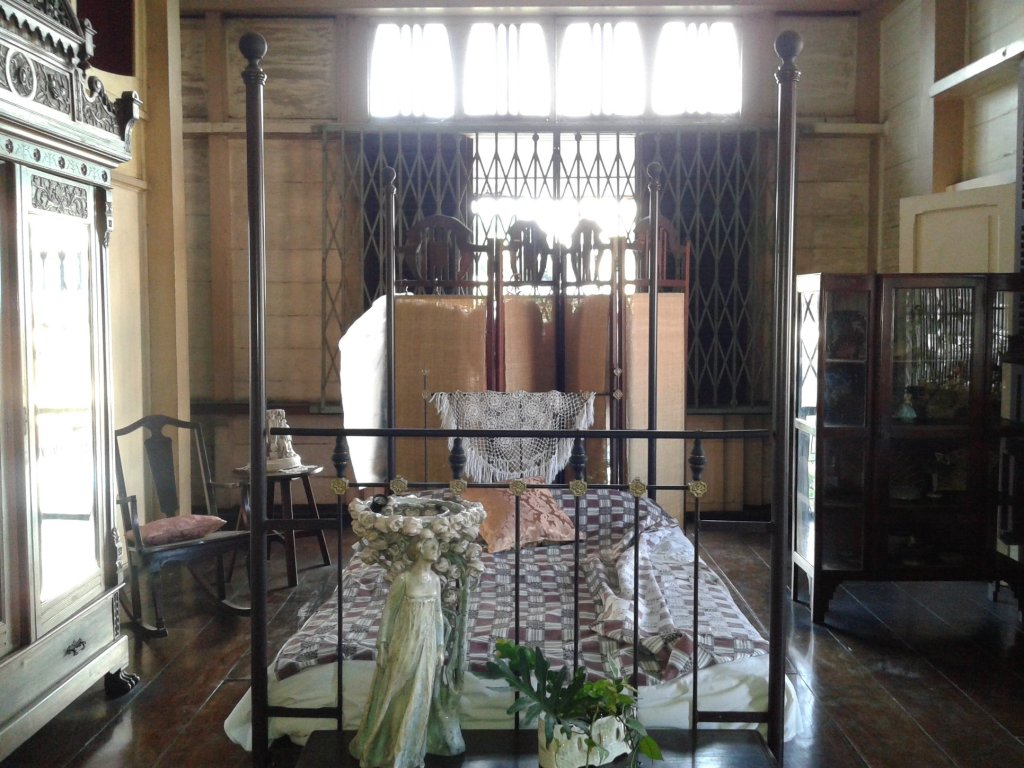
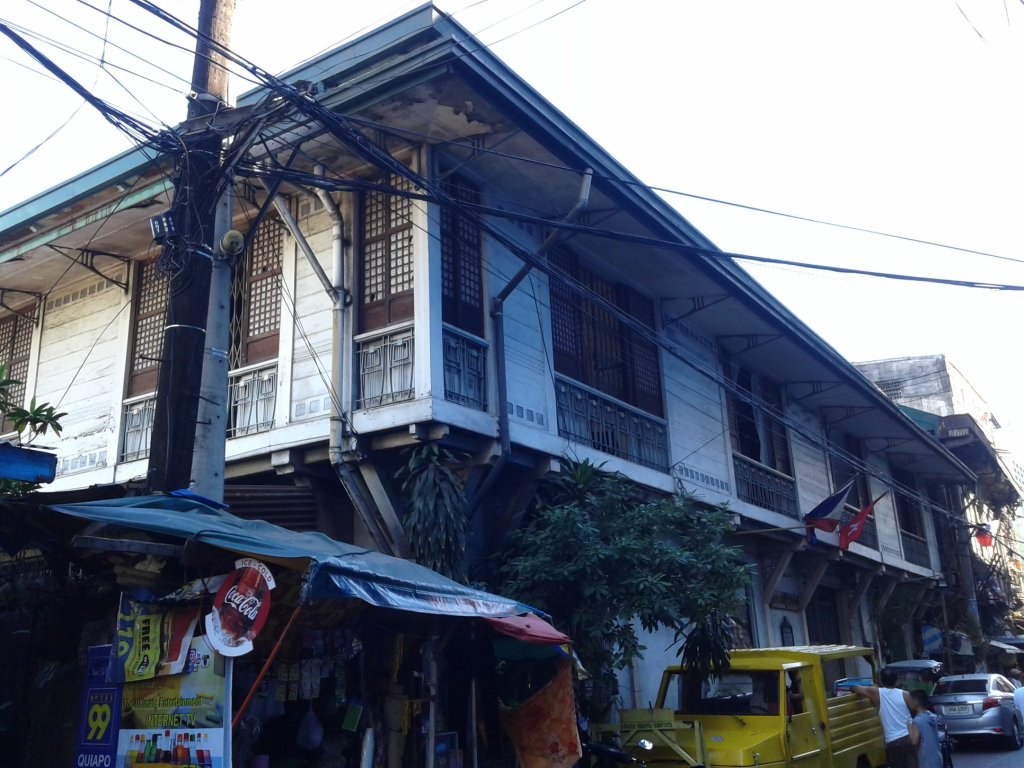
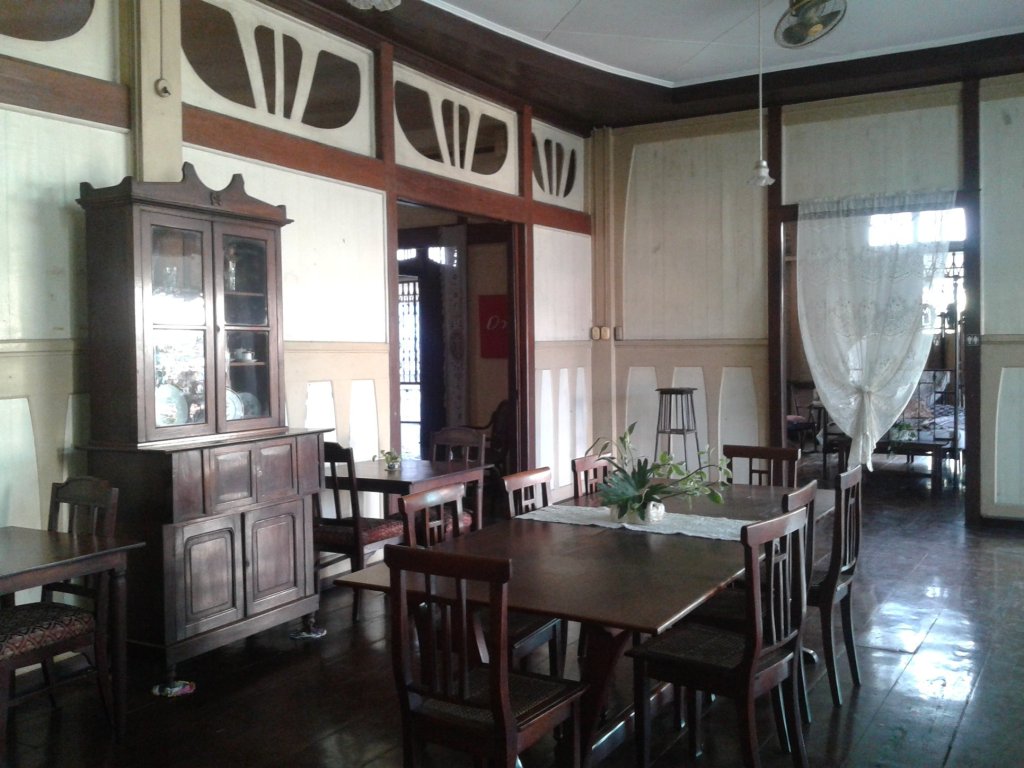
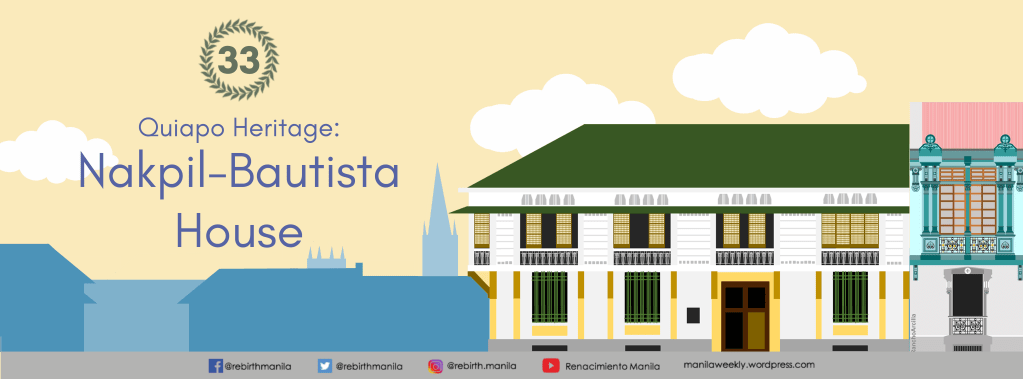
The Bahay Nakpil-Bautista’s unique design is based on the Vienna Secession
movement, related to art nouveau. The house was built by Arch. Arcadio Arellano for
Dr. Ariston Bautista and his wife Perona Nakpil. They were given a Viennese furniture
set as a gift and that served as the inspiration of the house’s design. Their motifs are
repeated all throughout the house, from the ventanilla grilles, the ceiling frames, the
callados of the room dividers, to the stair railings.
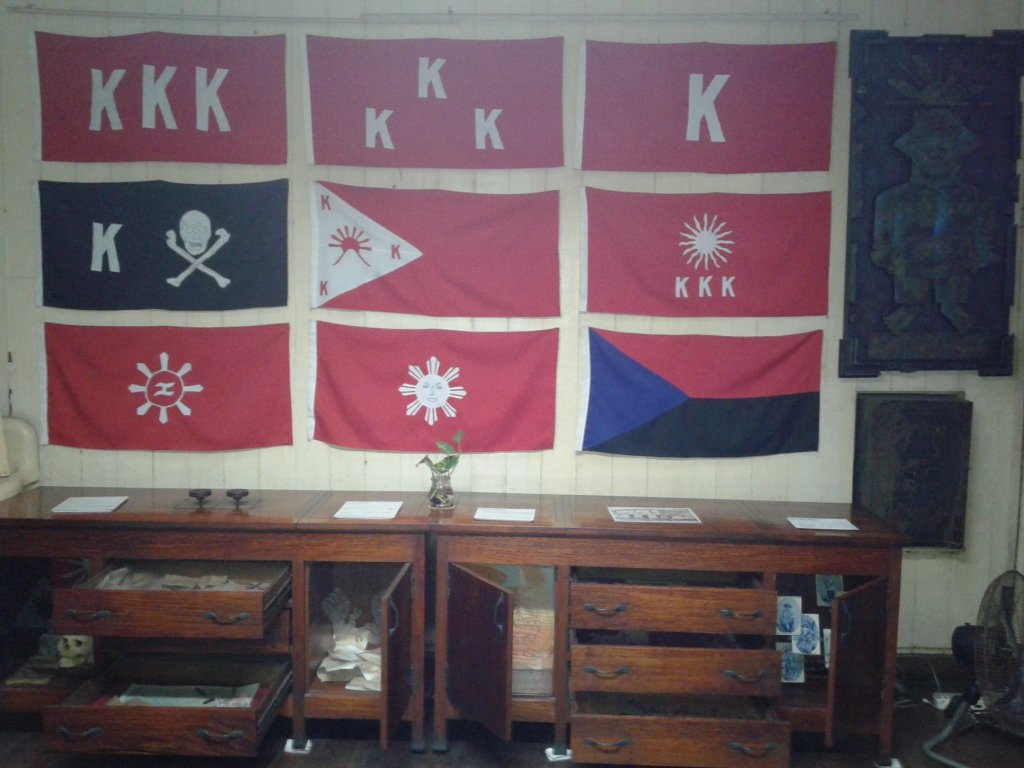
Apart from its architectural significance, Bahay Nakpil-Bautista stands out as the
residence of revolutionary Katipuneros and other key historical figures such as Gregorio
de Jesus, her husband– musical composer and soldier appointed by Andres Bonifacio
as Vice-President Supremo of the Katipunan Julio Nakpil; Francisco Nakpil, silversmith
and La Liga Filipina member; Juan Nakpil, first Filipino National Artist for architecture
who designed the Quiapo church after the 1929 fire; Angel Nakpil, architect of the Rizal
Park complex; and of course the original proprietor Dr. Ariston Bautista who was a
member of the propaganda movement.
The Bahay Nakpil-Bautista has been declared a National Historical Landmark and
serves as a museum with a permanent exhibit, as well as a community center and
venue for showcasing works by artists and photographers.
References:
Official website of Bahay Nakpil-Bautista
Wikipedia.
Article and photos by Ken Tatlonghari.
Cover art by Diego Torres.
Renacimiento Manila
All rights reserved.

The Renacimiento Movement. What, then, is the Renacimiento Movement? The movement is the core philosophy of the organization. It is founded on the reality that heritage is a cornerstone of holistic development and that it is indispensable in ensuring quality of life. As such, cultural revival is necessary for the promotion of heritage in the national agenda. Heritage should be driven by the people, regardless of race, gender, creed, or religion. This cultural revival can be achieved through the following ways: government support, the advancement of private initiatives, and the engagement of the people.
We will soon be moving to our official website. Thank you for supporting us.
 Renacimiento Manila
Leave a comment