
Ken Tatlonghari
14 February 2021
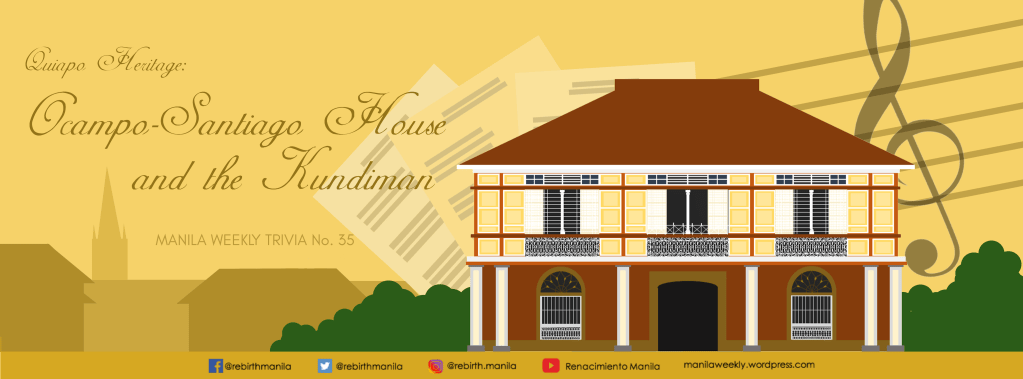
The Ocampo-Santiago house sits on 963 R. Hidalgo St., and was built in 1850 as the residence of the Ocampo clan of Quiapo. The first generation owner Don Pablo Ocampo was the delegate to the Malolos Congress who later became Resident Commissioner to the United States.
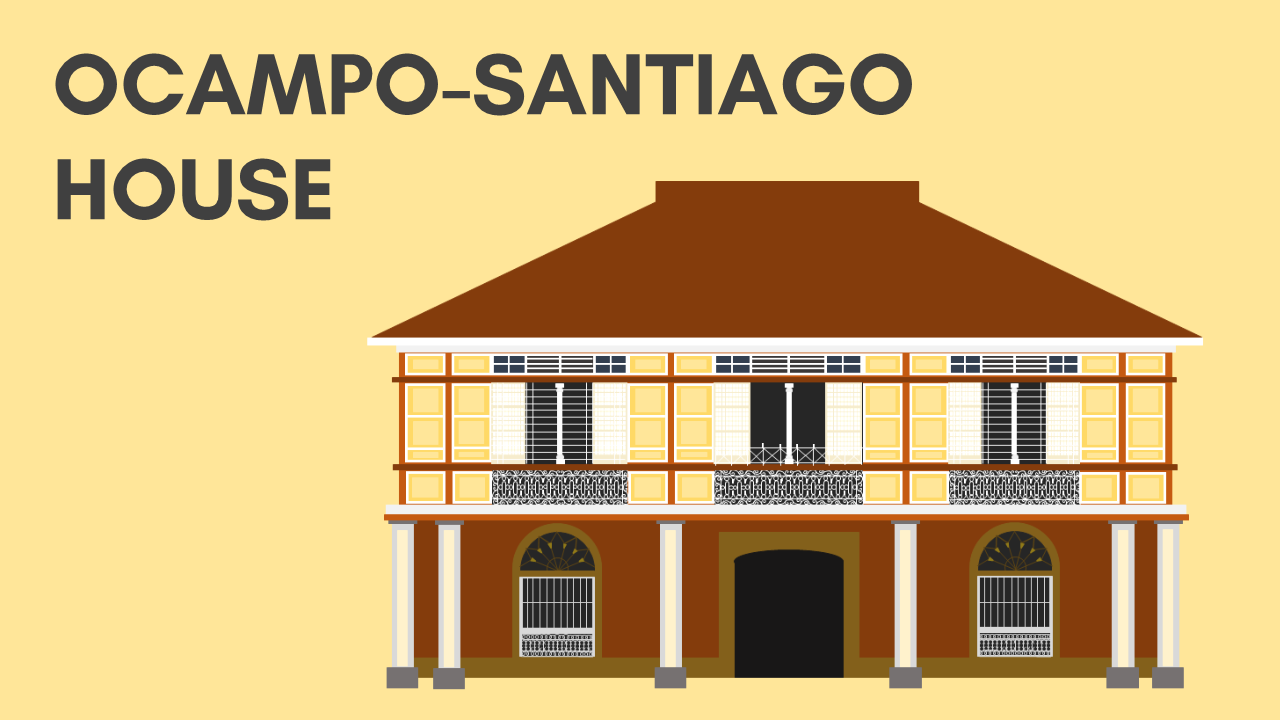
The house then passed on to Dr. Francisco Santiago, the first Filipino with his title in Music. He then became the first Filipino musical director of the UP Conservatory of Music, which first rented the building in 1916 upon its founding the previous year. But its first director was officially George Wallace, a voice professor from the New England Conservatory of Boston, Massachussetts. The school’s first enrollees were a handful of students, most of whom belonged to Manila’s prominent families.

With the building serving as a school for music, the Ocampo family then resided in another one of their houses on Palma Street. Francisco Santiago, who became dean of the school, then married Concepcion Ocampo. She was the daughter of Pablo Ocampo, the lawyer and nationalist who first owned the Ocampo-Santiago house.
When the Philippines became part of the Greater East Asia Co-Prosperity Sphere of Imperialist Japan, the Ocampo house was converted into a soap factory by the Japanese. Upon liberation from the Japanese in 1945, Francisco and his wife Concepcion returned to make it their family home.
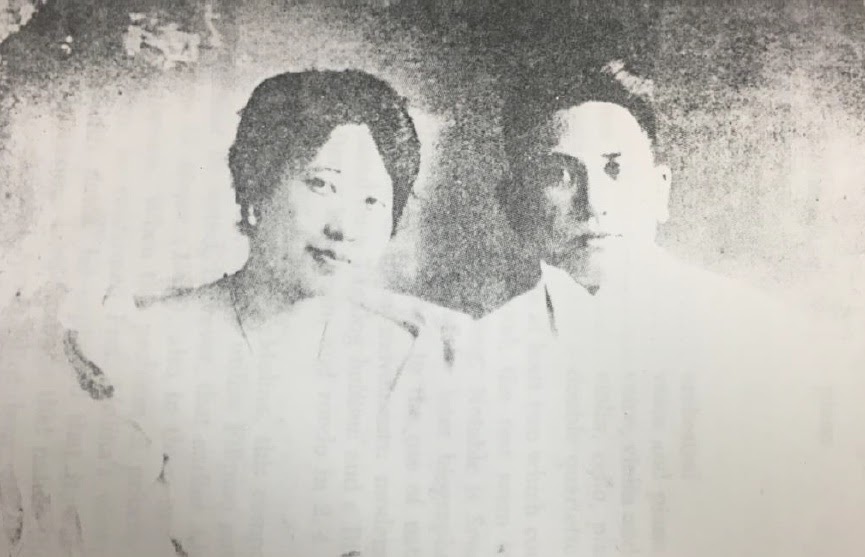
Francisco would pass away about two years later, but he will always be remembered as the “Father of Filipino Musical Nationalism”, and the “Father of the Kundiman”.
The creation of Kundiman
Francisco Santiago was born into a peasant family in Santa Maria, Bulacan to parents Felipe and Maria Santiago. His uncle Matias Magracia was a town fiddler who gave him his musical start at eight years old by teaching him the solfeggio, which uses the sol-fa syllables for learning aural skills, pitch, and sight-reading of Western music.
Sadly, he suffered the loss of his father at an early age. But his mother was a harp player who raised him to pursue music. Thus, he sang in the church choir, learned to play the violin and later, studied piano in the house of his uncle’s friend.
His elementary education took place at the Colegio de San Juan de Letran while his secondary education was completed at the Liceo de Manila. While in Manila, he studied piano and solfeggio under Blas Echegoyen at the Colegio de Niños Tiples. He became a member of the Santo Domingo Church choir which was led by Fr. Primo Calzada, who taught him the organ, vocalization, and the basics of composition. Santiago also took lessons from Russian pianist Alexander Fedorovich Sklarevski while he was in Manila for a concert.
His first ever composition was the two-step piece Purita, dedicated in 1908 to Pura Villanueva, the first Manila Carnival Queen. Copies of the song were released to different music stores spreading word of his name as a composer.
In 1914, Santiago took the post of orchestra director in Shanghai, China where he was unable to get his bearings musically and thus returned to Manila shortly after. The following year, he became director of the San Jose Seminary choir.
After the UP Conservatory of Music was founded, he was taken on board first as a piano instructor. There, he learned advanced harmony and counterpoint from Robert Schofield. Eventually, he earned his teacher’s certificate in science and composition in 1922.
In 1924, he solidified his musical education in the United States by obtaining his master’s degree in music at the Conservatory of Chicago, and his doctorate at the Chicago Musical School. And it was there where he presented his masterpiece—Concerto in B flat minor—for pianoforte and orchestra.
But his most famous piece was Kundiman, (Anak-Dalita), the first official Kundiman art song, which was sung in the Royal Court of Spain upon King Alfonso II’s request, and also sung by Arrigo Pola, Luciano Pavarotti’s teacher.
The word Kundiman is formed by the phrase kung hindi man (if it weren’t so), as if to express lament as a lover pining for his beloved. Thus the Kundiman itself became the musical genre of classic Filipino love songs. The melody’s rhythm is smooth and flowing with dramatic intervals. Its musical structure was formalized by Dr. Santiago along with Nicanor Abelardo, seeking poetry for their lyrics, blending verse and music equally. But before they had elevated it to art song status — accompanied by the piano or other instruments in a concert, recital or formal occasion — it was simply a folk song during the latter part of Spanish rule.
Because of the growing nationalist sentiment at that time, the Kundiman began to express love not just for a woman, but the country as well.
From its beginnings, the kundiman has evolved over time and one of the most popular songs from the genre to date is Dahil Sa Iyo, written by Mike Velarde Jr. for the movie Bituing Marikit in 1938. It has been translated into many languages such as English, Spanish, Japanese and Chinese. The English-Tagalog version recorded in 1964 was written by Tom Spinosa and it is popular among Filipino communities in the United States such as Honolulu, the West Coast, and Virginia Beach.
Words and Music by Tom Spinosa and Mike Velarde Jr.
We are lucky as Filipinos to have our own musical tradition that is rich and varied. While foreign music may continue to be a source of inspiration for us, how can we deny the beauty of our very own musical genre that is the kundiman? Perhaps by looking within our own culture we may even create music that is more original than that which has been produced in the Philippines for decades.
Article by Ken Tatlonghari . Art by Diego Torres
References
- The Ocampo-Santiago Mansion at Quiapo, via CourseHero.
- History of the UPD Conservatory of Music
- Francisco Santiago via Wikipedia. Retrieved 13 February 2021
- Kundiman via Wikipedia. Retrieved 13 February 2021
- Art song via Wikipedia. Retrieved 13 February 2021
- Dahil sa Iyo via Wikipedia. Retrieved 13 February 2021
- Biography of Filipino Composer Dr. Francisco Santiago, via Filipino Kundimans Blogspot
- Anderson, Quiliano Niñeza. “Kundiman love songs from the Philippines: their development from folksong to art song and an examination of representative repertoire.” DMA (Doctor of Musical Arts) thesis, University of Iowa, 2015.
- Galang Goco II, Abelardo. “The Development of Philippine Piano Literature”. 2010.
Article by Ken Tatlonghari . Art by Diego Torres

The Renacimiento Movement. What, then, is the Renacimiento Movement? The movement is the core philosophy of the organization. It is founded on the reality that heritage is a cornerstone of holistic development and that it is indispensable in ensuring quality of life. As such, cultural revival is necessary for the promotion of heritage in the national agenda. Heritage should be driven by the people, regardless of race, gender, creed, or religion. This cultural revival can be achieved through the following ways: government support, the advancement of private initiatives, and the engagement of the people.


 Renacimiento Manila
Leave a comment