
Article by Arch. Carlos Cucueco III, Art by Angela Piguing and Diego Torres
14 March 2021
Spanish Era Educational Institutions for Women
In 1589, just a few years after the establishment of Manila, the Bishop of Manila Domingo de Salazar along with some friars from the Franciscan order established the first educational institution in the Philippines dedicated for girls – the Colegio de Sta. Potenciana. The school was located inside the walls of Intramuros but it had numerous transformations and relocations due to different circumstances like earthquakes. After the 1863 earthquake, the office of the Governor-General was temporarily relocated to the buildings of the college. Unfortunately, many students who resided inside the college transferred to the nearby Colegio de Sta. Isabel. This resulted in the merger of the two colleges. These buildings were utilized by other government offices until its destruction during the earthquake in 1880.
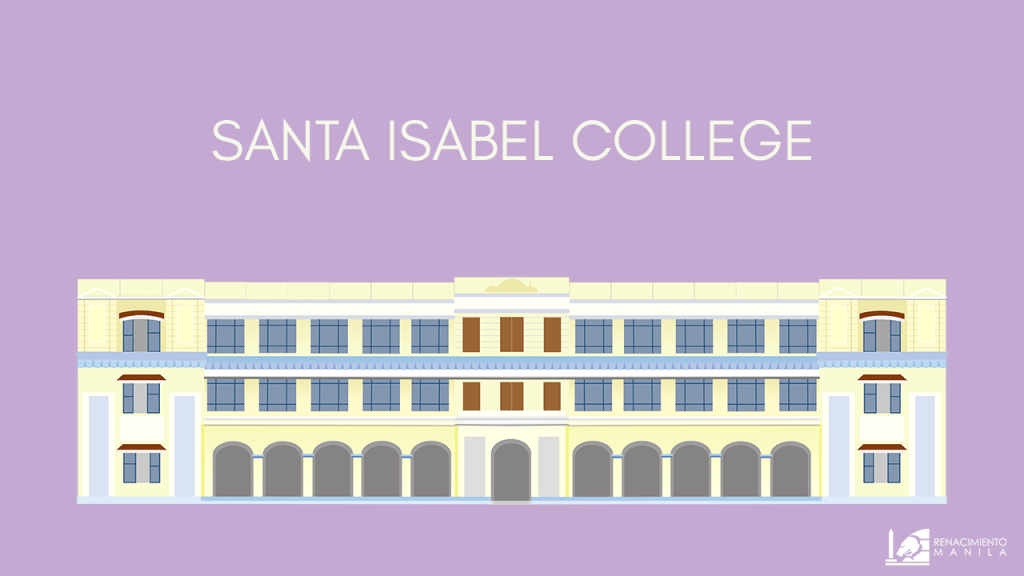
Decades after the establishment of Colegio de Sta. Potenciana, another educational institution was established with the purpose of educating Spanish orphan girls residing in the Philippines. The college was created with the initiative of the Hermanidad de la Santa Misericordia. Around a century later, a royal decree made the college under the protection of the Spanish Crown, thus the upgrade of the name to Real Colegio de Sta. Isabel. In 1864, the Daughters of Charity began their management of the college. The school stayed inside Intramuros until the Japanese occupation which destroyed their original headquarters, thus prompting their transfer to their present site at Taft Avenue.
Other educational institutions for women were established in Intramuros such as the Colegio de Sta. Rosa (1750) and Colegio de Sta. Catalina (1706). The Colegio de Sta. Rosa was known as the school where Jose Rizal’s mother, Teodora Alonso, attended. On the other hand, the Colegio de Sta. Catalina transferred to Legarda Street in Sampaloc after the Second World War which destroyed their headquarters.
Outside Intramuros, the Escuela Pia was founded in 1868 by Doña Margarita Roxas de Ayala and under the administration of the Daughters of Charity. The institution is also known as the Colegio de la Inmaculada Concepcion de la Concordia which we know today as Concordia College. This school was known because some of Rizal’s sisters studied here and it was also mentioned in his novel Noli Me Tangere.
Overall, these institutions during the Spanish period instructed women in reading, writing, arithmetic, religion, good manners, and skills such as cooking, sewing, music and household management.
American Era Educational Institutions for Women
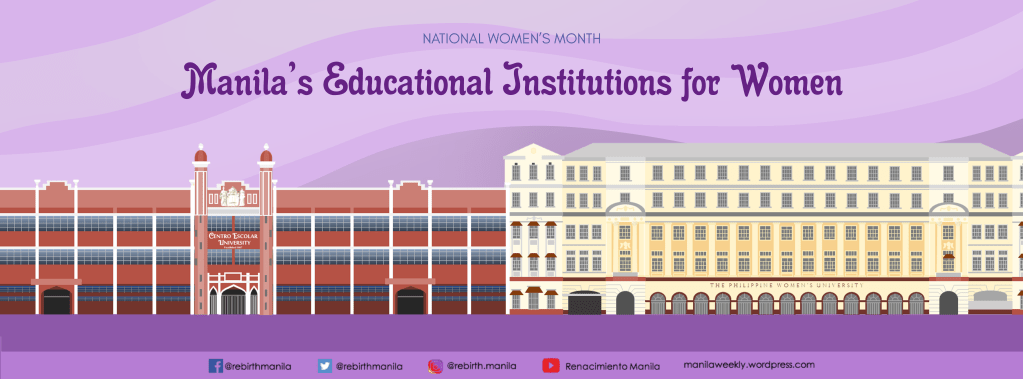
At the start of American Occupation in the Philippines, more schools were established outside the walls of Intramuros. One of the well-known sites where these institutions were built was in the street of Mendiola which leads to Malacañang Palace. One of the first institutions built on this area was the Centro Escolar de Señoritas was established in 1907 by Librada Avelino and Carmen de Luna on Mendiola Street. It was one of the first schools to acquire the level of university in 1932, thus renaming it to Centro Escolar University. It is also known as the first non-sectarian university that can confer doctorate degrees in philosophy and education.

On the other hand, two more educational institutions dedicated for women relocated to Mendiola, where they are presently located – La Consolacion College (1902, originally from R. Hidalgo Street in Quiapo) and College of the Holy Spirit (1913, originally from Legarda Street in Sampaloc). Unfortunately, due to the pandemic today, the College of the Holy Spirit will cease its operations next school year 2021-2022.
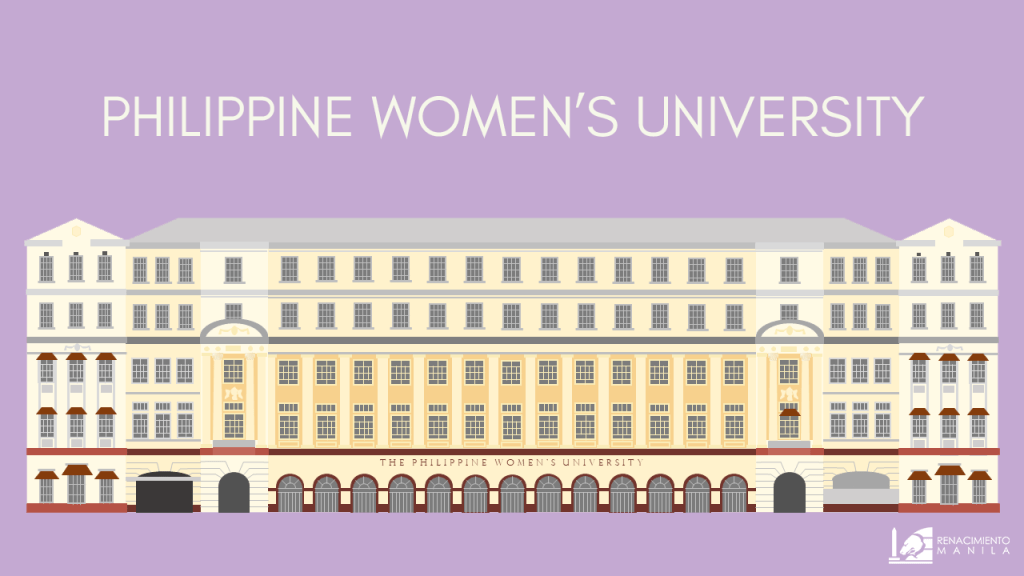
In other parts of Manila, we can find other educational institutions that were originally dedicated for women such as St. Scholastica’s College (1906, originally located at Tondo) in Singalong and Philippine Women’s University (1919) located at Taft Avenue. The establishment of Philippine Women’s University is unique because their goal was to educate women to have a life of useful citizenship and leadership, which is ideal during the time when Philippines is already preparing its transition from a Commonwealth under the United States to its eventual independence.
Sources
- Historical Markers
- Colegio de Sta. Potenciana
- Colegio de Sta. Isabel
- Centro Escolar University
- Philippine Women’s University
- Kahimyang website
- Intramuros2007 WordPress (Colegio de Santa Potenciana)
- Intramuros2007 WordPress (Santa Isabel College)
- Intramuros2007 WordPress (Colegio de Santa Rosa)
- Intramuros2007 WordPress (Colegio de Santa Catalina)
- Concordia College website (via Web Archive)
- SSC website
- http://www.pwu.edu.ph/

 Renacimiento Manila
Leave a comment