

Renacimiento Manila
4 Apr 2021


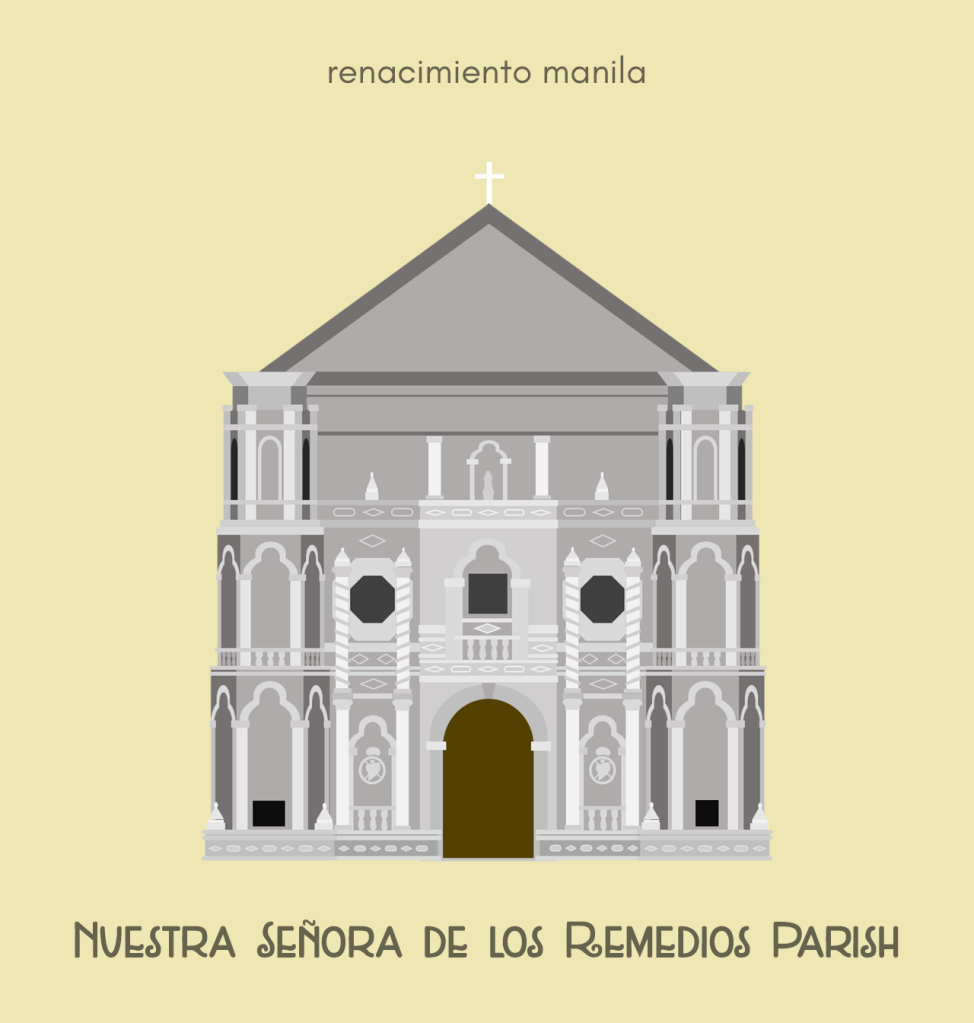
While Intramuros was a true hub of religion in its heyday, with more than 10 churches and chapels within the walled city itself at one point in its history, the arrabales had its own churches. As Manila and its suburbs grew, these churches, over time, became important bastions of both history and religion.
Nowadays, there are a lot of churches sprawled around the streets of Manila. Many of these have roots that have come from decades ago. From the old Manila that used to be confined within the walls, here we visit the seven churches of the old arrabales.
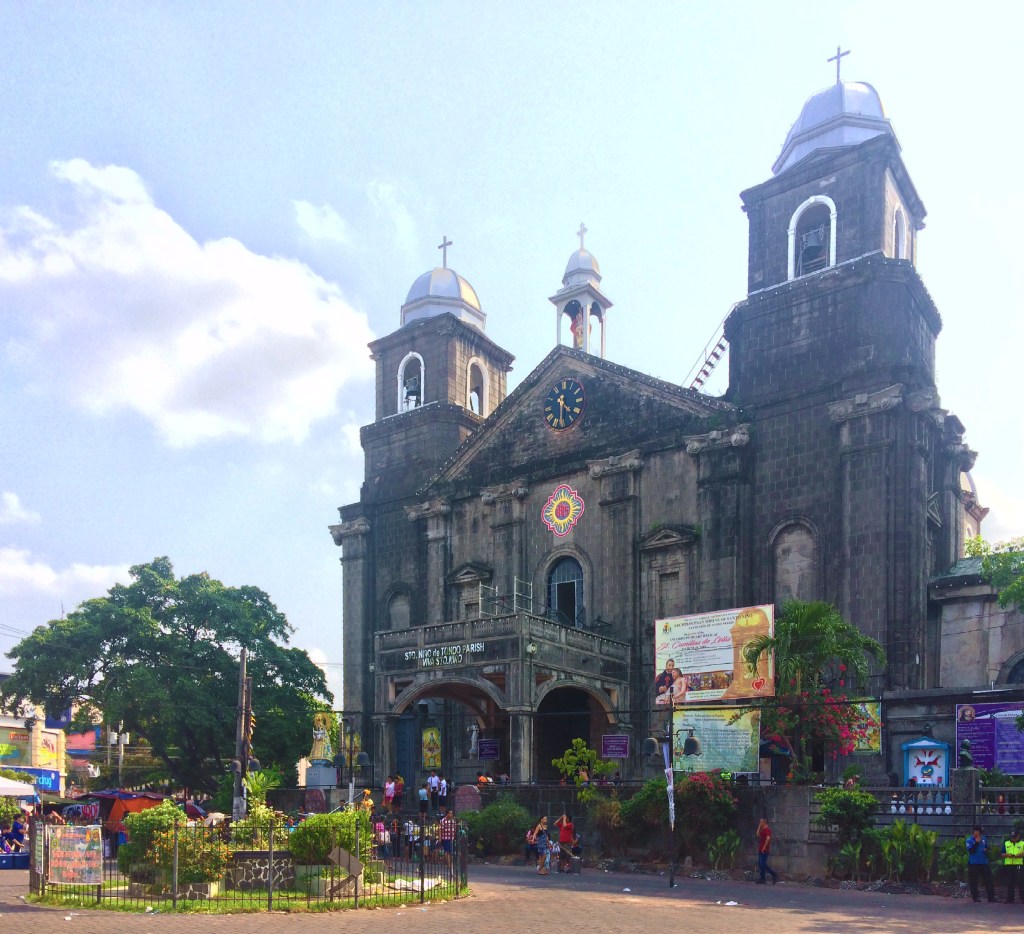

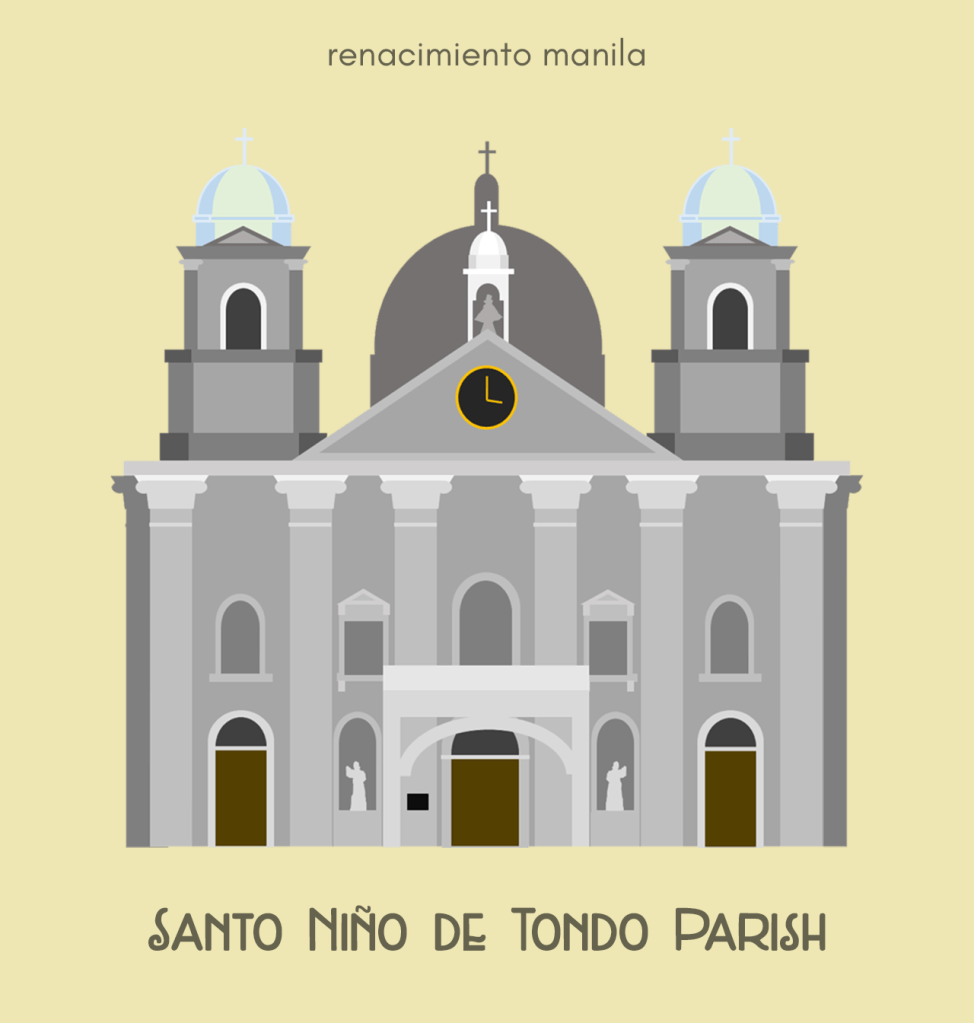
Tondo Church (Archdiocesan Shrine of the Santo Niño)
by Adam Daniel Reyes
The current church, completed in 1695 – the Santo Niño de Tondo Parish (commonly known as Tondo Church) was established by the Spanish Agustinian Friars in 1572. It houses an infant image of Jesus (Santo Niño) which originally came from Acapulco, Mexico. The current church was believed to be the exact location where the house of Lakandula (King of Tondo) was located.
Its architectural style is neo-classical, built using masonry. Its structural envelope is characterized by minimal ornamentation with Ionic rectangular pilasters that are attached from its main façade. Also, its buttresses support the unproportioned domes of the bell towers. There have been many restorations and renovations of the church due to calamities or war, two of which are the 1863 earthquake and during World War II – the Japanese forces used the church as their cuartel. Today, the Tondo Church measures 65 m long, 22 m wide and 17 m high. It attracts thousands of tourists and parishioners, especially during the fiesta of the Santo Niño de Tondo every third week of January.

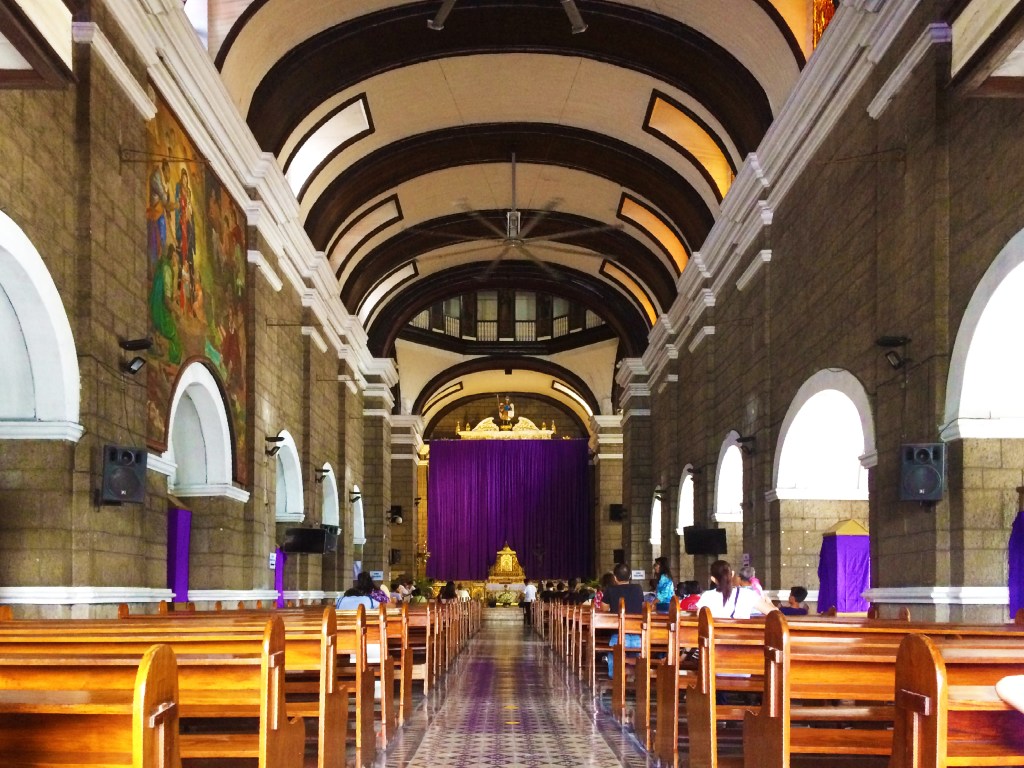
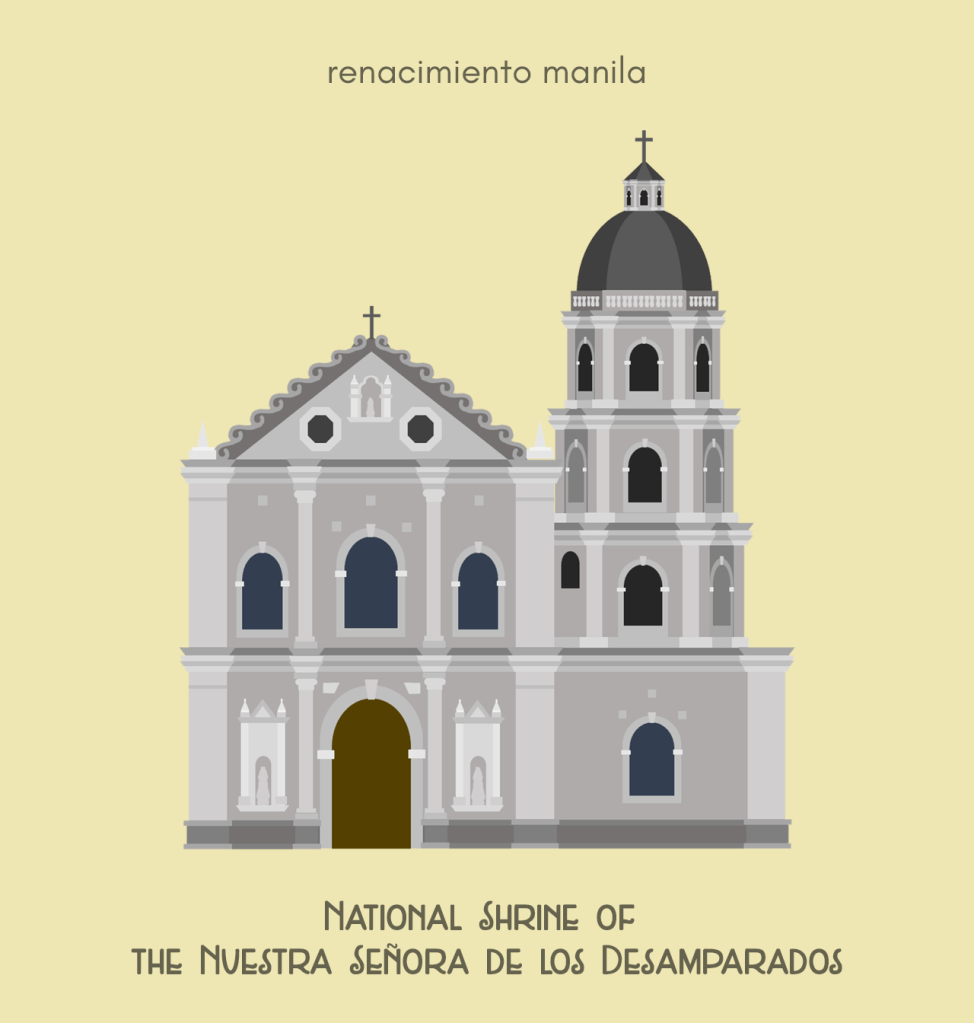
Santa Ana Church (National Shrine of the Nuestra Señora de los Desamparados)
by Ken Tatlonghari
Santa Ana Church in Manila is formally known as the Parish of Our Lady of the Abandoned, which was originally founded by the Franciscans in 1578 under the patronage of Saint Anne, grandmother of Jesus Christ. But the present stone church was constructed under Fr. Vicente Inglés from 1720 to 1725 with a new patron — Our Lady of the Abandoned. Fr. Inglés was a devotee of the image of La Nuestra Señora de los Desamparados in Valencia, Spain and decided to have a copy of it made for the parish in Manila.
As for the architecture of the church, adobe blocks were used in its construction with the façade being divided into three levels. The pediment is crowned by Vitruvian-scrollwork and has notable octagonal windows.
But what makes the church unique can be found inside — the Camarín de la Virgen (Dressing Room of the Virgin). It is a chapel room just behind the second level of the retablo where the image of the patroness is located. The figure sits in an octagonal niche (hornacina), while the hornacina rests on a platform which was part of the galleon that carried the image to the Philippines — the Santo Cristo de Burgos.
Aside from those features, the ceiling of the Camarín is also adorned with paintings belonging to the Estampita Age of Philippine art. The entrance to the Camarín is also flanked by paintings of archangels Michael and Gabriel.
Another interesting facet of the parish is the patio, enclosed by the adjoining convent. The patio was discovered to contain traces of Santa Ana’s prehispanic past (known as Namayan) and was subject to archaeological excavations from 1966.
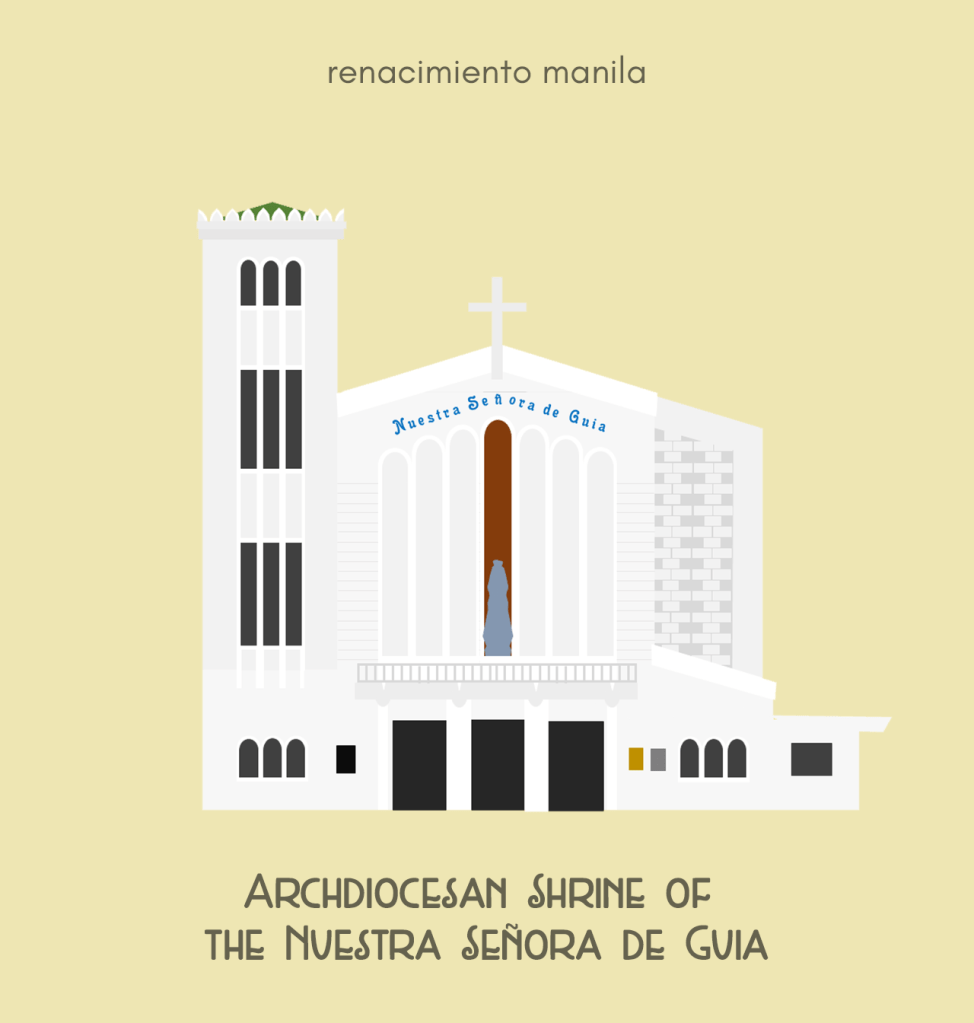
Ermita Church (Archdiocesan Shrine of the Nuestra Señora de Guia)
by Bea Dolores
This church served an important role in maritime history of the Philippines. It also holds the mysterious oldest Marian image in the country, Our Lady of Guidance or Nuestra Señora de Guia. This small, morena icon wasn’t part of Magellan nor Miguel Lopez de Legazpi’s ships, yet the latter’s soldier saw it being revered by a group of natives by the shores of Manila bay in 1571 – adorned with pandan leaves forming an altar, columns and more.
Our Lady of Guidance was moved to the first church where Manila Cathedral now stands, but was placed back in the constructed temple in Ermita because it was said that whenever it has been removed from its original place, they will find it back again on the next day. Several solemn events and traditions grew from the construction of Ermita church and the Marian icon’s favors to sailors, like the solemn nine-day festival that included a procession of the image from Ermita church to Manila Cathedral every time a galleon comes back safely from New Spain despite the turbulent seas.
The notable 16th century Ermita church was said to have a wide nave proportionate to its 25 cub. ft. high walls. It had a huge shell-adorned lantern on top of its belltower which served as a beacon of light for the mariners traversing the mouth of Manila bay. Unfortunately, it was destroyed by an earthquake back in 1610. Several reconstructions like the 1885 one of Lorenzo Guerrero’s, who was called “master” by Jose Rizal and was a teacher to architect Juan Arellano.
After the church was destroyed during the WW2’s Liberation of Manila, it was replaced by the recent one that was designed by Architect Carlos Antonio Santos-Viola, the notable architect of Iglesia ni Cristo churches who had designed the most churches in the country. Devotees today attribute to Nuestra Señora de Guia speedy approvals of US visas, as well as safe travels. She is considered as the patroness of OFWs.
Malate Church (Nuestra Señora de los Remedios Parish)
by Bea Dolores
Malate church’s unique stone façade is considered as one of the most interesting edifice designs in the Philippines. Its design for more than four (4) and a half centuries is inspired with Moorish elements partly due to Spain’s reception to the Islamic architectural style in the later half of 1600s. The architect remains unknown. It graciously stands amidst the large acacia trees since the 1930s.
Augustinian friars built the first church in the village of Malate, formerly known as “Maalat” back in Sept. 8, 1588. Several destruction from earthquakes, fears from Limahong invasion, and a typhoon fated the church and its convent until the first half of the 19th century. Malate church became a notable part of the British occupation history as it served as its headquarters back in 1762. This is also the oldest church to be dedicated to Virgen de los Remedios. Its two feet Marian image’s puffed butterfly sleeves were presumably the origins of the Filipino terno’s sleeve design. Mothers bring their children to Malate church for protection and care of the blessed Virgin.

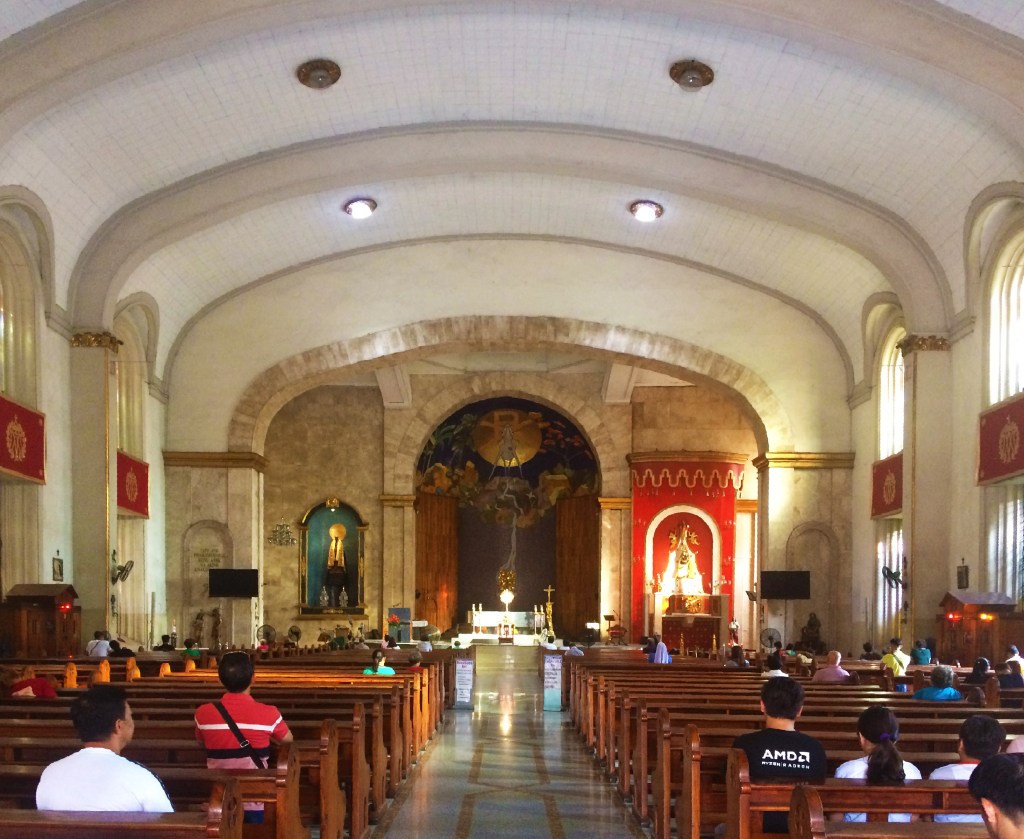
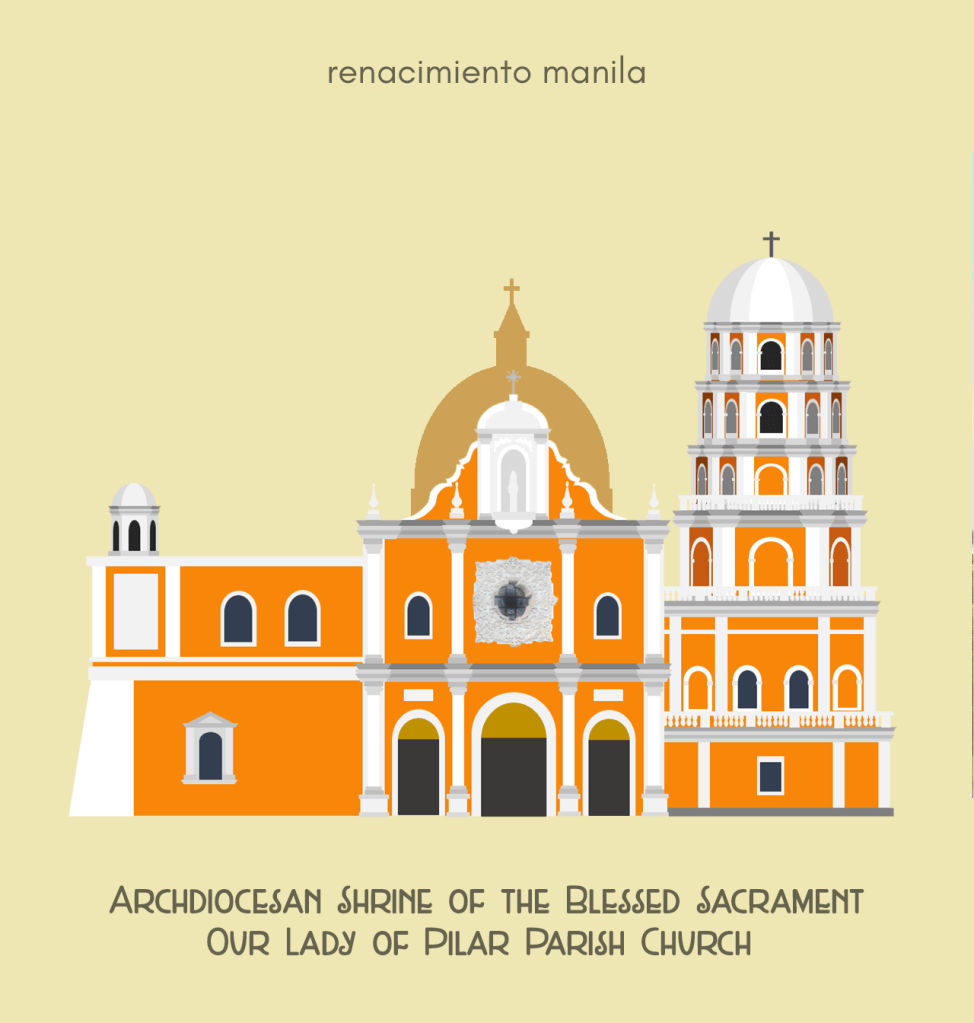
Sta. Cruz Church (Archdiocesan Shrine of the Blessed Sacrament)
by Chaeyeon
This church was first established on 20 June 1619 by the Jesuits to cater to the Chinese population in the area. A replica of the image of Nuestra Señora del Pilar was enshrined in this church- in 1743, the confraternity was canonically founded. It was in the grounds near this church where the British General handed over the keys of Manila back to Governor-General Anda in 1764.
The church was rebuilt a number of times. It was expanded in 1672, then later in 1850. It collapsed in the June 1863 earthquake, when it was then reconstructed beginning 1868. The church, along with most of Manila, succumbed to fire and shelling in the Liberation of Manila in 1945, leaving only a shell of the church. The historic May 1945 concert by the Manila Symphony Orchestra was held in the ruins of this church.
The current church was built over the ruined shell in 1957. It is designed with a blend of Spanish Baroque and Mission architecture, with Romanesque influences in the interior of the church.
In 2017, Pope Francis granted the Canonical coronation of the image replica. In 2018, Cardinal Tagle raised the status of the church into an Archdiocesan Shrine as part of the Corpus Christi celebrations. The church celebrated its 400th anniversary in 2019 in a year-long celebration.

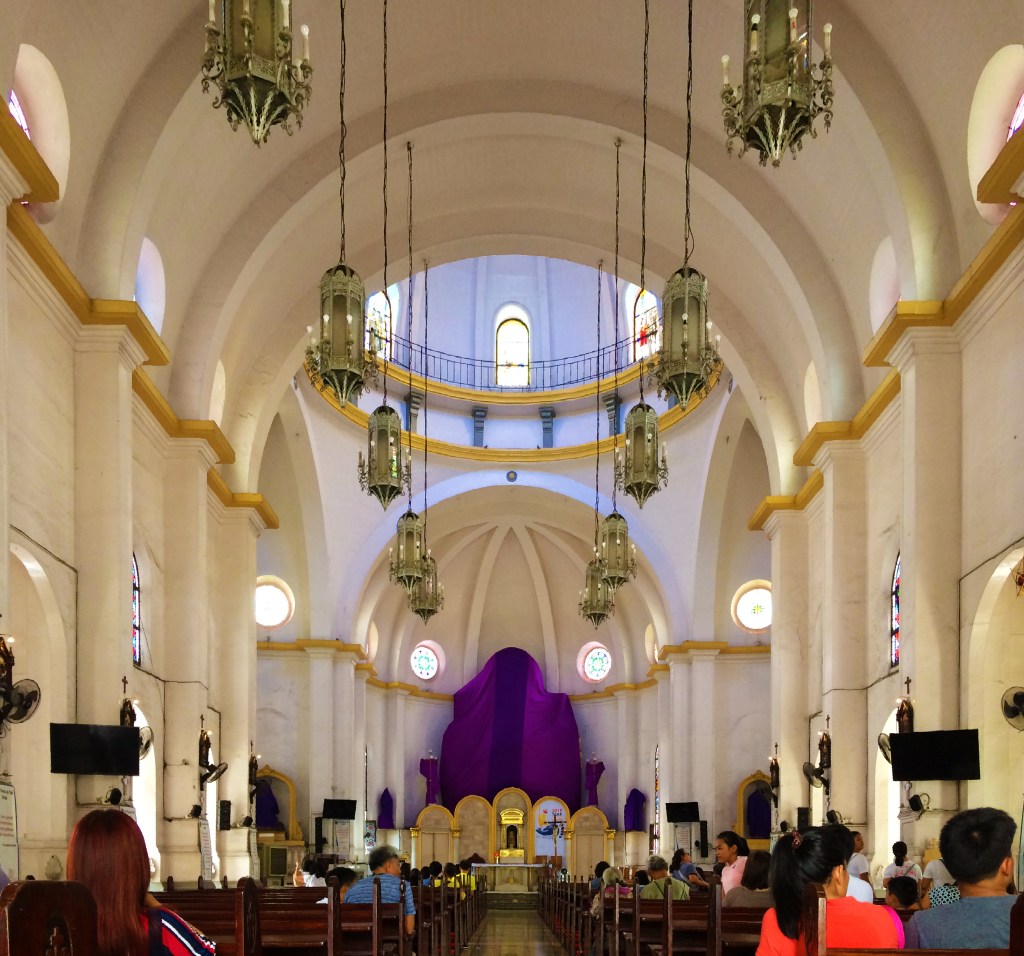
San Marcelino Church (Saint Vincent de Paul Parish)
by Riel A. A. Diala
In 1875, the Congregation of the Mission (CM) purchased 60,000 square meters of land along San Marcelino Street for the society’s country house. With concerns to provide a public worship space, a storehouse in the property was converted into a chapel. This was replaced in 1883, the chapel becoming the parish church of Paco from 1899 to 1909 when the former Paco Church was destroyed during the Philippine-American War. With the approach of the 50th anniversary of the Vincentians’ arrival in the Philippines in July 1912, the congregation planned to inaugurate, on that date, a church dedicated to their founder, Saint Vincent de Paul. However, due to delays during the construction, solemnities did not occur until December of the same year.
With the support of Manila Archbishop Jeremiah J. Harty, the chapel’s elevation to a parish and its separation from the Parish of San Fernando de Dilao, the Church of Saint Vincent de Paul became the first parish in the country to be under the Vincentian fathers. According to Dela Goza and Cavanna (1985), the church was designed by Spanish engineer Don Francisco Perez Muñoz, built by contractor Mr. R. Loper, and cost around PHP 100,000 for its construction. The church is also one of the earliest religious structures in the country built of reinforced concrete. Unfortunately, the church was not spared from the war, with Japanese forces burning the interior out of despair with the approaching American troops. The structure’s stable construction was still standing after the war and was restored to its current state under the auspices of Fr. Antonio Gomez who was the parish priest from 1948 to 1954, and again from 1957 to 1964.

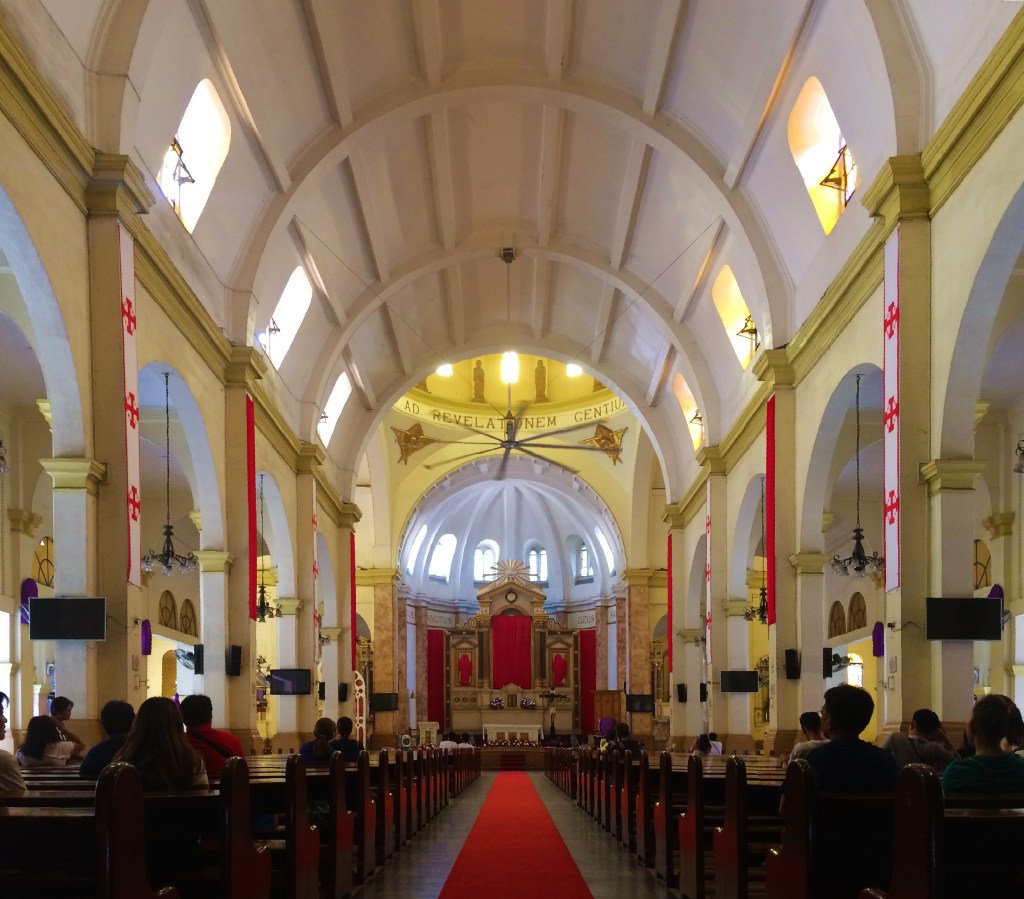
Paco Church (San Fernando de Dilao Parish)
by Angela Piguing
The church was first established in the mid-1500’s. The community back then was thriving with dilao shrubs; a plant whose yellow roots were used for food coloring, hence the name.
It was adaptation resulting from rebellion that led to the destruction of earlier iterations of Paco Church. The original church once stood closer to San Marcelino and Pasig River was dedicated to Our Lady of the Purification, which was destroyed, first by a reconstruction from bamboo to adobe in 1599, to being destroyed during the Chinese rebellion in 1603, and then the invasion of English forces in 1762. The church was then subsequently moved inland, along with the community, to where it now stands; Santiago in the southwest and Peña de Francia in the northeast. Despite the move and the town renamed as San Fernando, the community has retained the moniker Dilao, hence the name.
The church would be torn down and rebuilt for three more times at its new site, and would see a change of the order in charge for the church. Towards the end of the Spanish era to the early years of the American period (1894–1908) several parishes, including San Fernando de Dilao, were abandoned. The parish then fell to the hands of the Belgian Scheut Missionaries (CICM), where Paco Catholic School and the church itself would then be built through the years. Paco Church was destroyed during World War II, and then rebuilt gradually to what it is today. The church has an eclectic mix of Neoclassical, Mudejar on its twin towers, and minute details of other styles. The Belgian order that held the church was turned over to a local diocese. Additionally, the church served as a Pro-Cathedral of the Archdiocese of Manila when the Manila Cathedral underwent an extensive renovation from 2012 to 2014.
REFERENCES
- Congregation of the Mission. (24 Jun 2019). Vincentians in the Philippines (History and Present Work). Official website.
- Dela Goza, R. S. C. M., & Cavanna, J. M. C. M. (1985). Vincentians in the Philippines: 1862-1982. Vincentian Digital Books, 13.
- Historical Marker. (1935). Church of San Vicente de Paul, San Marcelino St., Ermita, Manila.
- History of Sto. Niño de Tondo Parish Church. (2005). Rose Marie Mendoza. The Tondo Website.
- Malate – Ermita District Part 3. (21 July 2013). Lou Gopal. Manila Nostalgia.
- Malate Church. Official Website.
- Our Lady of Guidance. Wikipedia.
- Roman Catholic Archdiocese of Manila. (2021). Nuestra Señora de Guia Parish. Official website.
- Roman Catholic Archdiocese of Manila. (2020). San Vicente de Paul Parish. Official website.
- With One’s Past. (4 Oct 2009) Arnaldo. Blog.
- Roman Catholic Archdiocese of Manila. (2013). History of San Francisco de Dilao Parish. Archived site.
Art by Diego Gabriel Torres. Photos from Riel A. A. Diala.
Text by Renacimiento Manila members
Adam Daniel Reyes, Angela Piguing, Bea Dolores, Chaeyon Lee, Ken Tatlonghari, and Riel A. A. Diala
All Rights Reserved. 2021.

The Renacimiento Movement. What, then, is the Renacimiento Movement? The movement is the core philosophy of the organization. It is founded on the reality that heritage is a cornerstone of holistic development and that it is indispensable in ensuring quality of life. As such, cultural revival is necessary for the promotion of heritage in the national agenda. Heritage should be driven by the people, regardless of race, gender, creed, or religion. This cultural revival can be achieved through the following ways: government support, the advancement of private initiatives, and the engagement of the people.
 Renacimiento Manila
Leave a comment