

What were the forms of Mass Transit in the Philippines during the Spanish Era?
Text by Angela AP .
Illustrations by Diego Gabriel Torres .
Renacimiento Manila
02 Aug 2020
After the events of the Filipino revolts to drive the Spanish colonizers out, the Americans established its governance in 1901. Despite the much shorter length of the US conquest of the Philippines compared to the Spanish colonizers, much of the way transport in the Philippines was shaped by the Americans. This can be due to the rise in technological advances, having occured in nearly the first half of the 20th century, which appeared to be a global movement to ease mobility.
The advent of more efficient steam engine designs opened promising opportunities for cities, sugar plantations, and curiously, fort-building, whose transport would otherwise be as tedious as the century behind. The American colonial period is also witness to some highly-regarded styles of urban planning, such as that of Daniel Burnham, notably in areas of Baguio and Quezon City. It is also the period where public transit in Iloilo of the Visayas region was considered

However, this era also marked the gradual shift from rail-based to road transport, which persisted even after World War II and thus, the Philippines as an independent country.
TRANVIA
That time, the existing tranvia was in derelict condition, battered and poorly maintained. The following year, five Americans and three Filipinos passed the Act No. 484, where operating the said streetcar system are bid out. It was Charles M. Swift, an American businessman, who won the Manila Electric Company franchise, in March 24, 1903.

Subsequently, Swift commissioned J. J. White for the construction and engineering; in the following year, the La Electricista and the Compañia de los Tranvías de Filipinas were acquired by the Manila Electric Company. In 1905 the tranvia at that time was inaugurated.
In 1913, Swift had another franchise, the Manila Suburban Railway. These three franchises are thus merged and became Meralco. La Electricista was the predecessor of Meralco’s electricity distribution services, and the Compañia was for its transportation ventures. The steam power plant in Isla Provisora generated electricity for the tranvia, which then utilized overhead lines of 500 volts.
Under the American ownership, tranvia services were expanded to connect Binondo, Escolta, San Nicolas, Tondo, Caloocan, Malabon, Quiapo, Sampaloc, Santa Mesa, San Miguel, and other areas within Metro Manila, such as Fort Mckinley and Marikina. Majority of the efforts in developing the tranvia were undertaken in 1920, on a five-year reconstruction program, alongside increasing the streetcars in service which are also produced by the company workshops. By 1924 the tranvia, or streetcar fleet as how Americans referred to it, consisted of around 170 cars. The tranvia services peaked in the 1930s, and was thus regarded as a “state of the art” transport system.
MANILA RAILROAD COMPANY
In December 8, 1902, the Philippine Commission passed a legislation that authorizes construction for another railway line, connected to the existing Main Line running to regions at Northern Luzon. This newer line constitutes the Main Line South, from Manila to the Bicol region.
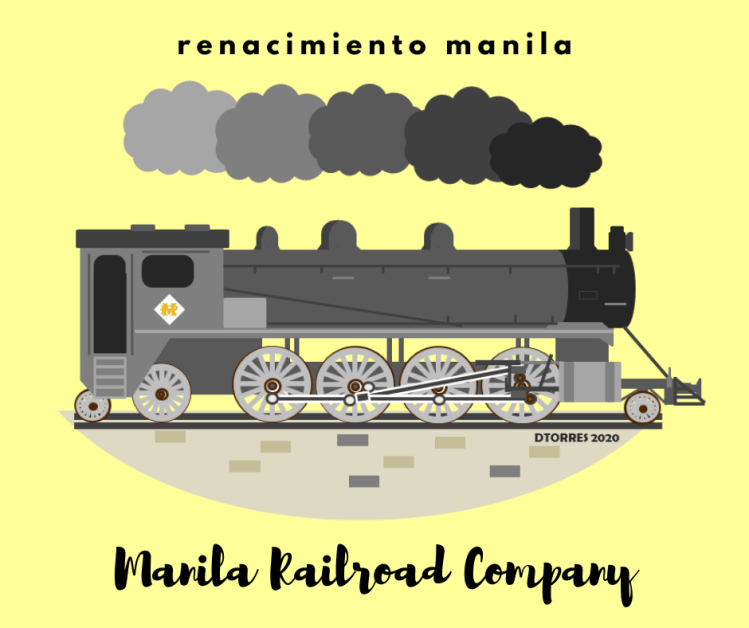
It is also under the American rule that this heavy, intercity rail had several branch lines. Among those served by the branch lines include, but are not limited to: Pangasinan, Nueva Ecija, Pampanga, Hinulugang Taktak in a cog railway at Rizal; Naic, Cavite; Laguna; Batangas; and a line to Port Ragay in Bicol. Also, a railway in the Panay Islands in the Visayas region was constructed with the the Act 1497 enacted in 1906.
Operations during World War I were maimed with financial difficulties, and subsequently a major shift in management. The Manila Railroad Company went from British to the Americans, and thus in 1923, José Paez was the first Filipino general manager of the railway.
In the 1920s, the railway was extended again; from Dagupan it then went to San Fernando, La Union at north, and down at south the main line reached Legaspi, Albay.
The last rail to connect Manila and Bicol was laid on November 17, 1937, and inauguration of regular direct services between Manila and Legaspi occured on May 8, 1938. This would become the well-known Bicol Express which was best known for being a popular long-haul service, yet suspended as of writing.
By the 1940s, the MRR operated 1,140.5 kilometers (708.7 mi) of track. However, the prime of most railway lines in activity did not last long, as World War II occurred.
CORREGIDOR and OTHER TRAMWAYS
Corregidor is an island southwest of Luzon, the largest among the islands that served as defenses of Manila Bay, which include the islands of El Fraile, Caballo, and Carabao. The islands are located at the entrance of Manila Bay, thus providing a strategic location for coastal artillery that defended Manila Bay from warship attacks. During the previous Spanish colonial period, the island served as means for defense, penal institution, customs inspection, and an outpost to warn Manila for incoming hostile ships.
Fortification of the Corregidor Island began with the construction of a narrow-gauge railroad in 1901. The railroad utilized 0-4-0 saddle tank engines for the tight curves, and as steam technology was considered a “prime mover” those days, the little engines eased transport of heavy goods delivered from the mainland United States.
In 1909, construction for the electric tramway, or trolley lines was started, which utilized a 600 volt overhead collection system. The railway was operated by the U.S. Army Quartermaster Corps with occasional assistance from the Meralco, operator of the tranvia. The trolley lines in the island eased transport between military batteries (a group of two or more big military guns), and also served island residents until prior to World War II.
As World War II began on December 8, 1942, the island’s light railroad and electric freight motors were utilized to evacuate the military hospital, heavy equipment, and other utilities to the Manilta Tunnel. The repetitive bombing by the Japanese Occupation left severe damage to the railroad infrstructures, and thus, broken railroad parts were salvaged to provide additional protection. The Battle of Corregidor in 1942 was met with a futile attempt of the Japanese to revive the railway, for this idea was scrapped. The line has since been unused, with at least some railway markers intact along the trails that may have been covered by erosion.
On the other hand, branch lines of narrow-gauge track provided access to the Manila Railroad Company. Some of these branch lines are tramways, and others are freight tracks that served sugar plantations or logging activities.
In Tarlac, the 11.3 kg (25 lb) light rail tracks connecting Paniqui and Camiling were laid in 1907. A narrow gauge tramway was also built at Camarines Norte serving Daet and Mercedes. Sugar plantations have been served such as in the Canlubang Sugar Estate at Laguna, and there is also one for logging at Negros in Visayas.
The aftermath
At the start of World War II on December 14, 1941 the intercity Manila Railroad was controlled by the military, which was succeeded by orders to destroy the railway structures in December 30 of the same year. War rendered severe damage to not only the MRR, but also to the tranvia and the Corregidor tramway. The glory of the tranvia was mostly crushed during the Battle of Manila, and the Corregidor tramway was severely mishappened when the Japanese forces invaded the island, in 1945. None of the light rail railroads were restored.
As for Manila Railroad Company, 452 kilometers (281 mi) of were operational, owing to partial restorations by the United States Army and the Philippine Commonwealth. On February 1, 1946, this railroad property was transferred to the Philippine government. This would be renamed as the Philippine National Railways.


Transportation, like other sectors, had been hugely affected by the war. With the reconstruction of railways too costly, and surplus US Willys jeepneys, Filipino ingenuity took place to provide what somehow relieved the lack of mobility. These became the well-known jeepney, known as “kings of the road” and thus remained in use as of writing. Also because road-based transport options were deemed cheaper and easier to set-up, the autobuses and subsequently automobiles took over as major modalities.
References:
Jose, Ricardo T. (August 25, 2018). “Planning Metro Manila’s Mass Transit System”. riles. upd. e du. ph. https:// riles. up d. e du. ph/index. php/2018/0 7/25/pla nning-me tro-manilas-mass-transit- system/
Corpuz, Arturo G. (1989). Railroads and regional development in the Philippines: Views from the colonial iron horse 1875–1935. Cornell University.
“100 Years with Meralco”. Meralco. October 11, 2004. Archived from the original on September 18, 2009. https:// web. archive. org /web/20090 918153259/http:/ /www. meralco. com. ph/Corporate/about/mh_100_years2. htm
“100 Years of Meralco: Colonial Outpost”. meralco.com.ph. Meralco. October 11, 2004. Archived from the original on September 18, 2009. https:// w eb. archive. org/web /20090918154 656/htt p:// www. meralco. com .p h /Corporate/about/mh_100_y ears. htm#1
“Brief history of PNR”. Philippine National Railways (February 27, 2009). Archived from the original on February 27, 2009 http s: //w eb. archive. org/web /20090 22704064 8/http: //pnr. gov. ph/hist ory. htm
“Manila Railroad Company”. National Register of Historic Sites & Structures in the Philippines. National Historical Commission of the Philippines. htt p:// nhc phistoricsit es. bl ogspot. Com /20 11/11/manila- railr oad-company. html
“Chapter I: Present Conditions”. Report of Survey of the Manila Railroad Company and the Preliminary Survey of Railroads for Mindanao (Report). Chicago: De Leuw, Cather & Company. 1951. pp. 1–12
Feredo, Tony (June 6, 2011). “The Corregidor Railway System”. corregidor.org. The Corregidor Historic Society. Archived from the original on November 20, 2019. htt ps: //web. archive. org/web/2019 1120232106/ht tp: //corregidor. org/chs_feredo/rails.
htm
Campbell, Don (June 6, 2011). “The Corregidor Tramway”. corregidor.org. The Corregidor Historic Society. Archived from the original on June 23, 2020. ht tps: //we b. arch ive. or g/ web/202006 23074105/ htt ps://corregidor. org/c hs_campbell /rails. Ht m
Secretary of Commerce and Police (1907). United States Congressional Serial Set. Philippine Commission. h ttps: //bo oks. Goog le .co m/boo ks?id=Sm SeeIJFV58C
Morton, Louis (1953). The Fall of the Philippines. CMH Pub. LCCN 53-63678. http s:// hist ory. army.m il/books/ wwii/5-2/5-2_C ontents. htm
http :// www2. ttcn.ne .jp/~ Phil rail/Phi lippines_r_cebu. htmh ttp://ww w2. ttcn.ne.jp/~ Phil rail /pan ay_20 04. htm
Railways and Industrial Heritage Society of the Philippines, Incorporated. Laguna Railways. ht tps:// we b.arch ive.o rg/we b/2011 10190 659 37/http ://la gun arailw ays. Rih spi.org /200 7/07/can lubang -sug ar-estate -railwa ys.ht ml http s:// web. arch ive.o rg/w eb/20100 62819 4448/htt p://lag unar a ilways.rih spi .or g/ 200 7/11/nort hern- negro s-loggi ng-ci rca-192 4.h tml htt ps:/ /web. arch ive.or g/web/20100 322230324/ht tp://lagunarailway s.rihspi. org/2007/ 11/hi nulugang- ta ktak-mrr-t rain-statio n.ht ml
Philippine Commission, United States Congressional Serial Set (1907). htt ps:// boo ks. Goo gle. co m.ph/boo ks?id =SmSeeIJFV 58C
Written by AnWritten by Angela AP, Renacimiento Manila. Illustrations by Diego Gabriel Torres. All rights reserved. Do not copy the illustrations. Violators will be pursued.


 Renacimiento Manila
Leave a reply to Vance Cancel reply